

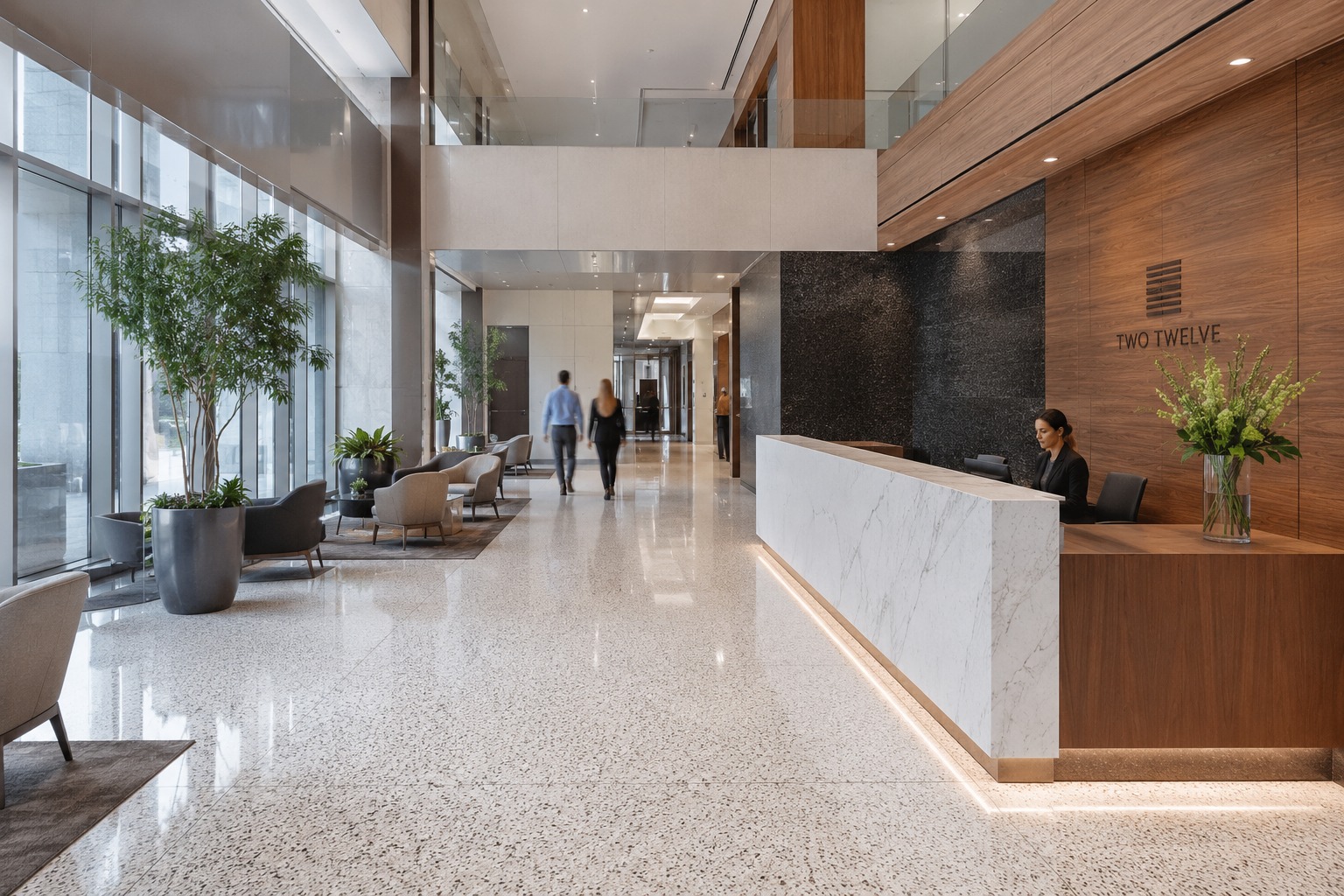
Material choices shape how commercial interiors perform under daily wear, cleaning cycles, and shifting occupancy patterns. Selecting the right combination lowers replacement costs, protects design intent, and keeps facilities looking sharp through years of steady use. Poor decisions show up quickly as scuffs, dents, stains, and premature failure across shared spaces.
Owners, architects, and facility teams weigh cost, aesthetics, safety, and sustainability across every specification decision. Balancing those priorities takes a clear framework grounded in traffic data, code requirements, and real maintenance budgets. Working through the trade-offs early prevents costly change orders once construction begins on site.
What Materials Work Best for High-Traffic Commercial Interiors?
Durable commercial interiors rely on materials engineered for impact, moisture, staining, and continuous cleaning without visible degradation. Top performers include porcelain tile, terrazzo, luxury vinyl tile, solid surface, quartz, and high-pressure laminates. The right mix depends on traffic volume, occupancy type, and long-term maintenance capacity across the space.
Why Material Selection Matters for Commercial Interiors
 Pin
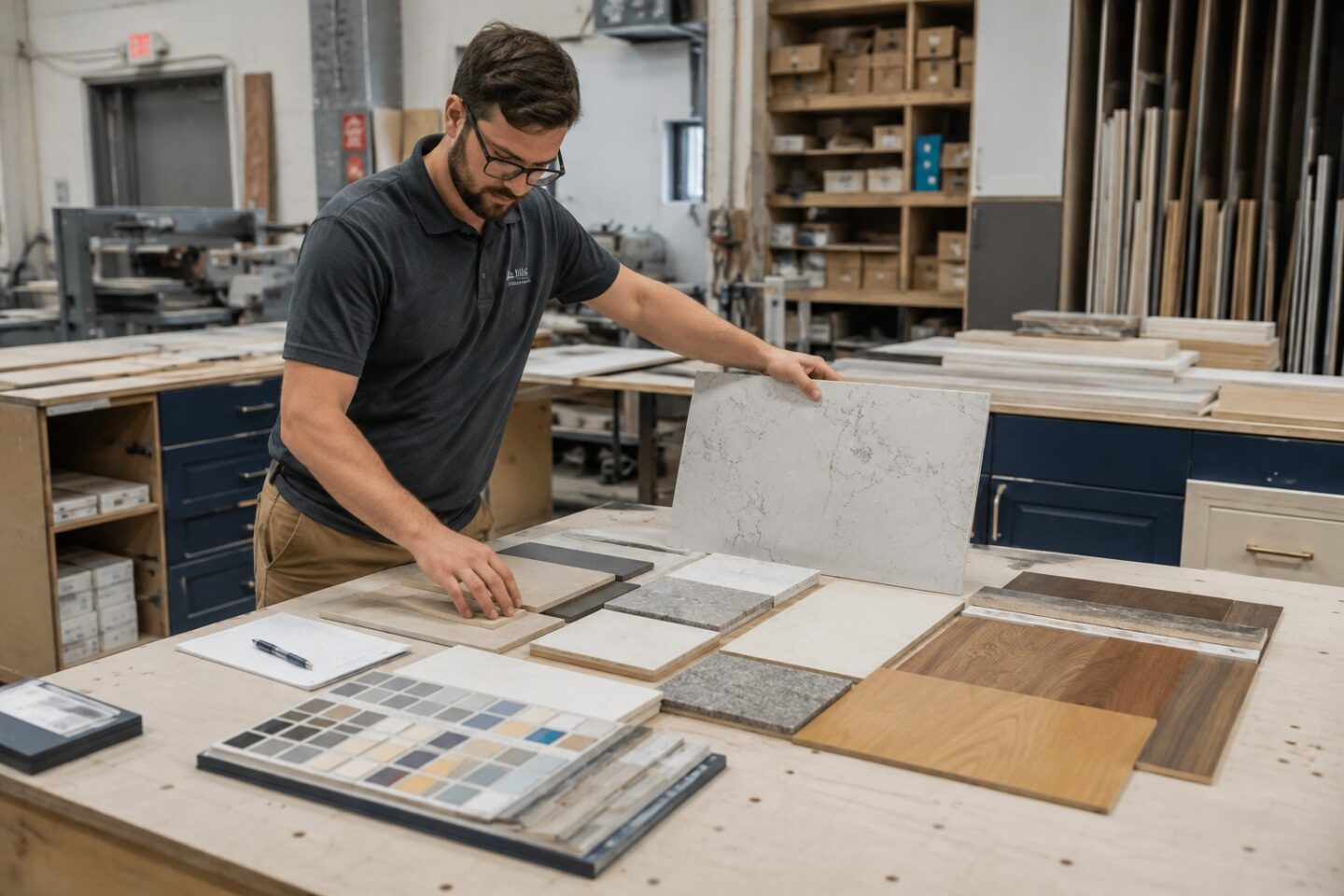
PinHigh-traffic zones face pressures that residential materials rarely handle without failing within a year or two. Commercial interiors absorb rolling carts, spike heels, spilled coffee, and rigorous cleaning chemicals every single day. Choosing surfaces built for that environment protects both aesthetics and total cost of ownership over time.
Indoor environments also affect the health and productivity of occupants across the workday. According to the United States Environmental Protection Agency, Americans spend approximately 90 percent of their time indoors, where some pollutant concentrations run two to five times higher than outdoors. Low-emitting materials help reduce that burden while keeping surfaces safe for long-term occupancy.
Beyond air quality, durability affects the pace of your operations and the perception of your brand. Frequent repairs create disruption, downtime, and safety hazards for staff, guests, and visitors. As a result, choosing well the first time protects revenue and reputation across every facility you manage.
To see how tailored specification works in practice, explore the DTANK+ services overview for guidance.
Comparing Flooring Options for Commercial Interiors
Flooring absorbs the heaviest wear in any commercial building, so it deserves the closest scrutiny during specification. Each material carries trade-offs across cost, appearance, slip resistance, acoustics, and repair pathways. Matching those attributes to real occupancy patterns keeps performance high across the useful life of the floor.
 Pin
PinTop Flooring Materials
Before locking in a single product line, compare the leading options against your traffic loads and cleaning routines. Each choice suits certain zones better than others across a typical mixed-use facility.
- Porcelain tile handles heavy foot traffic, moisture, and aggressive cleaning while offering wide design flexibility across zones
- Terrazzo delivers an exceptional lifespan of fifty years or more, though it requires significant upfront investment and skilled installers
- Luxury vinyl tile (LVT) balances comfort, water resistance, and quick plank-level repairs when damage occurs on busy floors
- Polished concrete cuts material costs by using the existing slab while reflecting light and reducing lighting loads
- Carpet tile with a Class 33 heavy contract rating suits offices and hallways where noise control matters most
- Rubber flooring cushions impact for gyms, healthcare corridors, and kitchens where staff spend long hours standing
Each option carries a different life-cycle cost profile once you factor in cleaning, refinishing, and eventual replacement. Consequently, comparing initial price alone often leads to expensive surprises three or four years into occupancy.
For real-world examples of these decisions in built environments, browse recent DTANK+ projects for reference.
Choosing Surfaces and Millwork Materials
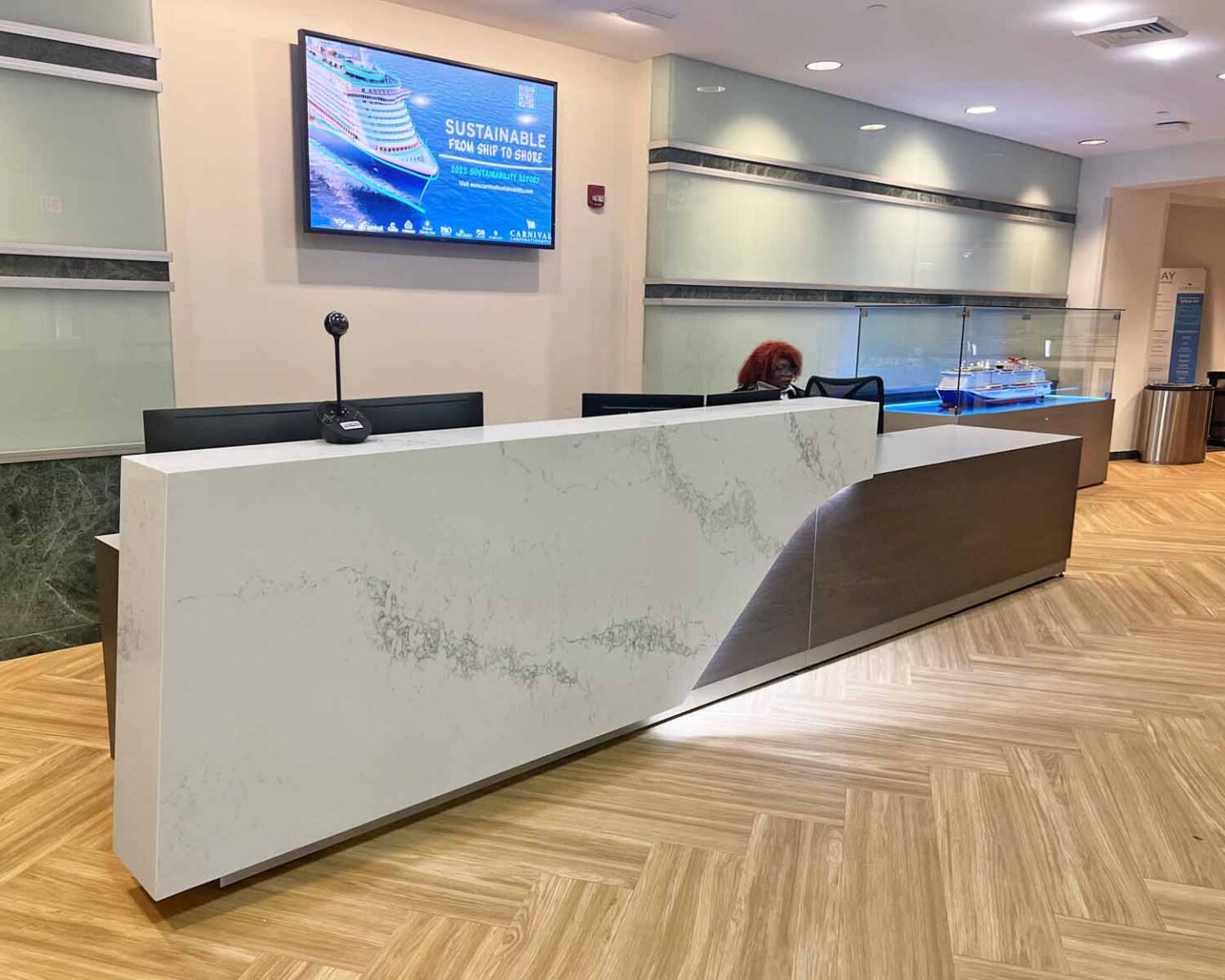
Countertops, reception desks, and wall panels take almost as much abuse as flooring in busy commercial interiors. Selecting the wrong surface can turn a signature design element into a maintenance headache within months of opening. Fabricators, architects, and owners should align early on both aesthetics and expected daily use.
Solid surface, quartz, and high-pressure laminate each bring different strengths to service counters and workstations. Solid surface allows seamless joints and easy repair, while quartz resists staining and heat under heavier commercial loads. High-pressure laminate keeps costs down when you need broad coverage across multiple stations.
Wood veneers and metal accents add warmth and identity when paired with durable substrates underneath. For further reading on tailored fabrication, see our overview on commercial millwork versus standard millwork options for related context.
Balancing Sustainability and Durability in Commercial Interiors
Sustainability and durability reinforce each other more often than they compete inside modern commercial interiors. Materials that last longer generate less landfill waste and lower embodied carbon across the life of a building. Owners increasingly demand both performance and environmental credentials in every specification package.
According to a research review published by the National Institutes of Health, indoor concentrations of some pollutants have risen due to increased use of synthetic building materials, furnishings, and cleaners. Choosing low-emitting products helps protect occupants while supporting Leadership in Energy and Environmental Design (LEED) credits during certification. LEED-aligned materials often carry stricter durability testing as well, which reinforces long-term value.
Recycled-content flooring, rapidly renewable wood species, and low-volatile-organic-compound finishes all fit within this dual mandate. To learn more about how our team approaches these decisions, visit the DTANK+ about page or read our post on custom furniture strategies that support workplace wellbeing for context.
Ready to Specify Durable Materials for Your Next Commercial Build?
Material choices shape how your commercial interiors look, perform, and cost over the coming decade of use. A disciplined selection process protects your budget, supports your sustainability goals, and keeps facilities safe for occupants. Getting the mix right early prevents disruptive repairs and preserves the design intent your team worked hard to create.
Partnering with an experienced design and fabrication team shortens the learning curve on any complex build. Our specialists help architects, developers, and end-users match materials to occupancy, code, and brand expectations across every project. Speak with the DTANK+ team to plan durable commercial interiors that stand the test of time.
Get gorgeous projects via email
