

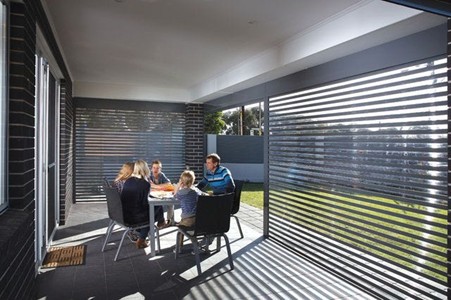
Aesthetic and security tension has been a silent struggle between designers and architects. What can you do to secure a building without destroying its aesthetics? Contemporary roller shutters are becoming a bridge solution that is both stylishly versatile and exceptionally protective.
Security meets design
Roller shutters were traditionally considered extremely functional: metal curtains that pulled down in front of windows or storefronts at night. They were secure but tended to be devoid of appeal. Modern materials, finishes and automation have now turned them into design-conscious elements. Roller shutters are now well incorporated into walls, architects choose colors, textures and profiles to suit the work of a building. What is the outcome is a protective layer but not in a way that feels like an afterthought.
Other than the aesthetics, modern shutters offer more security as compared to passive elements. An excellent quality mechanism is able to resist forced entry, prevent vandalism and provide limited access so that safety is not compromised. They also ensure privacy and lighting control, supporting better lighting design, which enable people occupying the building to have dynamic control of their environment.
Energy consumption and the environment
Contribution to sustainability is another benefit of roller shutters which is frequently ignored. Shutters installed on windows or glass fronts could minimize summer heat absorption and decrease winter heat transfer, in effect enhancing energy efficiency. Modern roller shutters on buildings can lead to decreased HVAC loads, decreased energy bill, and less environmental impact.
Corresponding integration in architecture
Roller shutters are being incorporated in prominent projects whether in commercial spaces or modern houses. Architects in urban centers are employing them to preserve daytime transparent, glass-facaded structures and nighttime, high security measures. Shutters are often used to complement minimalist or industrial architecture in residential buildings, improving the shape and performance of the building.
Another important aspect of the contemporary use of roller shutters is automation. Smart home or building management systems can have shutters react to the sun or people (or security alarms) by turning them into an active element of the overall building intelligence.
Considering installation
Nevertheless, design and functionality are fundamental factors, but to attain beauty and safety, proper installation is vital. Professional roller shutter installers check that the mechanisms work well, finishes are properly laid, and security measures are functioning. Collaborating with seasoned providers allows architects to bring forth their vision without reduction.
A look at valid solutions
To those who are in need of trying out quality roller shutter systems, such companies as Royal industrial doors provide a variety of designs that can unite performance, beauty and stability. Although they are only one in a sea of offerings, what they offer illustrates what modern roller shutters can do in both commercial and residential projects.
Final thoughts
In modern residential development, beauty and safety must work together. When it comes to architecture, however, the balancing between beauty and safety is seldom a straightforward answer. But now modern roller shutters are very close. They enable designers to preserve visual integrity and achieve high-security and energy criteria. With the changing materials, automation and integration, roller shutters are no longer an essential requirement, but a design possibility and allow architects to safeguard buildings and improve them equally.
The issue of aesthetics versus security might never be completely eliminated, yet with modern roller shutters, the trade-off is no longer needed.
Get gorgeous projects via email
