

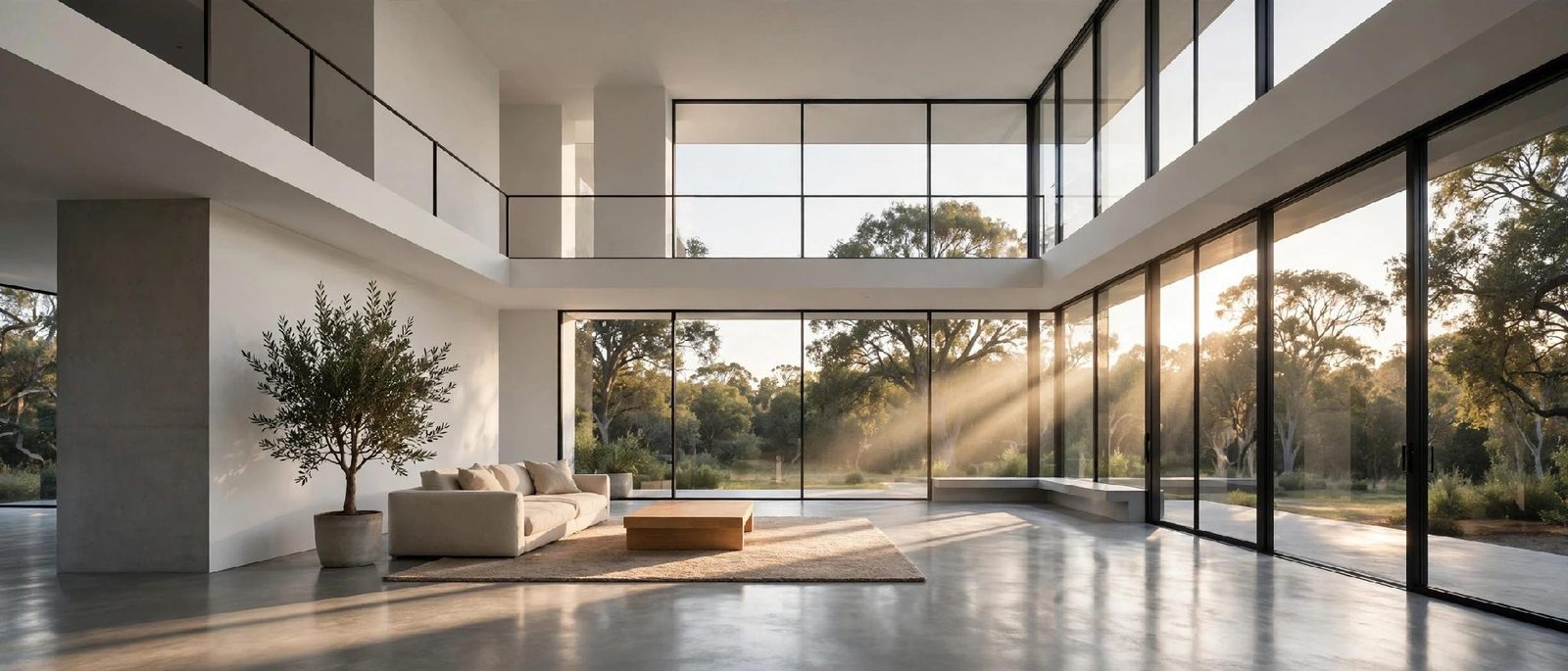
Minimalist, architect-designed interiors are stunning — and brutally honest. Double-height living spaces, walls of glass, polished concrete floors, and restrained material palettes leave nowhere for dust to hide. A film of dust that would go unnoticed in a cozy, cluttered room screams for attention on a pale oak floor under raking afternoon light. Keeping these spaces pristine isn’t about cleaning harder; it’s about understanding how the architecture itself interacts with dust — and choosing tools that match the space.
Why modern interiors show dust more
Three architectural features conspire against you. First, large windows and skylights create dramatic raking light that makes every particle visible. Second, open plans mean air — and the dust it carries — circulates freely across the whole floor instead of settling in closed rooms. Third, hard, light-colored surfaces like polished concrete, pale stone, and white oak show contrast sharply. None of this is a design flaw; it’s the price of the aesthetic. The solution is a cleaning approach designed around it.
Design choices that fight dust at the source
The best dust control happens before you ever pick up a vacuum. Fewer horizontal surfaces mean fewer places for dust to land — floating vanities, wall-hung toilets, and minimal open shelving all reduce the dusting workload dramatically. Concealed storage beats display shelving for the same reason. For window treatments, consider that heavy drapes are dust reservoirs; sheer roller blinds or well-fitted shutters collect far less.
Entry design matters enormously. A proper airlock-style entry or even a generous recessed mat zone captures the grit and dust that would otherwise travel across those beautiful floors on shoes.
The rug question
Rugs are where many minimalist interiors meet their maintenance challenge. A low-pile rug over polished concrete adds warmth and acoustics without becoming a dust trap the way deep pile does — but it still needs regular attention, because the contrast between a dusty rug and a clean hard floor is exactly what raking window light loves to reveal. For quick maintenance between deep cleans, a small vacuum cleaner for carpet kept nearby handles the rug in minutes, so dust never gets the chance to work deep into the fibers where it dulls the texture.
A cleaning rhythm for minimalist homes
Daily: a quick dry-mop or robot pass over hard floors — five minutes prevents the visible film from building. Weekly: damp-mop hard floors (damp, not wet, to protect wood and stone), vacuum rugs and upholstery, wipe the handful of horizontal surfaces. Monthly: windows and sills, where dust accumulates most visibly in glass-heavy architecture, plus HVAC vents and returns, which are the hidden dust distribution system of any open-plan home.
Choosing a vacuum that suits the space
Big upright vacuums are overkill — and an eyesore to store — in a minimalist interior. What works is a compact, powerful machine that lives discreetly in a utility niche and handles both hard floors and the occasional rug. The key spec to compare is real suction performance across floor types, not just the headline number on the box. A careful handheld vacuum suction power comparison shows how models with similar advertised power can perform very differently once a brush head meets an actual rug — exactly the scenario that matters here.
Look for sealed HEPA filtration too: in a tightly sealed modern home, a vacuum that recirculates fine dust defeats the purpose of the whole exercise.
Don’t forget ventilation
Dust control in modern architecture isn’t only about surfaces — it’s about air. Many architect-designed homes use mechanical ventilation with heat recovery (MVHR), which continuously replaces indoor air with filtered outdoor air. If your home has one, replace or clean its filters on schedule; a neglected MVHR unit becomes a dust distributor instead of a dust remover. In homes without one, a portable air purifier with a true HEPA filter in the main living space noticeably reduces the fine airborne dust that settles on those pristine surfaces between cleans.
Maintenance is part of the design
Finally, treat the cleaning tools as part of the interior’s maintenance plan, not an afterthought. Empty dustbins before they’re full, rinse washable filters on schedule, and keep brush heads free of hair. A well-maintained compact vacuum keeps an architect-designed interior looking the way the architect intended — which, after all, was the point of the design in the first place.
Marry Marlowe is a home cleaning specialist with 15 years of experience in vacuum care and home maintenance. She founded Vacuum Intel to help readers choose the right vacuum, use it effectively, and maintain it for years.
Get gorgeous projects via email
