

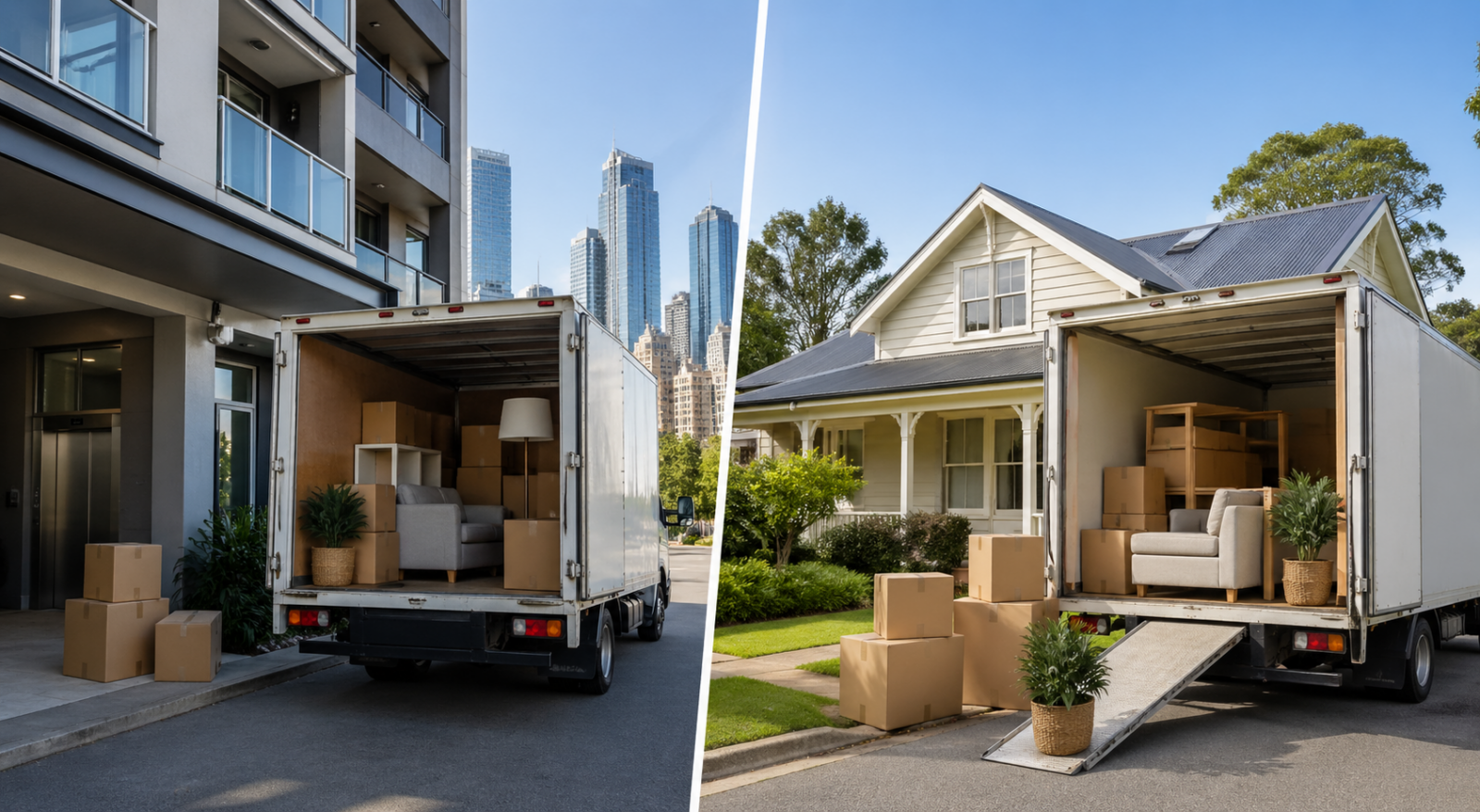
Moving homes in Brisbane can be a challenge. The distance generally isn’t the problem — it’s the type of move that often is. An apartment move and a house move can feel like night and day. But that’s something people realise only after the boxes are already taped up and the truck’s on its way.
Getting things out is rarely simple in apartments
We all know how restricted apartment access can be. Hence, an apartment move usually involves a few extra steps before the move starts. You have to deal with lifts, shared hallways, and sometimes strict building regulations. Quite often, a booking is needed just to use the lift. And the worst part is that you have to be on time for everything.
Parking is another headache. Trucks can’t always get close to the entrance doorway. That results in longer carry distances. It doesn’t sound like much on paper, but it adds up quickly during the day. This is where packers and movers in Brisbane often have to adjust their pace depending on the building.
Houses feel more open, but not always easier
House moving looks simpler at first glance. There’s usually a driveway, wider entry points, and no shared access rules. So loading furniture tends to be more direct.
But houses come with their own surprises. Longer walkways, garden paths, or multi-level layouts can slow things down. Bigger homes also mean more rooms, more furniture, and more decisions about what goes where.
Experienced house removalists in Brisbane usually plan for this by breaking the job into clear sections instead of rushing through.
Space changes everything on moving day
Inside an apartment, space disappears fast. One room becomes a storage zone, then a walkway, then a packing area, all at once. It can feel tight and a bit chaotic.
In a house, there’s more flexibility. Boxes can be spread across different rooms, and furniture can be staged before loading. That alone changes the rhythm of the move. Packers generally work faster in these conditions because they’re not constantly reshuffling items just to make space.
Timing doesn’t behave the same in both
Apartment moves often run on strict schedules. Lift bookings, noise restrictions, and building management rules don’t leave much room for delays. If something slips, the whole move can feel compressed.
House moves are more forgiving. There’s still a plan, but it’s not as tightly controlled by external rules. That difference is why furniture removalists in Brisbane often treat apartment jobs as more time-sensitive, even when the distance is short.
The cost isn’t just about size
People usually assume apartments are cheaper because they’re smaller. Sometimes yes, but not always.
Extra time spent waiting for lifts, navigating stairs, or managing restricted access can increase labour hours. Houses may have more furniture, but the flow is often smoother. So the final cost depends more on effort and access than just how much you own.
Trusted packers and movers in Brisbane usually explain this upfront, since it’s one of the most misunderstood parts of moving.
Final thought
Apartment and house moving don’t just differ in scale — they differ in rhythm. Apartments feel controlled and time-bound. Houses feel open but physically broader. Neither is easier across the board.
When it comes to stress-free moving in Brisbane, having the right support makes all the difference.
That’s where Express Furniture Removals & Storage comes in, helping take the hassle out of every move. They offer professional removal services designed to handle everything from careful packing to safe transport and secure storage solutions when needed.
Get gorgeous projects via email
