

Most museum facades are built to announce a building, not to perform. At the National Geographic Museum of Exploration in Washington, D.C., Moment Factory and architectural firm Hickok Cole have made the museum’s most visible surface the lead character of a nightly show. Wonders of Our World: Ocean uses a smart glass facade, the courtyard, and the surrounding buildings to tell a 17-minute story of the ocean, blending footage from National Geographic Explorers’ expeditions with custom visual content.
| Project Name | Wonders of Our World: Ocean |
| Project Type | Outdoor nighttime immersive experience |
| Architect / Designer | Moment Factory (multimedia design & production); Hickok Cole (architectural firm) |
| Client | The National Geographic Society |
| Location | National Geographic Museum of Exploration, Washington, D.C., United States |
| Smart Glass Facade | Nearly 3,000 sq ft of floor-to-ceiling smart glass with custom dimmer control |
| Official Opening | June 26, 2026 |
| Duration | Approximately 45 minutes (17-minute main show, plus interactive pre- and post-show) |
Designing a Smart Glass Facade That Stays Clear by Day and Performs by Night
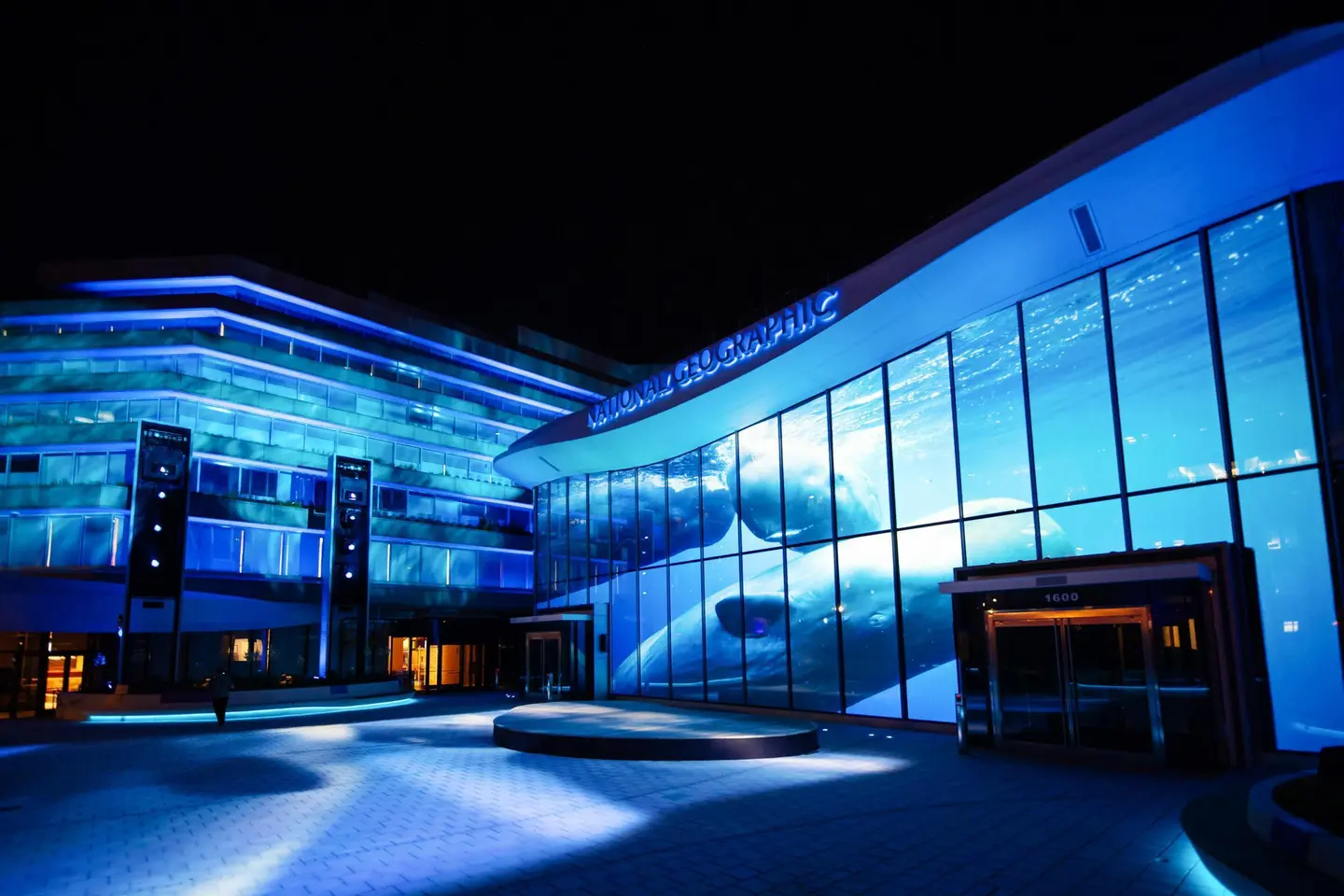
The brief from the National Geographic Society was a closing act: a spectacular way for visitors to end their day at the museum, drawing on the nighttime projection and firework shows of theme parks. Meeting it meant treating multimedia and architecture as one design problem from the outset. Moment Factory, Hickok Cole, Society teams, engineers, and consultants explored several options before choosing smart glass (glazing whose opacity can be electronically controlled) as a projection surface across the building’s entire facade, something never attempted at this scale.
The tension was clear. The glass had to stay transparent enough to preserve the museum’s daytime aesthetic and architectural intent, yet deliver more depth than traditional projection mapping (video projected onto a building’s surfaces) after dark. Years of testing covered tint, glass thickness, viewing angles, and image quality, with prototypes ranging from tabletop courtyard models to outdoor mock-ups approaching the building’s height. The result is nearly 3,000 square feet of floor-to-ceiling glass beneath a sweeping illuminated canopy, set between taller rectilinear wings, where opacity itself becomes a storytelling tool.
Design Decision: The facade hides a second screen. A 45-foot high-resolution LED screen hangs inside the building, behind the glass, and stays concealed while the glass is dialed to opaque. As the glass turns transparent, the screen emerges to create an unexpectedly layered composition.
 Pin
Photo: Moment Factory
Moving Through a 360-Degree Courtyard Canvas
The Facade as the Show’s Protagonist
 Pin
 Pin
 Pin
 Pin
 Pin
Photo: Moment Factory
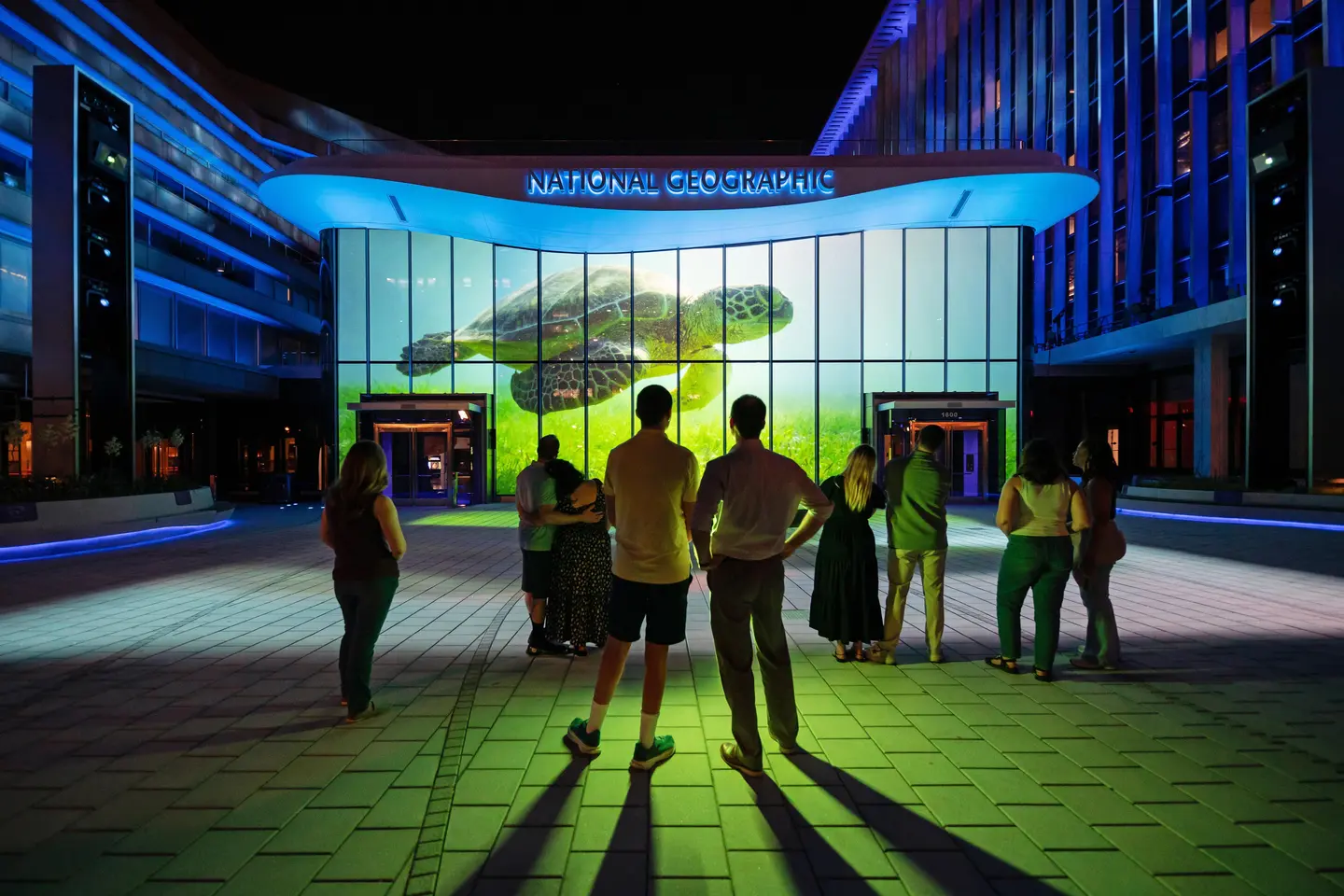
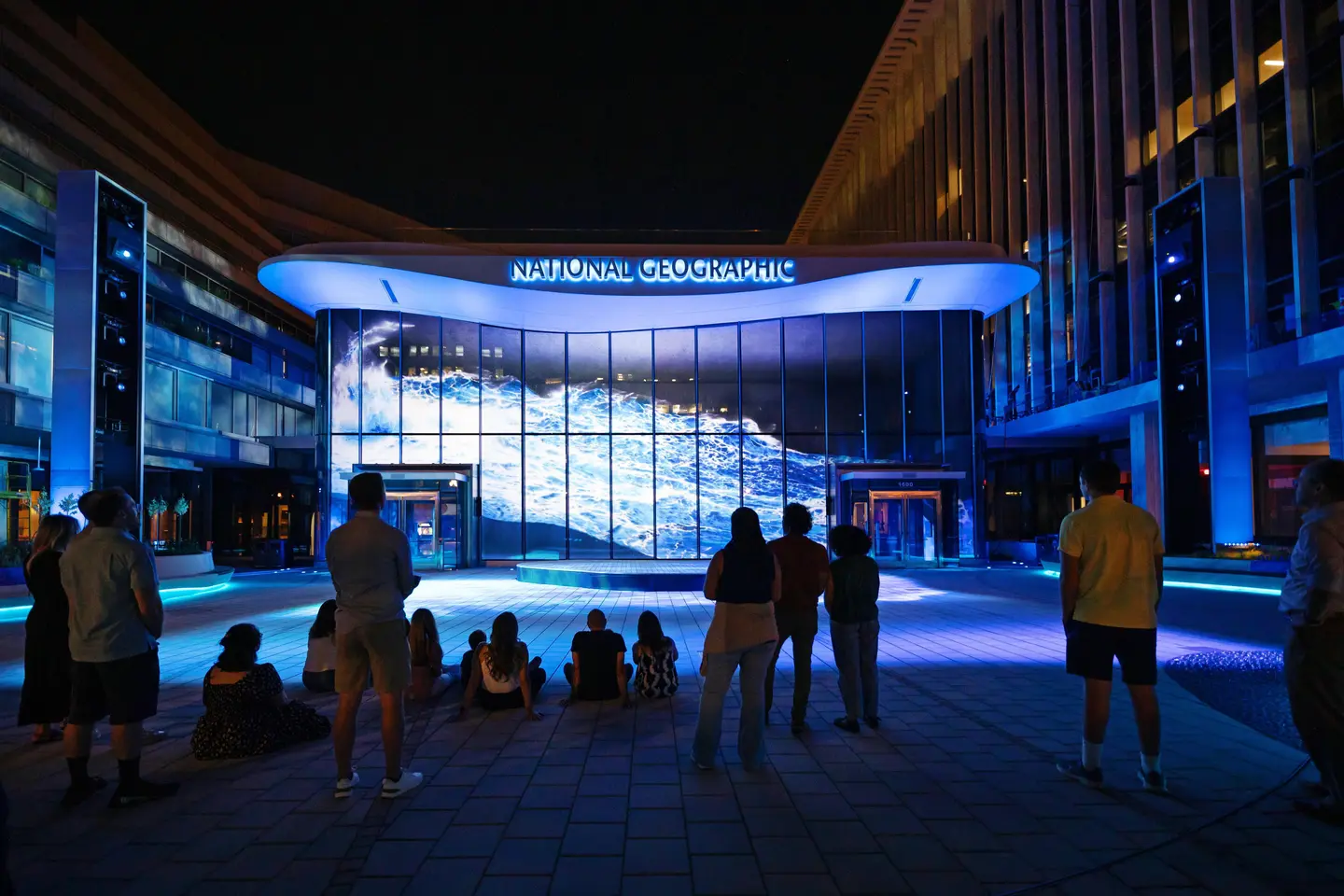
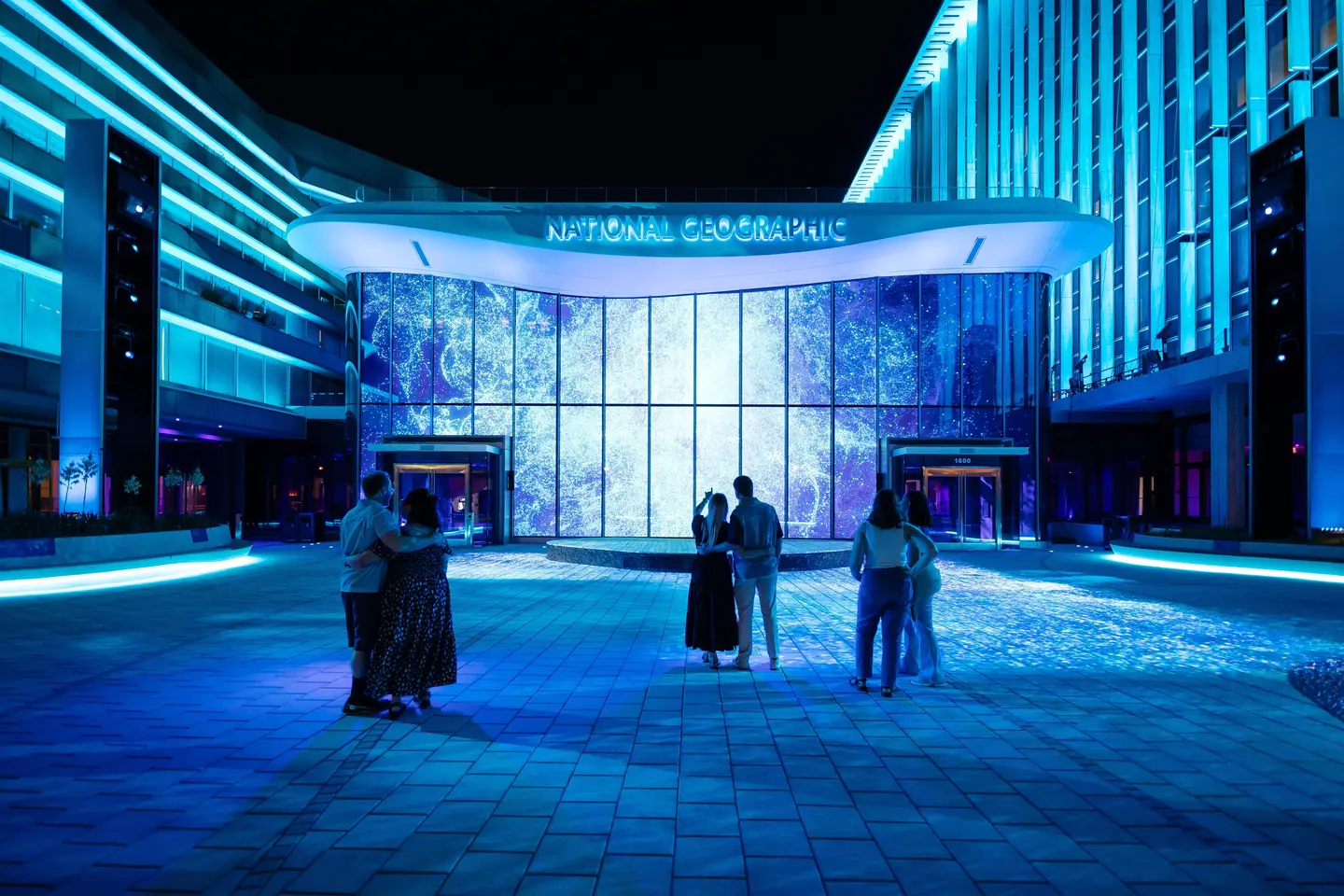
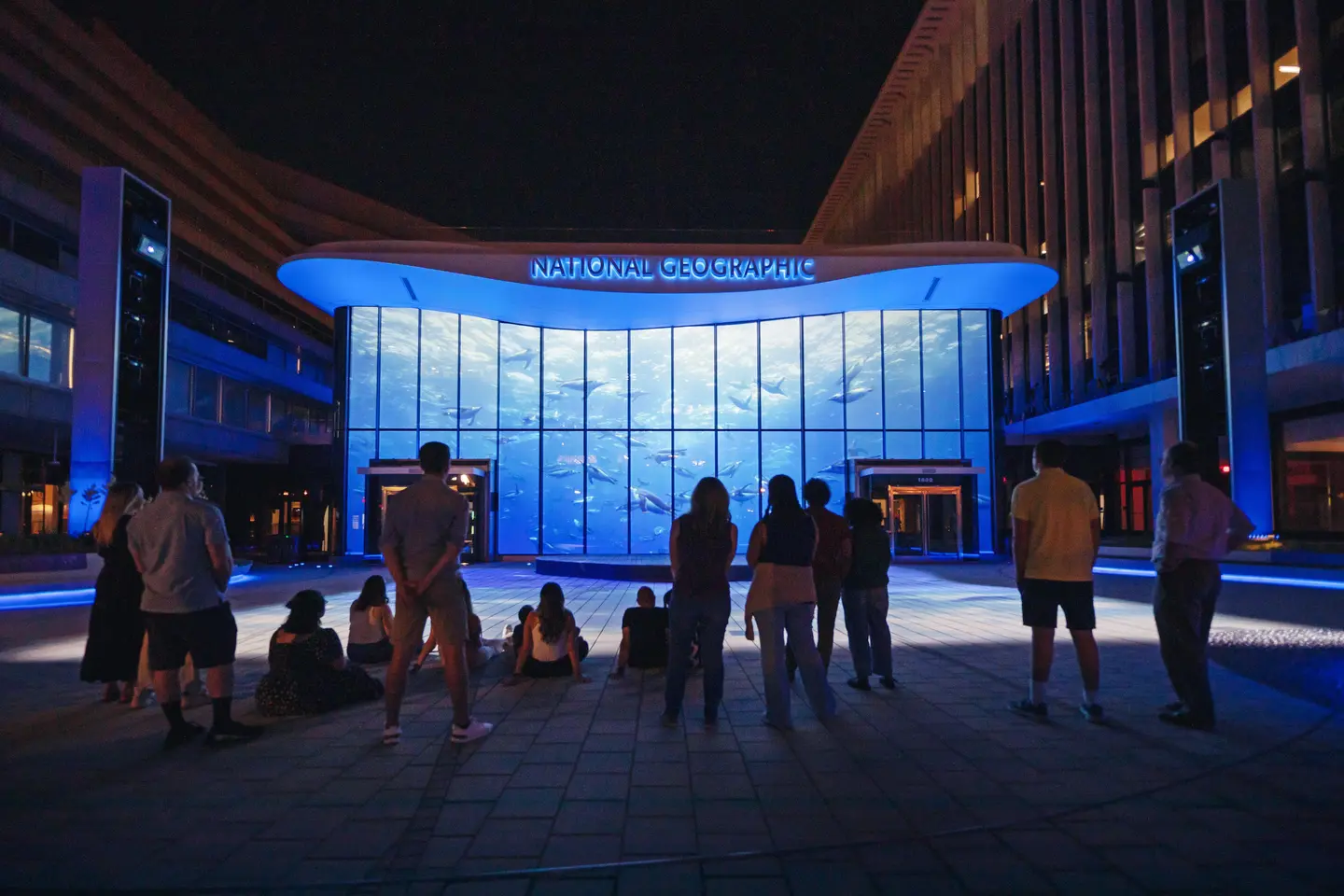
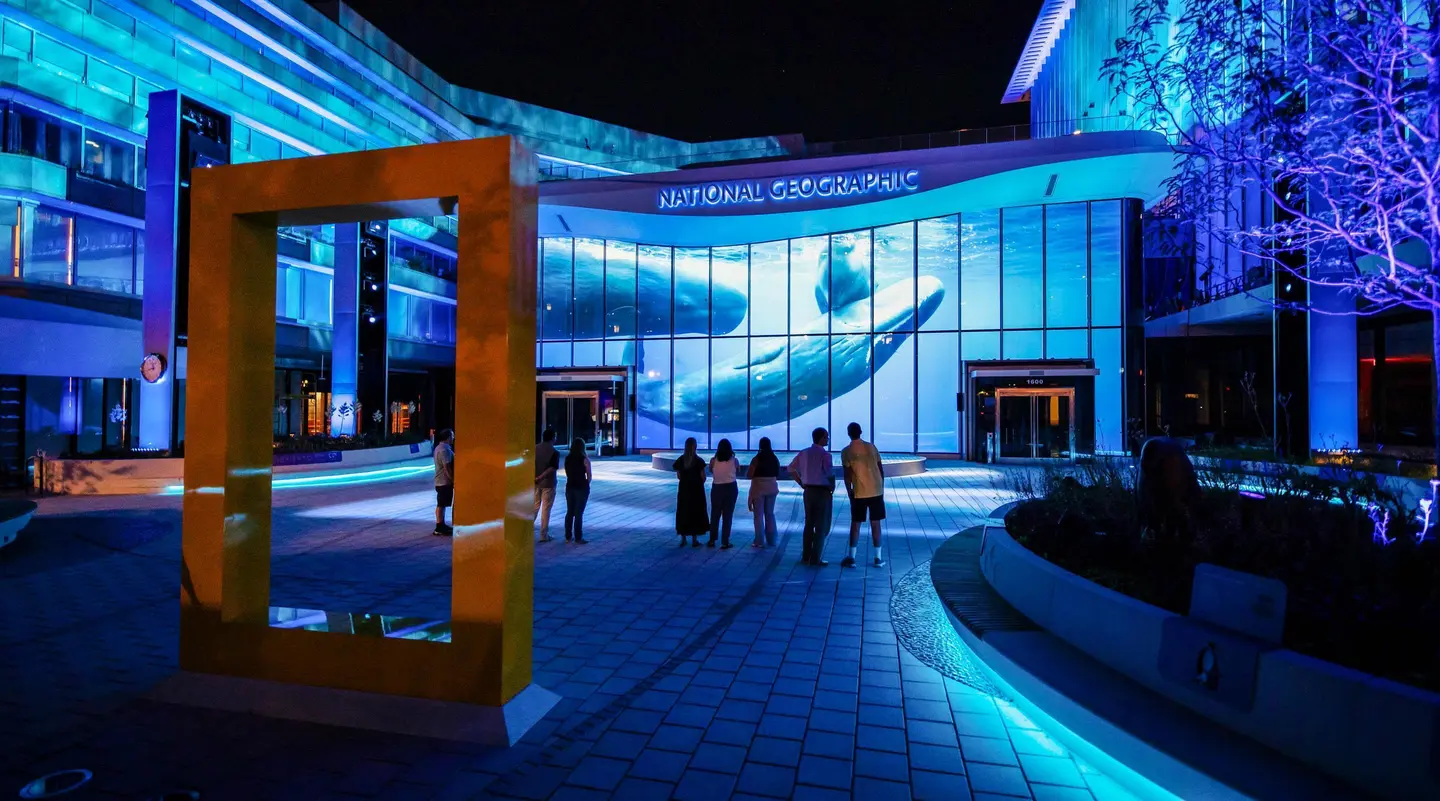
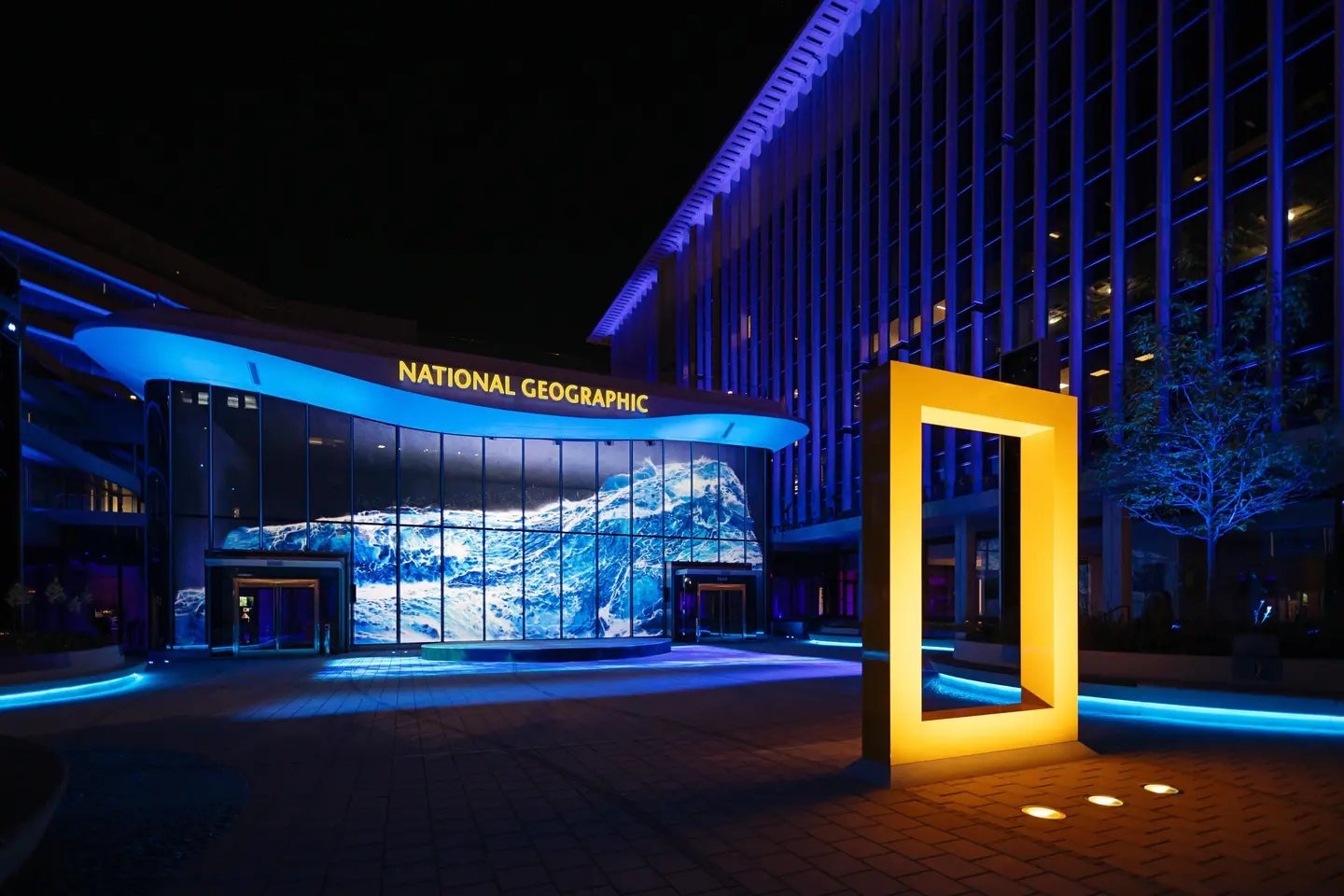
With the glass dialed to opaque, the full facade becomes a single projection plane framed by the glowing canopy. The show opens with a trompe-l’oeil (an image that tricks the eye into reading real depth) of ocean waves crashing inside the building, and later the facade seems to freeze over as the story shifts to the polar regions. Audiences take it in from the open paving, seated or standing.
Where Glass and LED Screen Share the Frame
 Pin
 Pin
 Pin
Photo: Moment Factory
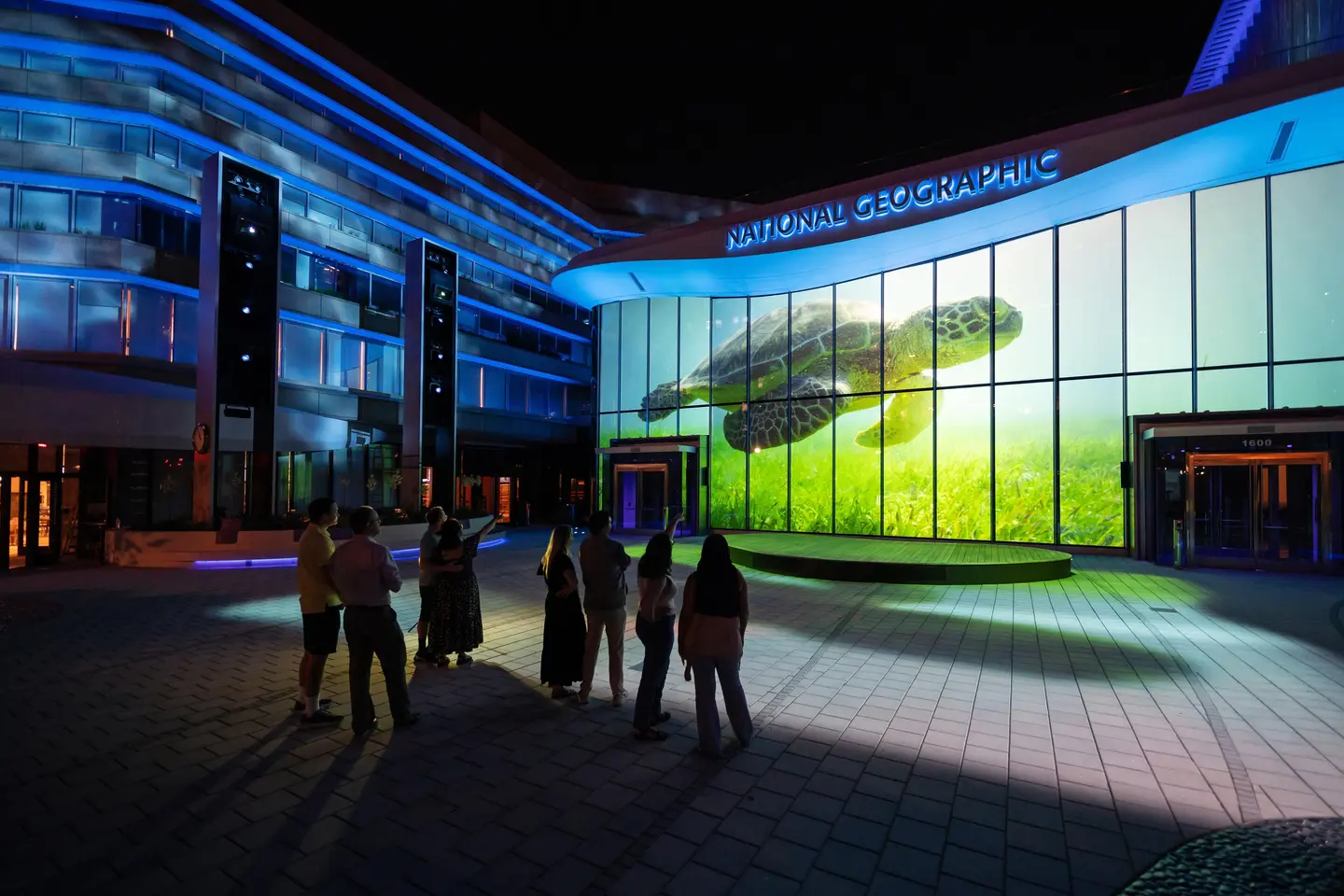
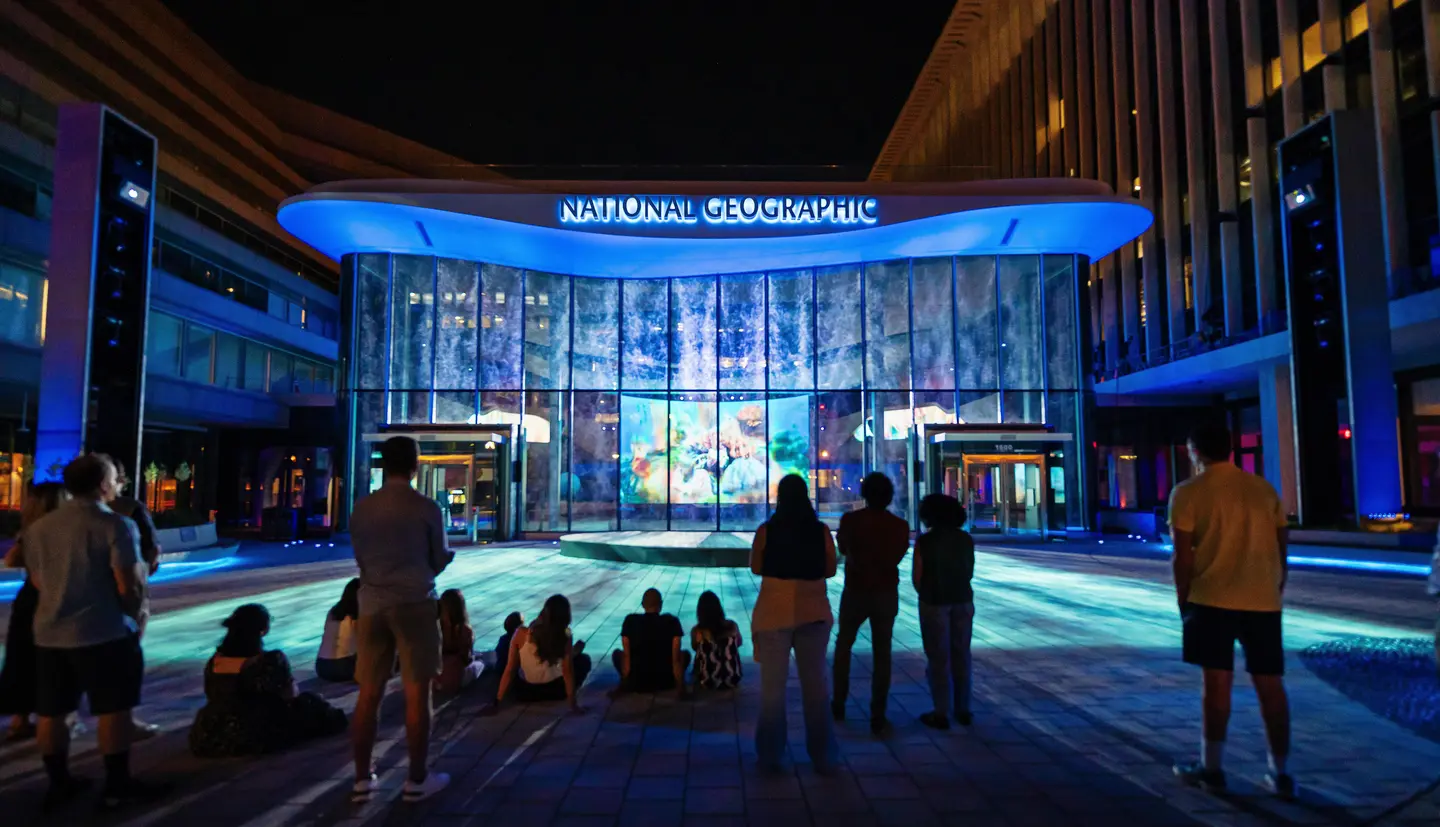
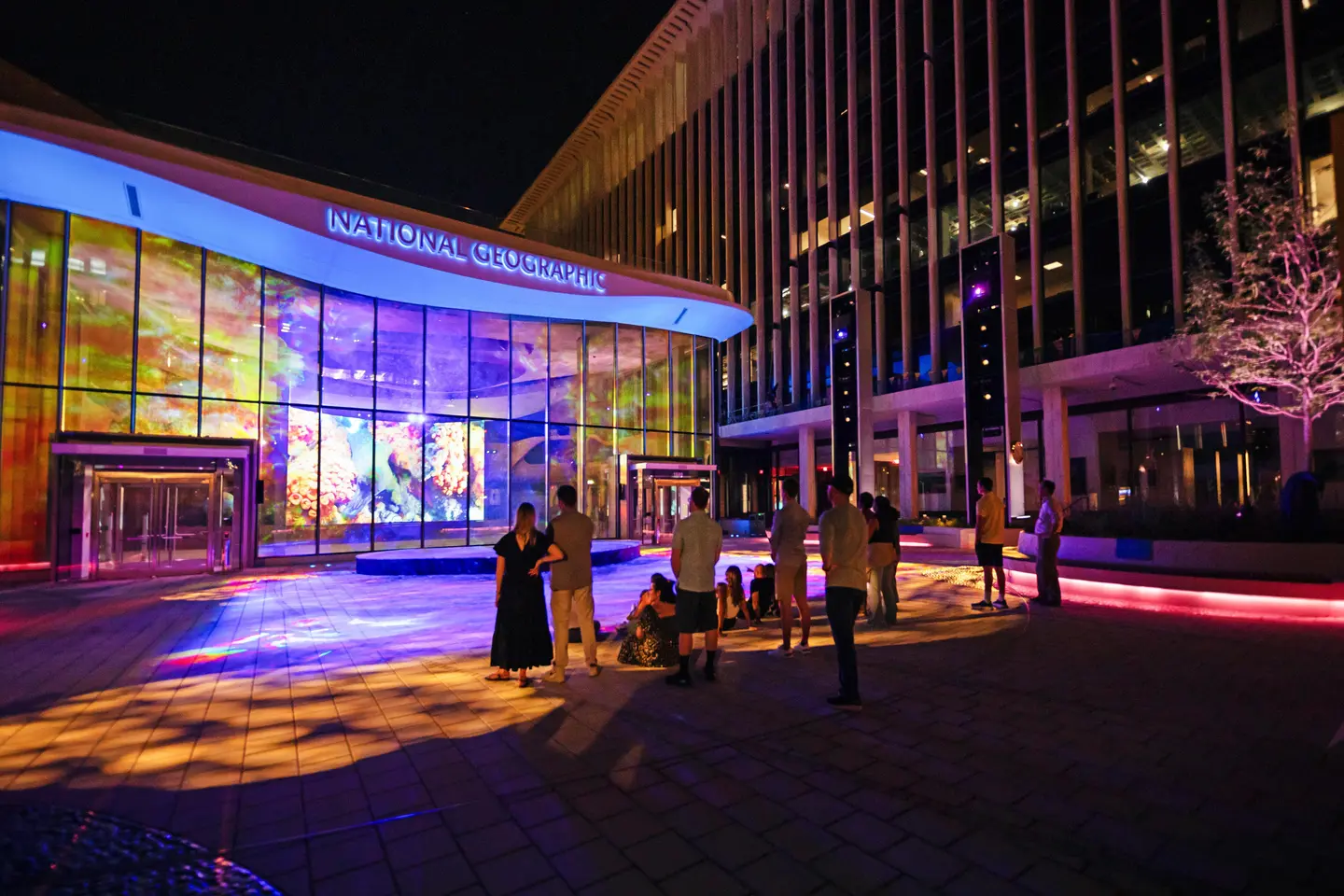
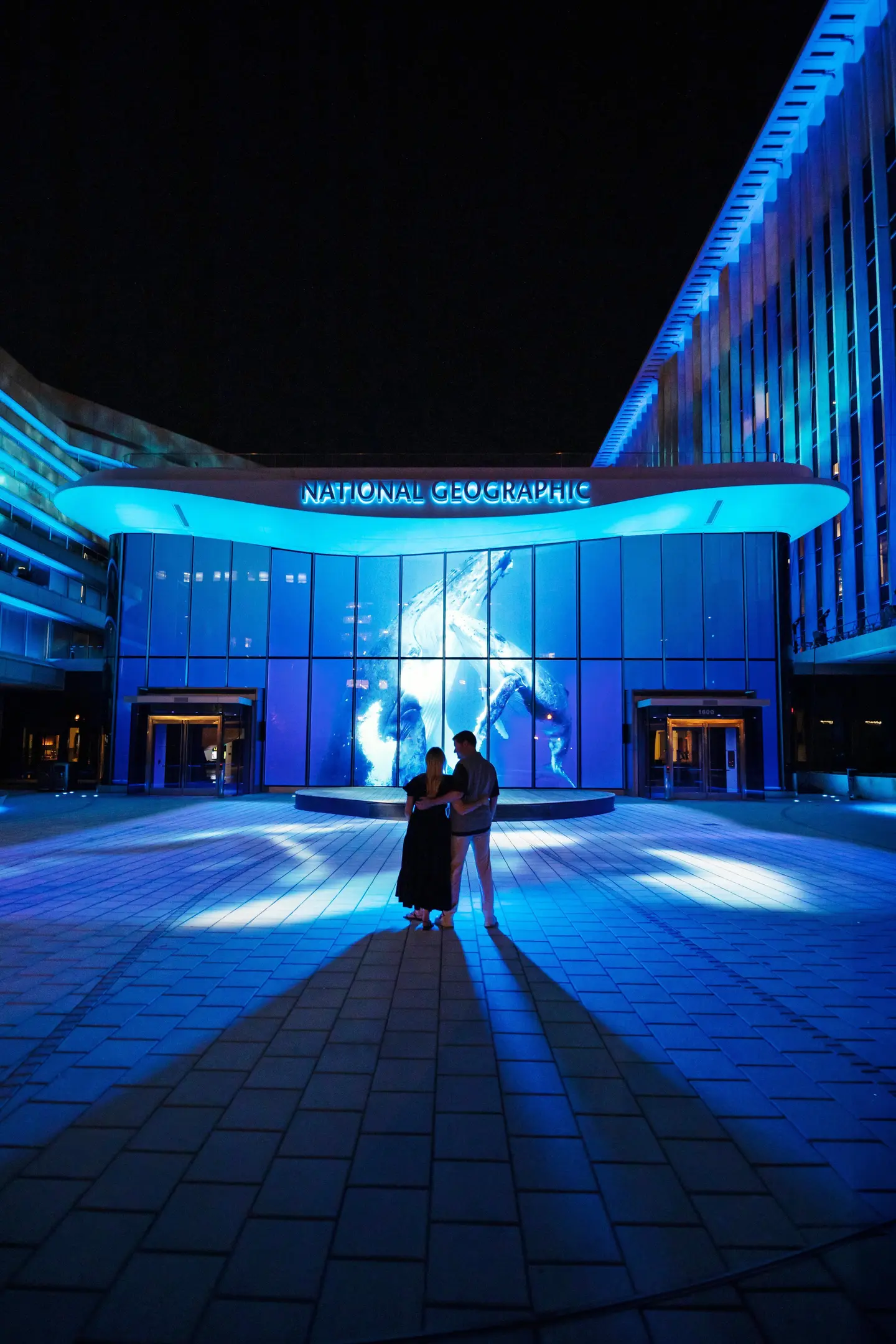
Partial transparency is where the facade earns its depth. The projected image thins across the glazing while the brighter LED screen behind it comes forward, so the eye reads two planes of imagery at once. Color spills off the facade onto the courtyard paving, pulling the scene toward the audience.
A Courtyard Floor That Tracks Every Step
 Pin
 Pin
 Pin
Photo: Moment Factory
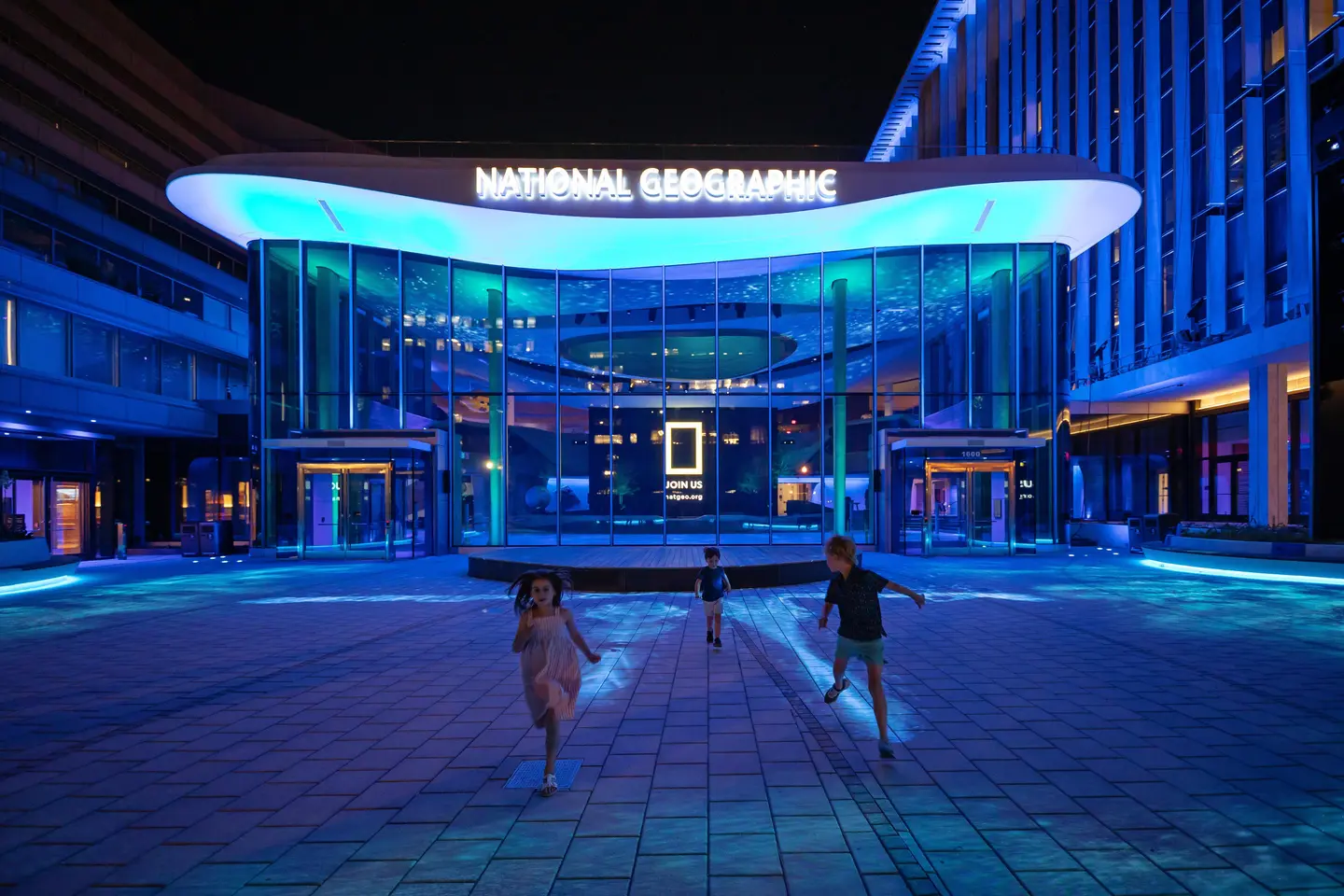
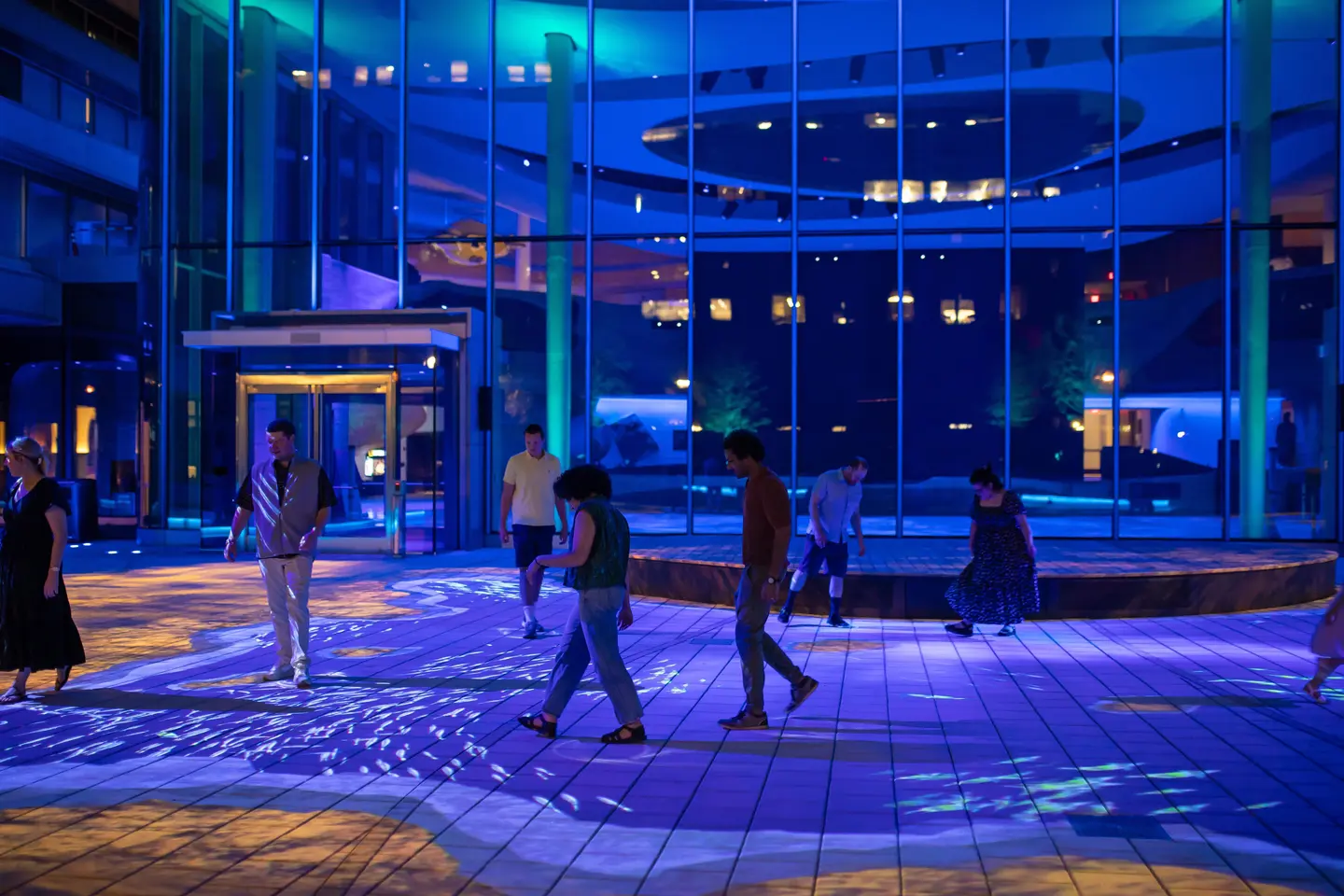
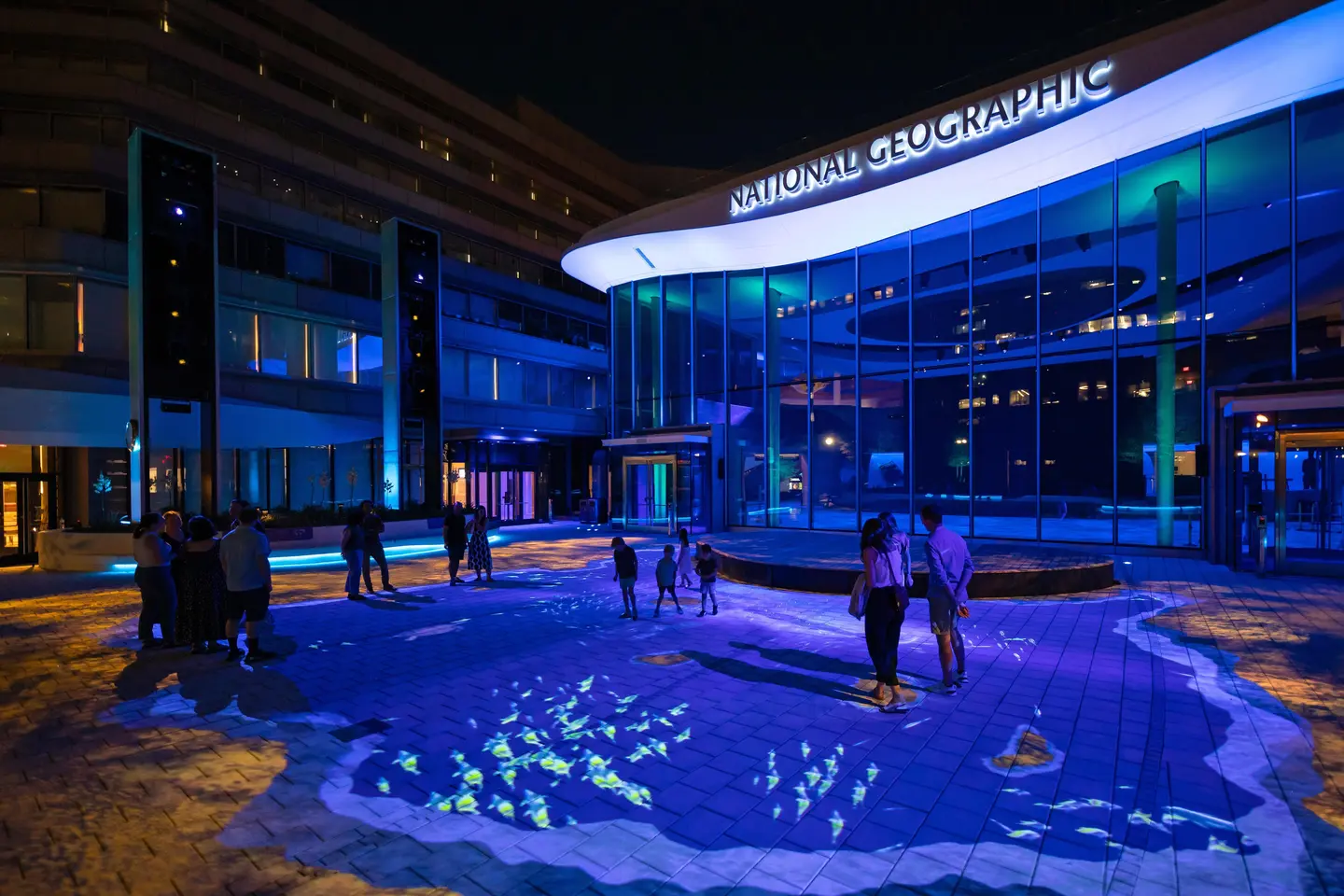
The ground plane is part of the show. Projections spread across the paving, and real-time motion-tracking zones respond to visitors as they move, so children run across the scene rather than watching from its edge. With the facade glass turned clear, the lit interior becomes a backdrop instead of a screen.
Trees, Neighboring Buildings, and a Freestanding Frame
 Pin
 Pin
 Pin
Photo: Moment Factory
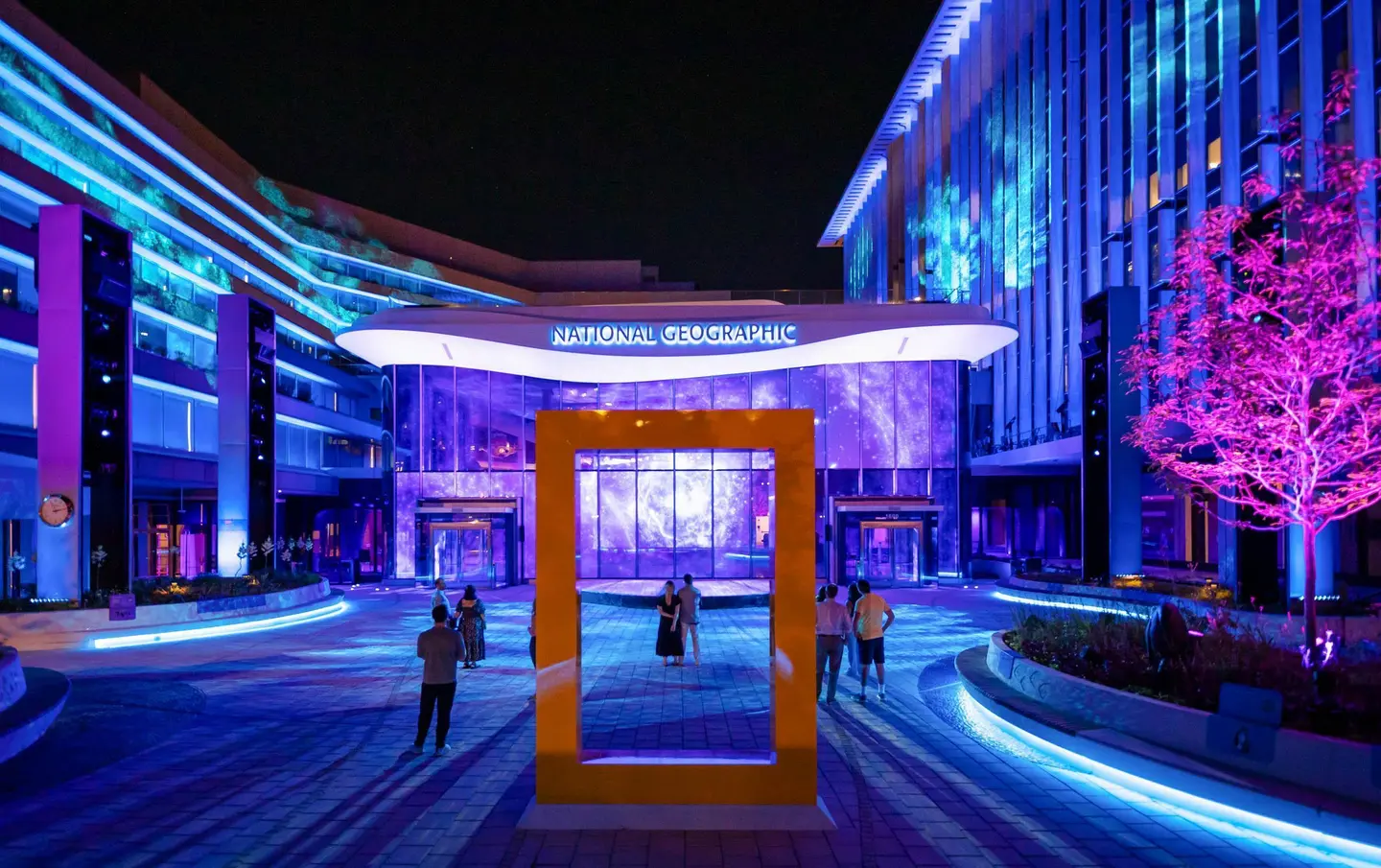
The canvas reaches past the museum itself. Lighting and visuals pick out the surrounding trees and adjacent buildings, so the courtyard’s whole perimeter joins the composition. A tall freestanding yellow frame stands on the paving, its saturated color holding its own against the blue-dominated scene.
Where the Spectacle Excels, and Where the Glass Raises Questions
One Surface, Two Jobs
Modulated opacity lets a single facade work as daytime glazing and nighttime screen, so the museum’s most visible elevation never reads as a permanent screen wall. Extending visuals to the paving, trees, and neighboring buildings turns the courtyard into an enveloping room rather than a plaza facing one wall.
The Price of Choreography
A show that depends on synchronized glass, LED, projection, lighting, and audio systems could be demanding to maintain, and any fault on the facade would play out in full public view. The open-air setting may also leave nightly performances exposed to weather.
A Museum Facade Designed as a Medium, Not a Backdrop
Wonders of Our World: Ocean shows what happens when a building’s envelope is conceived alongside the story it will tell. As Mark Ramirez, Managing Director at Hickok Cole, put it, the result is “a place that doesn’t just house the experience—it becomes the experience.” It suits evening visitors and families who want to be inside a story, not in front of one. It makes a persuasive case that outdoor public space can carry mission-driven storytelling as powerfully as any gallery.
FAQs
What is Wonders of Our World: Ocean?
It is an outdoor nighttime immersive experience at the National Geographic Museum of Exploration in Washington, D.C., created by Moment Factory for the National Geographic Society. Its 17-minute main show uses the museum’s facade and courtyard to tell the story of the ocean.
How long does the Wonders of Our World: Ocean experience last?
The full experience runs approximately 45 minutes. That includes the 17-minute main show plus interactive pre- and post-shows that let guests actively explore an underwater world rather than only watch it, using courtyard floor projections with real-time motion-tracking zones.
How does the smart glass facade work?
The facade uses nearly 3,000 square feet of floor-to-ceiling smart glass with custom dimmer control. Shifting between opacity and transparency lets the glass act as a projection surface, conceal or reveal a 45-foot LED screen behind it, and preserve the museum’s daytime aesthetic.
Who designed Wonders of Our World: Ocean?
Moment Factory, a global entertainment studio headquartered in Montreal, led multimedia design and production, working in close collaboration with architectural firm Hickok Cole, National Geographic Society teams, engineers, consultants, and vendors. The experience officially opened on June 26, 2026.
Source: v2com
Get gorgeous projects via email
