

If you buy at auction in Victoria, there’s no cooling-off period. Once the hammer falls on a double-fronted Victorian in Kew or a 1920s bungalow in Camberwell, the drains under it belong to you. So does whatever a century of tree roots has done to them.
A plumbing inspection before buying an older home is one of the few ways to find that out in advance. Very few buyers bother. That’s odd, because getting a local plumber in Hawthorn (or wherever you’re buying) to run a camera down the sewer is a small job next to the price of the house. Buyers will pay for a building inspection and read the pest report closely, then sign for a sewer line nobody has actually looked at.
What a standard building inspection leaves out
Most of the plumbing. A pre-purchase building inspection is a visual check of the parts of the house an inspector can see and safely reach. It will pick up a water stain on the ceiling or a leaking shower base. It stops well short of anything buried in the backyard.
That gap matters more in the inner east than almost anywhere. Plenty of houses in Kew, Hawthorn, Camberwell and Malvern still run on their original terracotta sewer pipes. Builders laid them in short sections, and every joint gives a fine root somewhere to work in. (The root doesn’t need much of an opening. It needs moisture and time.) Add sixty or a hundred years of ground movement, plus a liquidambar planted by the second owner, and a fair few of those lines are partly blocked or cracked long before anyone inside notices.
Getting a camera into the sewer
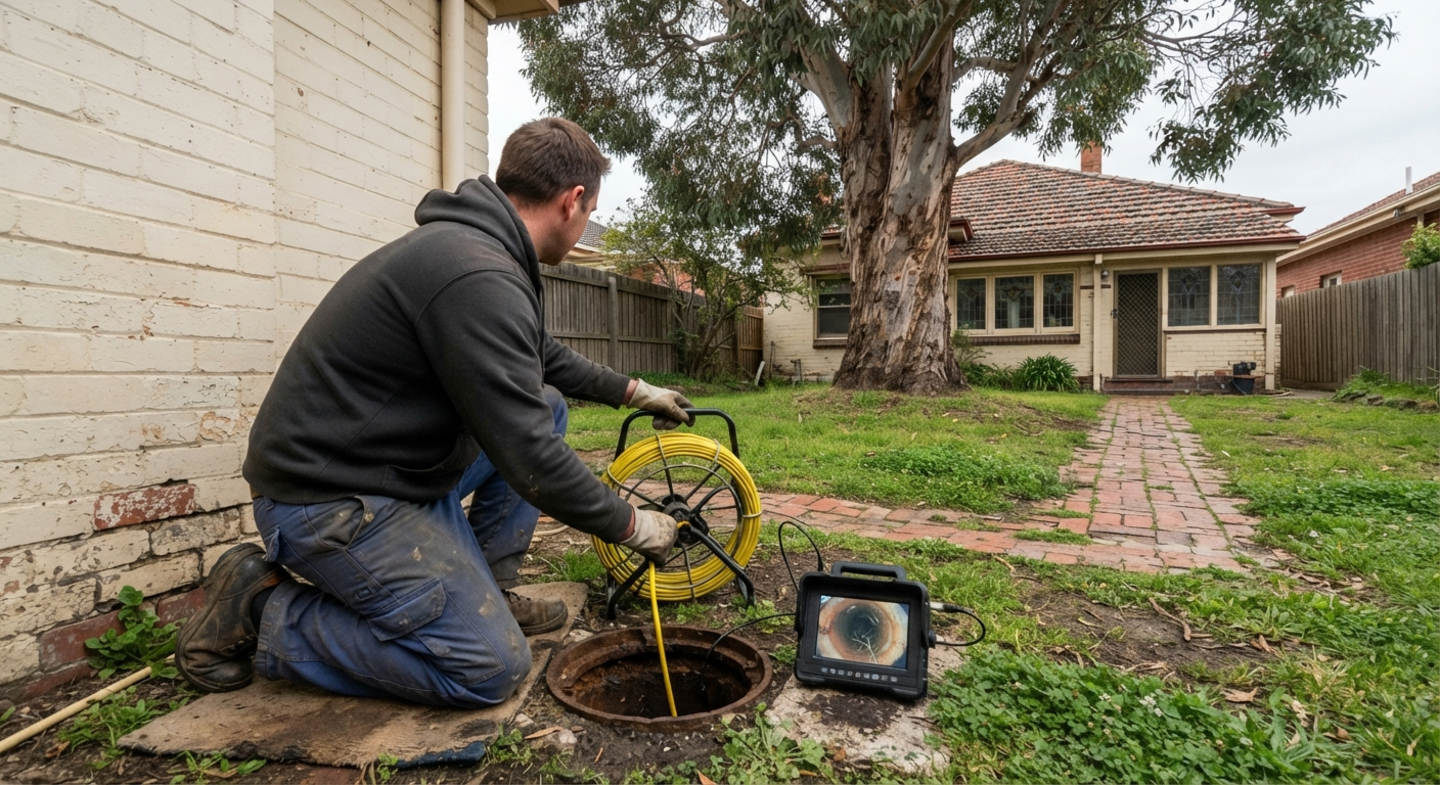
A CCTV drain inspection is the only real way to see inside an underground pipe without digging. A plumber feeds a waterproof camera on a flexible cable through an inspection opening. They record the run from the house to the street connection, and the footage picks up roots, cracks, offset joints and sagging sections where water sits instead of draining away.
Ask for the footage, not just a verbal rundown. It stays useful later, whether you buy or not.
Access is the awkward part. The agent has to arrange it with the vendor, and some vendors get a bit twitchy about a plumber poking around before auction. Ask anyway. A refusal tells you something too.
At the open for inspection, you can check a few things yourself:
- Big trees within a few metres of where the sewer probably runs. Elms, liquidambars and large gums are common offenders in the older streets.
- The overflow relief gully. This is the grated outlet outside that lets a blocked sewer spill into the yard rather than up through the shower. Check it hasn’t vanished under a garden bed or new paving.
- A toilet that gurgles when the basin drains.
- One strip of lawn that’s noticeably greener than the rest. A leaking sewer line underneath can cause it.
Water pipes, hot water and gas
Plumbers working on houses before about the 1970s often used galvanised steel water pipe. Plenty of older homes still have some of it left in the walls or under the floor, corroding quietly from the inside. During the inspection, run the kitchen tap and the shower at the same time. A drop in pressure you can see is a decent hint the old pipework is still in service. So is a brownish tinge when a tap first opens.
Then find the hot water system and read the date on its compliance plate. Storage units commonly start giving trouble somewhere past the ten-year mark. A tank installed in 2012 is something to factor into an offer, not a deal-breaker. Honestly? It’s the easiest check on this list and the one people forget.
Gas is quicker still. Ask whether the gas heater has service records. An old unit nobody has touched in years is worth a professional look before winter, not after.
Turning a camera report into a negotiating point
A report showing root intrusion or a cracked line gives you a real repair figure to take into price negotiations. Or a clean reason to walk. In most cases, the pipes between the house and the water corporation’s connection point are the owner’s to fix, so the cost lands on whoever holds the title.
It’s also worth requesting a property sewerage plan from the local water corporation. The plan shows where the sewer runs on the block, and every so often that turns out to be straight under the extension someone added in the 1990s.
Get gorgeous projects via email
