

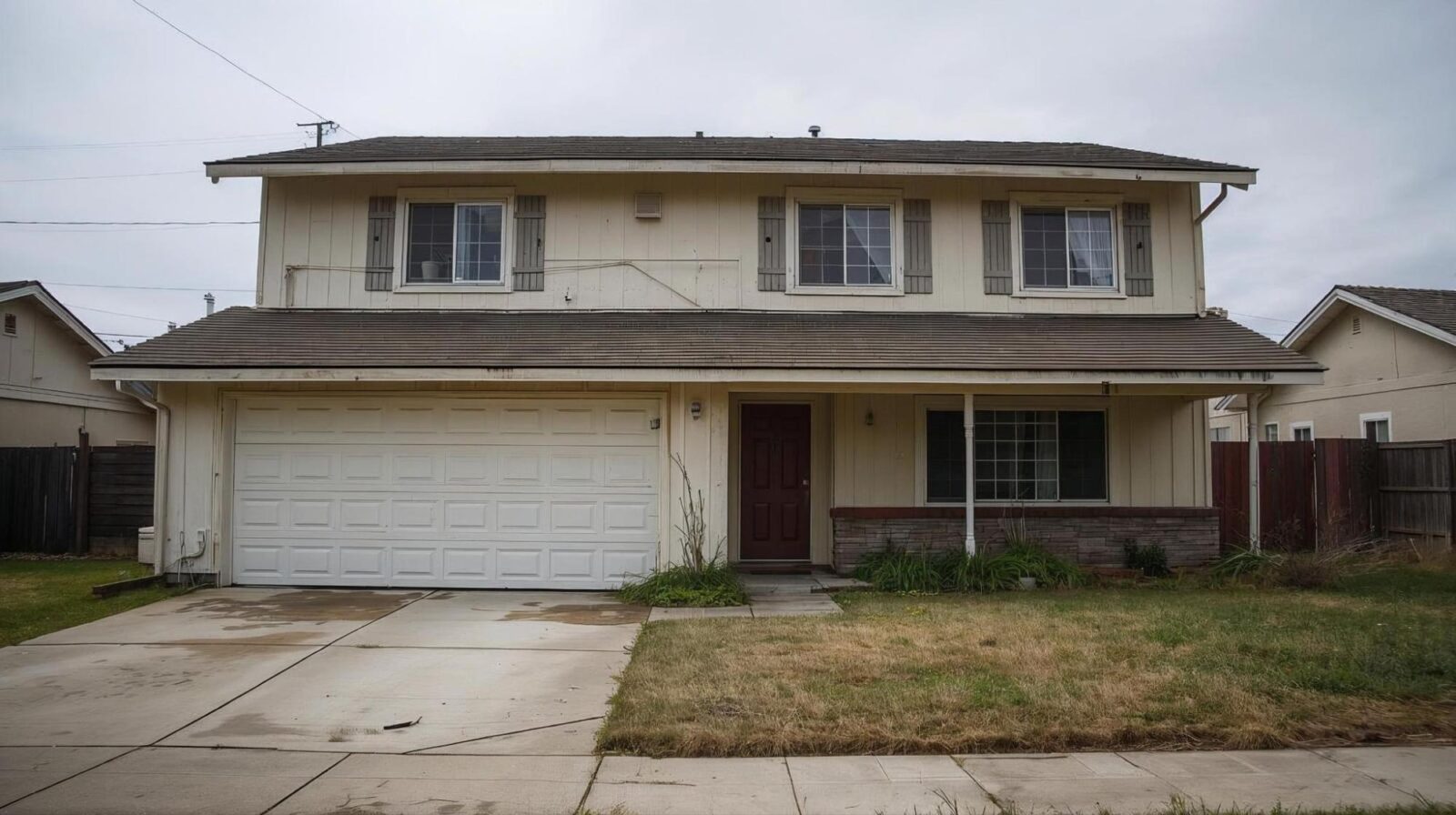
When older adults begin to need assisted living, memory care, or care from family members who don’t live nearby, the long-time family home often becomes the financial centerpiece of the conversation. What was once the backdrop for decades of holidays, graduations, and quiet routines suddenly turns into the primary source of financial support. In most of America, home values have appreciated substantially in recent years – but so have the costs of care, which are equally daunting.
When the time comes that the long-time home must be sold, families in this position are frequently presented with a false choice. They believe they must either pour significant money into renovating an older, dated home before listing it, or accept a quick cash offer from an investor promising speed, simplicity, and a “fair deal.” But according to noted Silicon Valley real estate expert and Seasoned Living Strategist Sebastian “Seb” Frey, both of those options typically badly erode the hard-earned equity that families count on for quality long-term care.
Frey, whose work focuses heavily on helping older adults and their families navigate complex housing transitions, argues that there is a third path. Rather than remodeling extensively or selling at a steep discount, he advises a strategically structured as-is sale on the open market. When executed properly, he maintains, this approach can preserve substantially more of a family’s wealth while still delivering a predictable and timely outcome.
His perspective is informed by years of guiding families through emotionally charged sales. Frey has built a successful and decades-long practice around advising older homeowners and their adult children during pivotal life transitions. That specialization shapes his view that selling the family home is not merely a transaction, but a financial and personal inflection point.
The urgency that surrounds long-term care decisions is real. Assisted living and memory care facilities often require prompt and substantial financial commitments, and in-home care can cost thousands of dollars per month. Frey notes that in these circumstances, families are understandably drawn to any option that promises to “just get it done.”
Investor buyers understand this dynamic. Postcards and online ads offering to purchase homes “in any condition” for cash create the impression of relief. However, Frey cautions that these transactions are structured to maximize the investor’s profit margin, not the seller’s net proceeds.
In his advisory work, Frey repeatedly emphasizes that professional cash buyers calculate offers well below open-market value. Their business model depends on acquiring property at a discount, performing selective updates, and reselling at a higher price. The spread between what they pay and what the home ultimately sells for represents their return.
“In strong markets like Silicon Valley, that spread can be enormous,” Frey has explained to clients. He points out that families sometimes assume a dated or worn home has little appeal to conventional buyers, when in fact the opposite may be true. Location, lot size, floor plan and square footage – the true value found in any property – always matter more than cosmetic finishes.
At the same time, Frey does not dismiss the anxiety families feel when comparing their loved one’s home to polished online listings. Modern kitchens, staged interiors, and freshly landscaped yards create an implicit standard. Many families conclude that without substantial renovation, their home will struggle to compete, and they will lose time, and money, as their home languishes on the market.
Frey’s advice consistently pushes back on that assumption. He argues that large pre-sale remodels rarely return their full cost, particularly when undertaken quickly and under stress. Construction timelines are unpredictable, contractor availability can be tight, and costs can escalate once work begins.
He also notes that renovation decisions are inherently subjective. Even high-quality updates reflect a particular aesthetic. Buyers with the financial capacity to purchase a single-family home these days, particularly in expensive metro areas found in coastal areas nationwide, frequently intend to customize a property to their own preferences. This means a seller’s newly installed finishes may be viewed as temporary rather than permanent value, which they intend to change down the road to suit their own needs and taste.
Rather than focusing on cosmetic perfection, Frey centers his strategy on a different principle: reducing buyer doubt. In his view, uncertainty is the most expensive element in residential real estate. When buyers perceive risk—whether about deferred maintenance, hidden issues, or unclear history—they protect themselves by moving on to another property, lowering offers or demanding concessions.
According to Frey, major renovations do not automatically eliminate that doubt. In some cases, they introduce new questions about permits, workmanship, or whether updates were done for durability or simply to facilitate a sale. He encourages families to think carefully about where their dollars will actually change buyer behavior.
The as-is strategy Frey advocates is not a shortcut. He is careful to clarify that selling as-is does not mean presenting a neglected or chaotic property. Instead, it means being selective and intentional about preparation.
In practice, Frey advises addressing the elements that universally discourage buyers. That can include clearing excessive clutter so rooms feel functional, correcting obvious safety issues, handling minor but highly visible maintenance problems, and ensuring the home is clean and accessible. These targeted efforts often produce meaningful returns without the financial risk of full-scale remodeling.
Transparency also plays a central role in Frey’s approach. He recommends organizing records of past repairs and improvements, disclosing known issues clearly, and in many cases conducting pre-sale inspections. By surfacing potential concerns early, families can reduce the likelihood of disruptive renegotiations during escrow.
Frey often explains that surprises during a transaction erode leverage. When buyers discover previously unknown problems late in the process, they frequently respond with price reduction requests or credit demands. Proactive disclosure, by contrast, fosters confidence and smoother negotiations.
Pricing strategy is another area where Frey’s guidance diverges from common assumptions. He does not equate as-is with selling for less at closing. Instead, he stresses the importance of positioning the property in a way that attracts serious attention without deterring buyers through overpricing.
In any competitive real estate environment, overpricing can limit showings and extend time on market. Frey cautions that once a property lingers, it can lose momentum and negotiating power. Buyers begin to assume something is wrong, and subsequent price reductions often signal vulnerability.
By contrast, a well-calibrated launch can create simultaneous interest from multiple buyers. Frey underscores that competition changes the entire tone of a transaction. When buyers know others are evaluating the same opportunity, they are more likely to present strong offers and favorable terms.
This competitive dynamic is absent in most direct investor transactions. When a seller negotiates with a single buyer, there is no upward pressure on price. Frey regularly reminds families that the open market is not merely a listing venue; it is a mechanism for discovering what buyers are truly willing to pay.
He also highlights that many buyers actively seek homes in original condition. Some want the opportunity to design renovations to their own specifications. Others prioritize location, school districts, or lot characteristics over interior finishes. By exposing the property broadly, families allow these buyers to participate.
For families funding long-term care, the financial implications are significant. Preserving additional equity can extend the duration and quality of services available to an older adult. Frey frequently frames the sale of a long-time family home as an act of stewardship, not simply a liquidation.
In his advisory conversations, he encourages adult children to view the property as the result of decades of mortgage payments, maintenance, and personal investment. Treating it casually or rushing into a steep discount can mean forfeiting resources that could otherwise enhance a parent’s comfort and dignity.
Frey acknowledges that in certain highly distressed situations, speed may outweigh other considerations. However, he consistently advises families to understand the trade-offs before committing to an investor offer. Condition alone, he argues, does not disqualify a property from achieving a strong open-market result.
Ultimately, the guidance Sebastian “Seb” Frey provides is grounded in preparation, transparency, and strategic positioning. By eliminating obvious barriers, clarifying the home’s condition, and leveraging competitive market forces, families can often achieve higher net proceeds without enduring the uncertainty of major renovations.
For older adults and their children navigating one of life’s more complex transitions, that difference can be transformative. In any region where both home values and care costs are substantial, preserving equity is not simply about maximizing price. As Frey’s work in Silicon Valley demonstrates, it is about extending options, maintaining stability, and ensuring that the next chapter begins on the strongest possible financial footing.
Get gorgeous projects via email
