

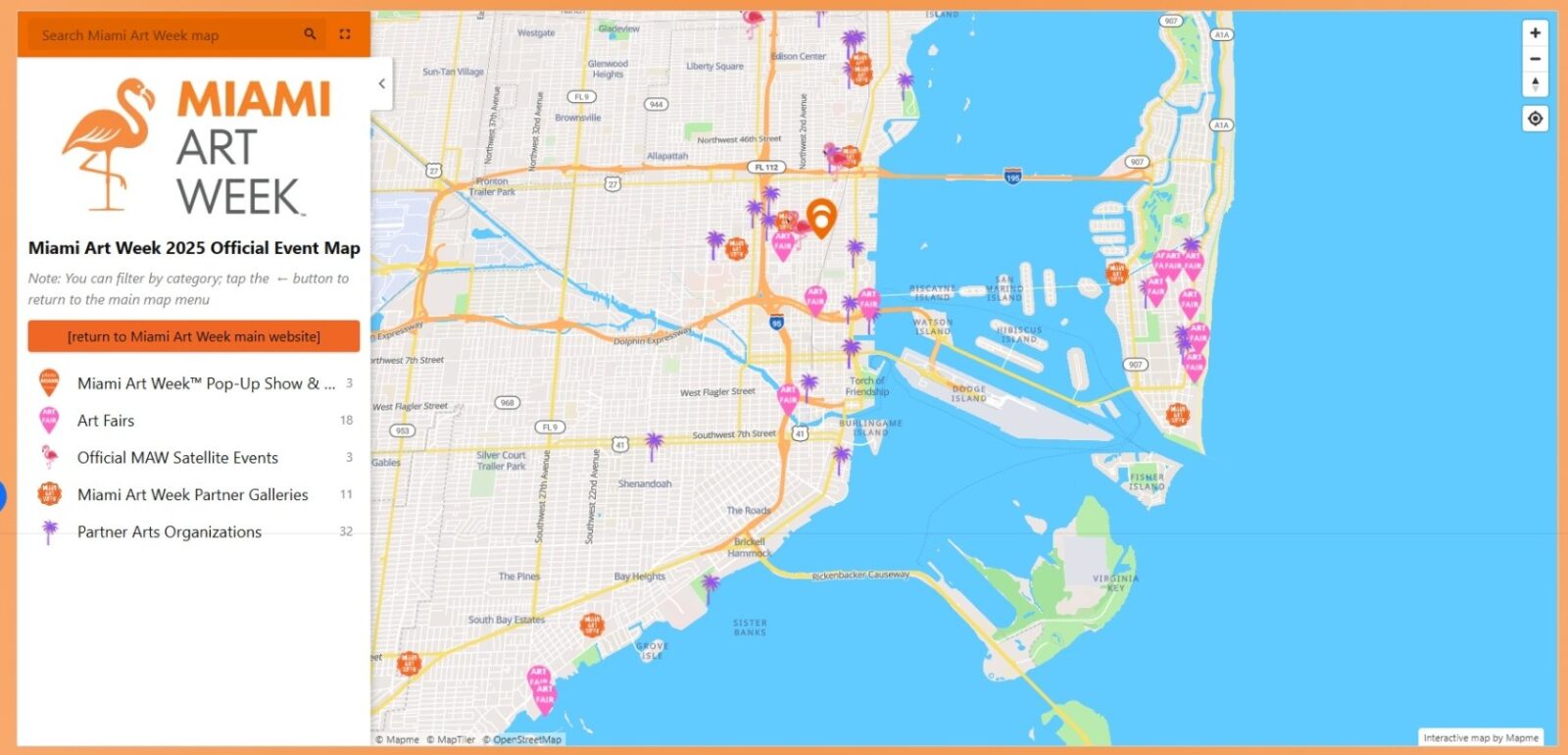
Every December, Miami transforms into the epicenter of the global art world. For one transformative week, the city’s neighborhoods—from the glittering beaches of Miami Beach to the vibrant streets of Wynwood—become a living gallery where emerging and established artists share the spotlight with collectors, curators, and cultural leaders from around the globe. Miami Art Week 2025 promises to be no exception, offering an unprecedented convergence of over 20 major art fairs, 1,200+ galleries, and thousands of artists competing for attention in what has become the art experience of a lifetime.
Event Summary
- Event Name: Miami Art Week 2025
- Date: Monday, December 1 – Sunday, December 7, 2025
- Location: Miami, Miami Beach, Wynwood, and Coral Gables, Florida
- Official Website: Miami Art Week
- Social Media: Instagram (@miamiartweek)
- Contact: [email protected]
Understanding Miami Art Week’s Cultural Significance
As an architectural and cultural writer, I’ve witnessed firsthand how cities evolve through their relationship with the arts. Miami Art Week represents something increasingly rare in contemporary culture: a genuinely democratic approach to global art exposure. Unlike some international art fairs that prioritize exclusivity, Miami Art Week’s mission—as stated by its Board of Directors—is to “create meaningful pathways and opportunities for emerging and established artists, nonprofit arts organizations and galleries alike to be seen, discovered, and celebrated on an international stage.”
This philosophy fundamentally shapes the week’s architecture, both physical and organizational. The event doesn’t exist in isolation at a single convention center. Instead, it activates multiple neighborhoods and venues simultaneously, creating what I call a “distributed cultural ecosystem.” This approach acknowledges a crucial reality: the future of art fairs lies not in gatekeeping, but in expanding access.
The Major Fairs: Where Prestige Meets Innovation
Art Basel Miami Beach: The Anchor Event
Art Basel Miami Beach remains the gravitational center of the week, operating December 3–7 at the Miami Beach Convention Center. The fair’s structure reveals sophisticated curatorial thinking:
- Private Days (December 3–4): Invitation-only access for collectors and VIPs, establishing exclusivity and creating market momentum
- Public Days (December 5–7): 11 AM–6 PM, democratizing access for the general public and emerging collectors
This tiered approach isn’t merely about access control—it’s a carefully calibrated marketing strategy that builds anticipation while ensuring serious collectors have dedicated time for acquisitions.
Design Miami and Art Miami: Complementary Experiences
Design Miami (December 2–7, Convention Center Drive & 19th Street) and Art Miami (December 2–7, One Herald Plaza) represent the week’s expansion beyond traditional painting and sculpture. Design Miami’s preview day (December 2, invitation-only) followed by public hours (December 3–7) creates a distinct curatorial space for design-forward thinking—a recognition that contemporary art increasingly blurs boundaries between fine art, functional design, and architectural objects.
This diversification reflects a broader cultural shift I’ve observed: collectors and institutions now view design and architecture as essential components of contemporary artistic discourse, not secondary disciplines.
The Satellite Fair Ecosystem: Where Innovation Thrives
While major fairs command attention, the satellite shows reveal Miami Art Week’s true revolutionary potential. These specialized venues demonstrate how the week functions as an ecosystem rather than a single event.
Arte NXT and photoMIAMI: Wynwood’s Emerging Voice
Located at 2300 N. Miami Avenue in Wynwood, Arte NXT Pop-Up Show and photoMIAMI represent a deliberate investment in emerging artists and specialized mediums. The programming structure is particularly thoughtful:
- Preview Nights (December 2–4, 5–9 PM): Extended evening hours designed for industry professionals and serious collectors
- Public Hours (December 6–7, 12–8 PM): Weekend accessibility for casual visitors and community engagement
photoMIAMI deserves special mention as the only dedicated photography-focused fair during Miami Art Week. This specialization acknowledges photography’s evolution from documentary medium to fine art category commanding significant market attention and institutional validation.
Additional Satellite Shows Creating Specialized Conversations
The week’s diversity extends to numerous other venues and fairs:
- AfriKin Art Fair (Maison AfriKin, North Miami, December 1–7): Dedicated to African and African diaspora artists, with VIP opening November 30
- Aqua Art Miami (Aqua Hotel, Miami Beach, December 3–7): Intimate setting for curated contemporary work
- Red Dot Miami & Spectrum Miami (Mana Wynwood, December 3–7): Cutting-edge contemporary art in the heart of Miami’s creative district
- Scope Miami Beach (801 Ocean Drive, December 2–7): Established fair with platinum preview access December 2
- UNTITLED Art, Miami Beach (Ocean Drive & 12th Street, December 3–7): Boutique fair with VIP preview December 2
- NADA Miami (December 2–6): Nonprofit organization dedicated to emerging contemporary art
- Pinta Miami (December 4–7): Latin American contemporary art focus
- Satellite Art Fair (December 4–7): Independent artist and gallery platform
This multiplication of specialized fairs serves a critical function: it prevents market consolidation around a single aesthetic or demographic. Emerging artists, photographers, African diaspora artists, and Latin American practitioners all have dedicated platforms rather than competing for scraps in a monolithic marketplace.
The Kickoff: Architecture of Anticipation
The week begins with the Kickoff Party & VIP Vernissage on December 1, 2025, 6:30–10:00 PM at The Biltmore Hotel in Coral Gables. The venue choice itself is architecturally significant—The Biltmore, designed by Schultze & Weaver and completed in 1926, represents Miami’s aspirational architectural heritage. Holding the opening reception in this landmark creates a symbolic connection between historical cultural achievement and contemporary artistic innovation.
Exhibitor Opportunities: Democratizing Access to Global Platforms
What genuinely distinguishes Miami Art Week from many international art fairs is its structured commitment to accessibility for emerging artists and smaller galleries. The organization offers multiple pathways to participation:
In-Person Exhibition Opportunities
Exhibitors at Arte NXT Wynwood Pop-Up Show and photoMIAMI receive comprehensive benefits:
- Professional exhibition space curated and installed by Lelia Mordoch Gallery (Miami & Paris)
- Invitation to the Miami Art Week Kickoff Party at The Biltmore Hotel
- Invitations to Wynwood Opening Reception & Artist Party (December 5)
- Dedicated exhibitor page with images on the official Miami Art Week website and Digital Magazine
- Promotion across official channels: website, email, social media, and marketing collateral
- Complimentary guest passes for collectors, family, and VIPs
- Inclusion on permanent maps and guides for Miami-Dade, Broward, and Palm Beach exhibitors
The application fee of $29 (in addition to exhibitor fees) represents intentionally low barriers to entry—a philosophical commitment to accessibility that contrasts sharply with major international art fairs where booth fees can exceed $10,000.
Digital Platform Opportunities
Recognizing that not all artists can travel to Miami, Miami Art Week offers robust digital participation options:
- Dedicated exhibitor pages with comprehensive content (artist statement, contact information, website, social media links, artwork documentation)
- Listing in the Miami Art Week Digital Magazine with international distribution
- Promotion via official website, email, social media, and digital media partnerships
- Invitations to Wynwood Opening Reception & Artist Party (enabling some in-person participation)
- Complimentary guest passes for Arte NXT & photoMIAMI shows
This hybrid model—combining physical and digital platforms—reflects sophisticated understanding of contemporary art market realities. International artists, galleries in underserved regions, and emerging practitioners without travel budgets gain genuine exposure to collectors and institutions without requiring physical presence.
The Digital Platform: Innovation Since 2017
Miami Art Week’s multimedia platform represents one of the week’s most underappreciated innovations. Since 2017, the organization has built digital infrastructure enabling artists, galleries, and cultural organizations to collaborate and exhibit with minimal financial barriers.
This platform serves multiple critical functions:
- Direct Connection Facilitation: Artists and galleries connect directly with each other and with collectors before VIP previews even open
- International Distribution: Artwork reaches global collectors and patrons through dedicated digital channels
- Permanent Record: Unlike physical fairs that exist for a week, digital presence creates lasting visibility
- Data and Analytics: Artists and galleries gain insights into collector interest, geographic reach, and market trends
From a cultural economics perspective, this digital infrastructure represents genuine democratization—the kind that actually works because it’s built on technological reality rather than wishful thinking.
Specialized Programming: Art Coral Gables and Beyond
Art Coral Gables represents an innovative approach to city-wide engagement, inspired by the Venice Biennale and Les Rencontres d’Arles. Rather than concentrating art in a single venue, this programming activates Coral Gables’ neighborhoods and cultural institutions, creating what amounts to an extended urban gallery experience.
This distributed model acknowledges an architectural and urbanistic principle I’ve observed across revitalized cultural districts: art fairs that activate multiple neighborhoods create more sustainable economic and cultural impact than those confined to single venues.
The Strategic Vision: South Florida as Global Cultural Hub
Miami Art Week’s expansion strategy reveals ambitious thinking about South Florida’s cultural future. The organization is actively building stronger connections with arts and cultural organizations in Broward and Palm Beach counties, positioning the entire tri-county region as an integrated cultural ecosystem rather than Miami-centric.
This regional approach acknowledges demographic and economic realities: the greater Miami metropolitan area encompasses nearly 6 million people across multiple counties. Art infrastructure that serves only Miami proper underutilizes regional cultural assets and talent.
What Makes Miami Art Week Distinctive
Having covered numerous international art fairs—from Art Basel in Basel to Frieze in London—I’ve developed criteria for evaluating what makes an art fair genuinely significant beyond market metrics. Miami Art Week excels across several dimensions:
Authentic Commitment to Emerging Artists
Many fairs claim to support emerging artists while maintaining prohibitive booth fees and gatekeeping structures. Miami Art Week’s $29 application fee, digital platform accessibility, and dedicated emerging artist programming represent genuine commitment rather than marketing rhetoric.
Hybrid Innovation
The integration of digital and physical platforms isn’t an afterthought or pandemic-era adaptation—it’s fundamental to the organization’s identity. This hybrid approach acknowledges that contemporary art exists simultaneously in physical and digital spaces, and artificial separation between these domains serves no one.
Geographic Diversity
By activating multiple neighborhoods and expanding beyond Miami proper, the week creates opportunities for artists and galleries throughout the region. This distributed model also strengthens local economies beyond the Miami Beach hotel corridor.
Curatorial Sophistication
The proliferation of specialized fairs—photoMIAMI for photography, AfriKin for African diaspora artists, Pinta for Latin American work—demonstrates understanding that contemporary art thrives through specialized curatorial voices, not monolithic programming.
Practical Information for Collectors and Visitors
Planning Your Miami Art Week Experience
For first-time visitors, the sheer scale of Miami Art Week can feel overwhelming. Strategic planning enhances the experience:
- Start with Your Interests: Identify which fairs align with your collecting interests or artistic passions. photoMIAMI for photography, AfriKin for African diaspora work, Design Miami for contemporary design
- Prioritize Preview Days: If you have access to VIP previews, use them strategically. Major collectors often complete significant acquisitions during preview days
- Explore Satellite Fairs: While Art Basel commands attention, satellite fairs often feature more experimental and affordable work—ideal for emerging collectors
- Engage with the Digital Platform: Visit the official Miami Art Week website before arriving. Research exhibitors, read artist statements, and identify must-see galleries
- Plan Neighborhood Routes: Group visits by geography—Wynwood for emerging contemporary work, Miami Beach for established galleries, Coral Gables for institutional programming
For Artists and Galleries
If you’re considering participation, contact [email protected] with specific questions about your artistic practice or gallery focus. The organization’s commitment to accessibility means staff genuinely engage with exhibitor inquiries rather than treating them as transactional.
The Broader Cultural Moment
Miami Art Week exists within a fascinating moment in global art history. Traditional art market structures—dominated by a handful of mega-galleries and auction houses—are being challenged by democratized platforms, digital innovation, and geographic diversification. Miami Art Week doesn’t just respond to these shifts; it actively shapes them.
The week demonstrates that international art relevance doesn’t require centuries of institutional history (though Miami’s architectural heritage certainly helps). Instead, it requires genuine commitment to artist support, curatorial innovation, and accessibility—values that resonate across geographic, generational, and economic boundaries.
For collectors seeking emerging talent, for artists pursuing international exposure, and for cultural leaders interested in how contemporary art markets are evolving, Miami Art Week 2025 offers an unparalleled opportunity to engage with these transformations in real time.
Looking Forward: The Evolution of Art Fair Culture
As we approach December 2025, Miami Art Week represents more than a commercial event or seasonal cultural tourism. It embodies a particular vision of how art can function in society: as a democratizing force, as a catalyst for regional economic development, and as a platform where emerging voices receive genuine opportunity for international recognition.
Whether you’re a serious collector, an emerging artist, a cultural institution, or simply someone passionate about contemporary art, Miami Art Week offers multiple entry points for meaningful engagement. The week’s architecture—both physical and organizational—creates space for everyone from first-time gallery visitors to established collectors making million-dollar acquisitions.
That inclusive vision, more than any single fair or prestigious exhibitor, is what makes Miami Art Week genuinely distinctive in the international art calendar.
Frequently Asked Questions
What is the difference between Art Basel Miami Beach and other Miami Art Week fairs?
Art Basel Miami Beach is the largest and most prestigious fair during the week, operating at the Miami Beach Convention Center with 2,000+ galleries from around the world. However, Miami Art Week encompasses 20+ fairs with different focuses—Art Miami emphasizes contemporary work, Design Miami specializes in design objects, photoMIAMI focuses exclusively on photography, and AfriKin highlights African diaspora artists. Each fair serves distinct curatorial missions and collector interests. Art Basel remains the market anchor, but the satellite fairs often feature more experimental, affordable, and specialized work.
Do I need an invitation to attend Miami Art Week events?
Most major fairs have both invitation-only preview days and public hours. Art Basel’s private days (December 3–4) are invitation-only, but public days (December 5–7) are open to anyone. Similarly, most satellite fairs offer VIP previews followed by public access. The official Miami Art Week website provides specific hours for each venue. Many fairs offer free or low-cost general admission during public hours, though some charge entrance fees ($15–$30 typically).
Can emerging artists exhibit at Miami Art Week without major gallery representation?
Yes—this is one of Miami Art Week’s defining features. Artists can exhibit through Arte NXT and photoMIAMI pop-up shows with $29 application fees plus exhibition costs. Additionally, the digital platform allows international artists without travel budgets to participate fully, reaching collectors and institutions globally. The organization explicitly prioritizes emerging artist access through multiple pathways, making it significantly more accessible than many international art fairs.
What neighborhoods should I visit during Miami Art Week?
Plan to visit Miami Beach (Art Basel, Design Miami, Scope, UNTITLED), Wynwood (Arte NXT, photoMIAMI, Red Dot, Spectrum), Coral Gables (Art Coral Gables programming, The Biltmore kickoff), and North Miami (AfriKin Art Fair). Each neighborhood offers distinct aesthetic and curatorial approaches. Wynwood emphasizes emerging contemporary work, Miami Beach features established galleries and design, and Coral Gables offers institutional programming.
How does the digital platform work, and can I participate if I can’t travel to Miami?
The digital platform allows artists and galleries to create dedicated exhibitor pages with artwork images, artist statements, contact information, and social media links. This content reaches international collectors and institutions through the Miami Art Week website, digital magazine, and promotional channels. International exhibitors receive the same promotional support as in-person participants and can attend select events remotely. This hybrid approach makes Miami Art Week genuinely accessible to global practitioners regardless of travel feasibility or budget constraints.
Get gorgeous projects via email
