

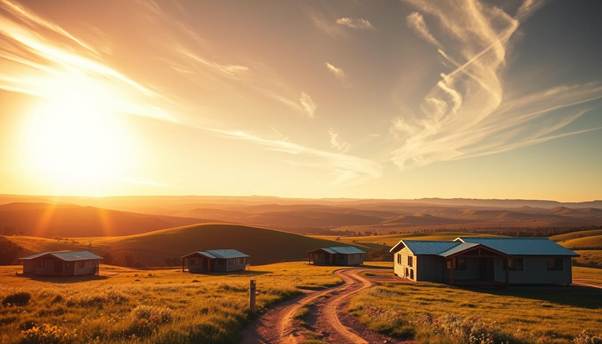
The Australian dream is changing. We used to dream of big homes with traditional brick walls. Now, farmhouse modular homes are winning hearts in the countryside. These homes are more than just places to live; they mix old charm with new design.
Picture moving to a country-inspired modular cottage that’s both old and new. These homes are not just buildings. They’re spaces that show what Australian families want: a connection to nature and simplicity.
Rural Australians are finding that modular farmhouses are very flexible. They’re a smart choice compared to building from scratch. They mix creativity with practical living, fitting perfectly to each property’s needs.
Key Takeaways
- Farmhouse modular homes revolutionise rural housing design
- Offers seamless blend of traditional aesthetics and modern functionality
- Provides cost-effective and sustainable living solutions
- Faster construction compared to traditional building methods
- Customisable to suit individual lifestyle and landscape requirements
The Rise of Farmhouse Modular Homes in Rural Australia
The Australian countryside is seeing a big change in how homes are built. Prefabricated country homes are making rural living better. These homes mix modern comfort with old-world charm.
Rural Australians are now choosing homes that are both new and true to their roots. These homes meet the needs of today’s rural communities in a unique way.
Traditional Architecture Meets Modern Design
Farmhouse design has evolved, combining old and new. Key features include:
- Open-plan living spaces
- Sustainable building materials
- Enhanced energy efficiency
- Flexible interior configurations
Market Trends Driving Change
Market research shows a big increase in demand for prefabricated homes. These homes are popular because they:
- Are built faster
- Cost less to build
- Can be customised
- Are better for the environment
The Future of Rural Housing
Rustic manufactured farmhouses are more than a trend. They represent a new way of living in the countryside that blends tradition with modern design.
The modern farmhouse is not just a home, it’s a lifestyle choice that reflects the evolving needs of Australian rural communities.
Cost-Effective Benefits of Prefabricated Country Residences
Buying prefabricated country homes is a smart move for Australian homeowners. These homes are a great choice for those wanting to own a rural property. They save money and add value compared to building from scratch.
The benefits of these homes are clear when looking at costs:
- Reduced labour expenses
- Shorter construction timelines
- Minimised material waste
- Lower overall project costs
Let’s compare traditional farmhouses with these modular homes. The savings are huge:
| Construction Type | Average Build Cost | Construction Time |
| Traditional Farmhouse | $450,000 | 9-12 months |
| Prefabricated Country Residences | $320,000 | 3-4 months |
Prefabricated homes can save you up to 30% on total construction expenses. The manufacturing process avoids many unexpected costs found in traditional building.
“Modular homes represent the future of affordable rural living in Australia” – Australian Housing Industry Association
For those on a budget dreaming of country living, these homes are a great option. They offer quality and design flexibility without breaking the bank.
Sustainable Features of Modern Rural Prefab Housing
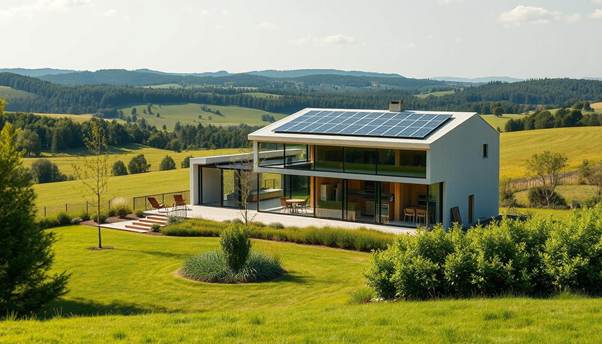
Rural prefab housing has changed how we live sustainably in the Australian countryside. Designers now focus on eco-friendly solutions. These solutions reduce environmental harm and improve home efficiency.
 Pin
PinModern prefab homes in the countryside use the latest sustainable technologies. These designs change how Australians live in the country. They create homes that are good for the environment and use the latest technology.
Energy-Efficient Design Elements
The heart of sustainable kit homes is their energy-saving design. Key features include:
- Passive solar orientation to control temperature naturally
- High-performance insulation to cut down energy use
- Smart home tech for better energy control
- Solar panels for clean electricity
Eco-Friendly Materials and Construction
Sustainable prefab homes focus on green materials. They use:
- Recycled steel and timber
- Materials made locally
- Low-emission building parts
- Insulation from renewable resources
Water Conservation Systems
Managing water is key in rural Australia. Kit homes have advanced water-saving tech:
- Rainwater harvesting systems
- Greywater recycling
- Drought-resistant landscaping
- Water-saving fixtures and appliances
These green solutions not only help the environment but also save money in the long run. Rural prefab housing is a smart choice for modern Australian homes.
Customisation Options for Countryside Kit Homes
 Pin
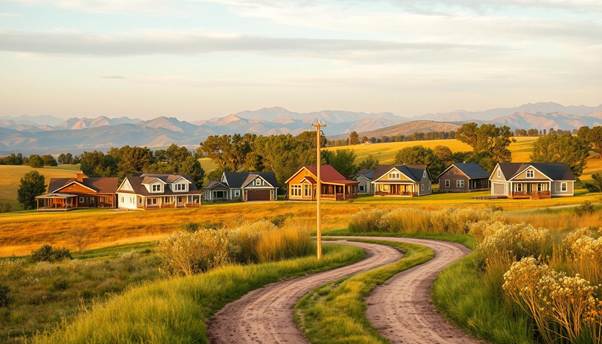
PinCountryside kit homes open up a world of personalisation for Australian homeowners. They are perfect for those looking to create a unique rural retreat. These homes, with their barn-style design, offer great flexibility in both design and function.
Homeowners can choose from many customisation options. This includes:
- Exterior facade selections
- Interior layout modifications
- Roof style variations
- Window and door configuration
- Material and colour choices
Barn-style relocatable dwellings stand out because of their adaptability. You can pick from traditional timber to modern metal cladding. This way, your home reflects your personal taste.
“Your rural home should tell your story, not someone else’s,” says rural design expert Rachel Thompson.
Customisation isn’t just about looks. You can also make your home fit your environment. Choose insulation, solar options, and water management systems that suit your location and lifestyle.
These modular designs are great because they mix personal style with practical needs. Whether you want a weekend getaway or a family home, countryside kit homes are a blank canvas for your dreams.
Time-Saving Construction and Installation Process
Barn-style relocatable dwellings have changed how Australians build homes in rural areas. They use a modular approach, making construction faster and more efficient than old methods.
The process of installing these homes is quick and simple. It cuts down on construction time and makes things easier.
Site Preparation Requirements
Getting a site ready for barn-style homes involves a few key steps:
- Land leveling and foundation preparation
- Utility connection planning
- Soil assessment and ground stabilisation
- Access road and delivery route clearance
Assembly and Finishing Timeline
Pastoral modular homes are built fast:
| Construction Stage | Estimated Time |
| Site Preparation | 1-2 weeks |
| Module Transportation | 1-3 days |
| On-Site Assembly | 3-5 days |
| Finishing Touches | 1-2 weeks |
Local Council Approvals
Getting approvals from local councils is easier with prefabricated homes. Standardised designs make the process simpler, cutting down on paperwork and delays.
“Modular homes represent the future of efficient, sustainable rural housing in Australia.” – Australian Housing Industry Association
Homeowners usually find the approval process smoother than with traditional building. Many councils now support these modern barn-style homes.
Conclusion
Farmhouse modular homes are changing the way we live in the countryside in Australia. They mix old charm with new tech. This means you can enjoy country life without giving up on comfort or style.
Modular homes have changed how we see country homes. They’re cheaper to build and go up fast. You can make them your own, so they really show off who you are.
Rural prefab homes are a smart choice for many families. They’re good for the planet and let you live in the country easily. This makes country living more possible and fun than ever.
Now, people can dream up their perfect country home. These homes are designed with the future in mind. They’re green, flexible, and set to change the face of country living in Australia.
FAQ
What exactly is a modular farmhouse?
A modular farmhouse is a prefabricated home that looks like a classic rural home but is built with modern methods. It’s made in sections off-site and then put together quickly on your land. This mix of old and new makes it efficient and charming.
How much do farmhouse modular homes cost compared to traditional builds?
Modular farmhouses are 10-20% cheaper than building one from scratch. They save on labour, build faster, and use less materials. Prices vary from $150,000 to $350,000, depending on size and design.
Can I customise my modular farmhouse design?
Yes, you can! Modular homes offer a lot of customisation options. You can change layouts, pick finishes, and choose styles. Whether you like barn-style or something modern, you can make it yours.
How long does it take to construct a modular farmhouse?
Building a modular farmhouse is quick. It takes 3-4 months, compared to 6-12 months for traditional homes. This is because the parts are made off-site while the site is prepared.
Are modular farmhouses environmentally friendly?
Yes, they are. Modular homes are built to save energy and use eco-friendly materials. They often have smart features and use less waste than traditional homes.
Do modular homes meet local building regulations?
Yes, they do. Modular homes follow the same building codes as traditional homes. This makes getting approval easier because they’re built to standard.
Can these homes withstand Australian rural conditions?
Yes, they can. Modular farmhouses are built to handle Australia’s harsh weather. They’re designed with local conditions in mind, using materials and techniques that ensure they last.
What maintenance is required for a modular farmhouse?
Modular homes need regular care, but less than traditional homes. They’re built to last, so just do annual checks, clean regularly, and fix small issues quickly. This keeps them in great shape.
Get gorgeous projects via email
