

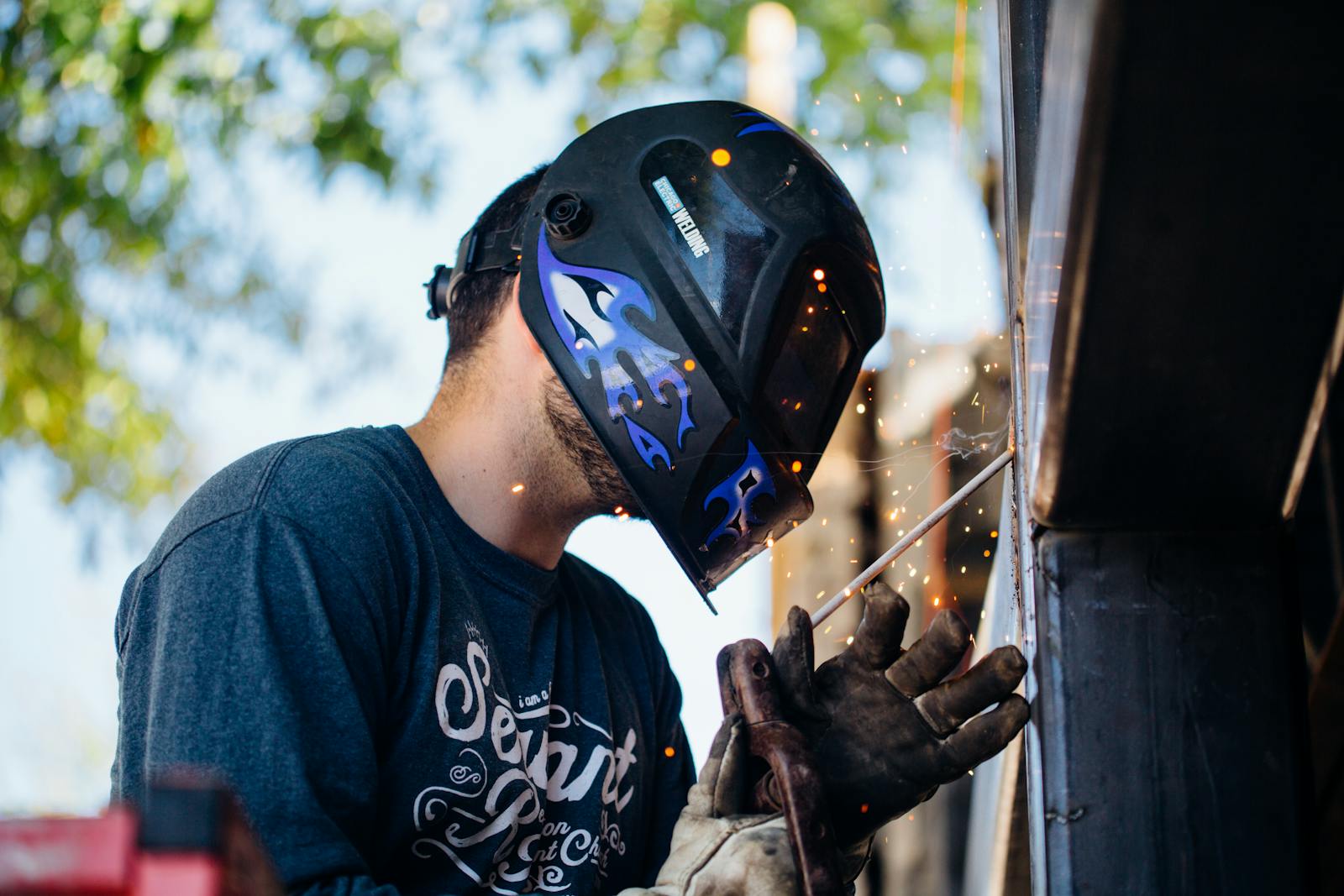
Those who work in construction or other types of metalworking know that personal protection is important. A respirator protects you from harmful fumes and ozone and from the fine particulates shed during the construction process.
With so many chemicals present in modern metals, workers must have proper equipment, such as a welding helmet with respirator, to protect themselves from fine particles or contaminants in the air.
Welding Helmet With Respirator: Complete Protection in One Unit
The risk of inhaling welding fumes is always high. It is especially worse when one realizes that fumes can also carry tiny particles by the thermal updrafts generated from hot-welded parts. These particles are small enough to penetrate lung tissues and cause permanent damage to an unprotected worker.
While traditional welding helmets can protect the eyes from radiation and splatter, they often leave workers vulnerable to invisible threats. This is why an integrated powered air-purifying respirator (PAPR) is essential in workplace safety.
A welding helmet with a respirator combines comprehensive head and eye protection with active respiratory defenses within a single unit. The powered air supply within creates positive pressure, which ensures clean air flow and filters contaminants by offering cool relief. This is especially helpful during long sessions, which often result in fatigue.
Best Welding Respirator NZ: What to Look for
When working with metals, selecting the proper respiratory protection is crucial. Understanding the present hazards and performance characteristics is important since not all respirators provide equal protection.
Choosing the right filter is the foundation of respiratory protection. P2 particulate filters capture 94% of particles, which protects light welding applications with minimal fume generation.
Heavy welders, however, will want to utilize P3 filters, which capture at least 99.95% of particles while protecting against metal particulates that pose health risks.
Processes with painted services, galvanized metals, and flux-cored welding require special filters incorporating active carbon layers to capture organic vapors and acid gases alongside particulate contaminants.
The best welding respirator NZ combines protection with wearability. It features adjustable head harnesses, soft sealing materials, and ergonomics that ensure a proper fit throughout long shifts. A poor-fitting respirator can compromise protection and lead to discomfort for the worker.
Fume Extractor for Welding NZ: Stopping Hazards at the Source
Personal protective equipment (PPE) is the last line of defense against hazards in the workplace. While adequate protection comes from controlling the contaminants at their source, they can be dispersed throughout the work environment. This is why exhaust ventilation is essential in welding safety.
A fume extractor for welding NZ helps capture welding fumes at the generation point, preventing their dispersal into the workspace. These systems utilize fans and strategically placed collection hoods to draw contaminants from the welder’s breathing space and work areas, keeping them safe.
Given that welding fumes have been classified as substances that may cause cancer by WorkSafe NZ, it is essential to recognize that prolonged exposure can be dangerous, further representing the need for effective control strategies.
Laying PPE and Ventilation for Maximum Safety
Combining helmet respirators and extraction systems provides the best defense for workers who are welding with heavy metals and other potentially dangerous chemicals. Utilizing the best PPE and ventilation ensures you remain safe during welding projects, especially if you commit to DIY projects at home.
FAQ Section
Q1: Can I wear a welding helmet and respirator in confined spaces?
You can, but you must ensure adequate ventilation and regularly check the unit’s airflow capacity.
Q2: How often should fume extractor filters be replaced?
Replacement depends on the filter’s usage, but most require replacement every 6–12 months.
Q3: Is a PAPR welding helmet better than a standard respirator?
PAPR helmets often provide more comfort and consistent protection for long jobs.
Get gorgeous projects via email
