

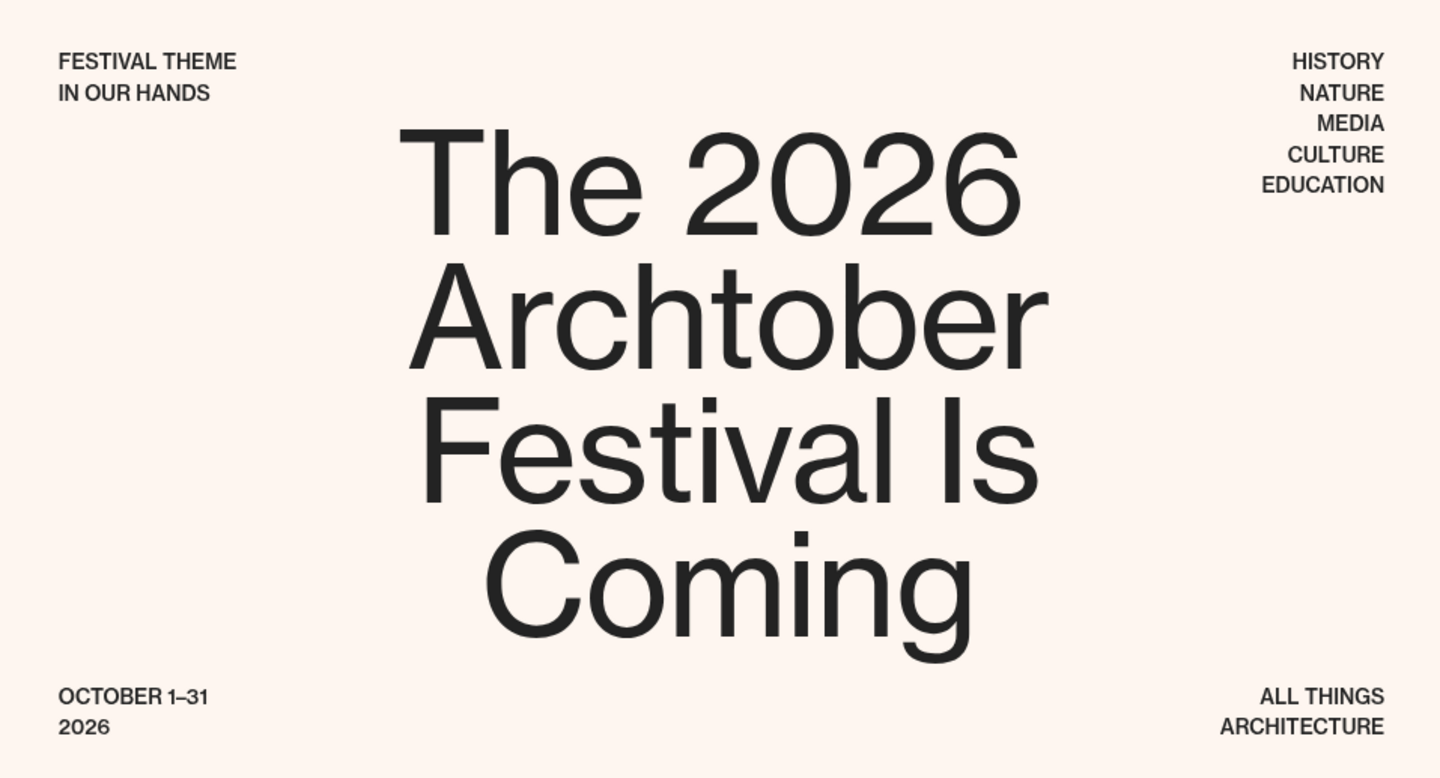
Every October, New York quietly turns into one giant architecture classroom. Boat tours slide past the skyline, historic house museums open their doors, and architects walk you through buildings you’ve passed a hundred times without really seeing. That’s Archtober, and the 2026 edition arrives with a theme that feels especially timely: In Our Hands.
Event Overview
| Event Name | Archtober 2026: New York City’s Architecture and Design Month |
| Date | Thursday, October 1 – Saturday, October 31, 2026 |
| Location | Venues across New York City’s five boroughs, with some programs in the wider tri-state area |
| Official Website | https://www.archtober.org/ |
| Social Media | https://www.instagram.com/archtober |
| Visit Info | https://www.archtober.org/2026/events |
| Contact Email | [email protected] |
From Architecture Week to a Month-Long Festival
Archtober didn’t appear out of nowhere. Its roots go back to 2003, the year AIA New York opened the Center for Architecture and Open House New York was founded. For the following seven years, AIANY ran Architecture Week during the second week of October, capped off by OHNY Weekend.
In 2011, that single week grew into a full month. Today Archtober describes itself as a year-round platform for discovering architecture and design, with its festival as the October finale. According to the organizers, it has drawn around 500,000 visitors, staged more than 1,500 events, and built a network of 100+ partners, from museums and parks to consulates and advocacy groups.
The Amazing Part: Since 2011, the Center for Architecture has hosted Building of the Day tours led by architects. Past picks have included Eero Saarinen’s TWA Flight Center at JFK, Fumihiko Maki’s 4 World Trade Center, and the Newtown Creek Wastewater Treatment Plant by Polshek Partnership / Ennead Architects. Yes, a wastewater plant, and it’s a genuinely great one.
The 2026 Theme: In Our Hands
Announced in June, this year’s theme responds to what the organizers call a moment of polycrisis: climate change, fast-moving artificial intelligence, and divisive policies. Instead of doom, the festival leans into community and optimism. The programming celebrates sensorial, inclusive design, handcrafted practices, and resilient structures, while reminding architects, designers, and everyday citizens that shaping a more just and joyful environment is partly their job.
I love that the theme lands on the hand. After a few years of design conversations dominated by software and renders, it’s a nudge back toward craft, touch, and agency.
Five Topic Umbrellas
To organize the calendar, events are grouped under five categories. The organizers suggest reading each one as “(category) in our hands.”
- Nature covers climate resilience, ecological restoration, parks, landscapes, and waterways.
- Media looks at storytelling through images, film, publishing, and new technology.
- Culture explores the traditions and identities that give places meaning.
- History digs into the people, movements, and decisions behind the built environment.
- Education focuses on teaching, mentorship, and public engagement.
Three Exhibitions Opening on Day One
When the festival launches on October 1, the Center for Architecture opens three exhibitions that sit squarely within the History and Culture categories.
Dark Matter U: Justice, Pedagogy, Design
Billed as the first major U.S. exhibition of and by the Dark Matter U network, this is the show I’d put first on any list. It speaks directly to the social responsibilities of architectural practice.
Humanist Modernity
This exhibition turns to Stanisława Sandecka-Nowicka and Maciej (Matthew) Nowicki, two significant figures in both American and Polish architectural history.
Why Design?
Organized by the Center’s Education Department, it showcases K-12 student design work from Learning By Design:NY in-school residencies plus school and Youth and Family workshops.
Why these three work together
Taken as a set, they cover human-centered design, critical design education, and ethics in practice, which is exactly where In Our Hands is pointing.
A Taste of the Calendar
The early listings already show how wide the net is. Before the festival officially kicks off, the South Street Seaport Museum runs a tour on the hidden history of the Seaport’s architecture on September 26. On opening day alone, you can join an October Nature Exploration at the Prospect Park Boathouse with Prospect Park Alliance, or hop on the AIANY Architecture Boat Tour with Classic Harbor Line.
The partner roster is a who’s who of New York culture and design media, including MoMA, The Metropolitan Museum of Art, Cooper Union, the New York Botanical Garden, Wave Hill, the Historic Districts Council, Open House New York, Dezeen, and Architizer, alongside historic homes like the Alice Austen House, Gracie Mansion, and Edgar Allan Poe Cottage.
Can’t Make It in October? Go Self-Guided
Archtober also offers ways to explore on your own schedule:
- Bloomberg Connects: a mobile guide on the free arts and culture app, with commentary from architects behind past Buildings of the Day.
- Anytime Activities: DIY resources from partners, including kid-friendly lessons, printables, videos, and exhibition guides.
- Archtober Map: a destination map for planning your own route.
Fun Fact: Archtober reinvents its visual identity every year. Pentagram designed the original logo and the festival graphics from 2011 through 2016, followed by With Projects, MTWTF, and Small Stuff. Greater, Inc. has handled the look since 2020, including this year’s In Our Hands graphic.
Full programming is still rolling out, so it’s worth checking the events page linked in the overview at the top of this article as October gets closer.
Frequently Asked Questions
Where do Archtober events take place?
All over New York City. The organizers say more than 100 cultural institutions host talks, tours, and programs across the five boroughs, and some events reach into the tri-state area.
What kinds of events can I expect?
Tours, lectures, workshops, panels, and exhibitions, all sorted this year into Nature, Media, Culture, History, and Education. You’ll find everything from family-friendly park programs to architect-led boat tours.
Can I enjoy Archtober outside of October?
Yes. The Bloomberg Connects guide, Anytime Activities, and the Archtober Map are available year-round, and the team also publishes stories and a monthly newsletter. Questions can go to the email listed in the overview above.
Get gorgeous projects via email
