

You know that moment when you look around your city and think, “There’s no way we’re building fast enough.” It’s happening everywhere. Demand rises. Construction slows. Prices climb. And urban housing feels like a puzzle with too many missing pieces.
Then along comes modular and prefab housing again, except this time it feels… different. Smarter. Lighter on the planet. Less of the “boxy unit from the early 2000s” vibe and more of a “clean, efficient, surprisingly beautiful little ecosystem.”
Prefab 2.0, if you will.
I think a lot of us assumed modular construction was a trend that peaked and then quietly went to sleep. But here it is, wide awake and holding a cup of coffee. And to be fair, the timing makes sense. Construction costs are unpredictable. Cities are bursting at the seams. Sustainability isn’t a nice idea anymore , it’s a requirement.
So let’s talk about why modular and prefab housing are having a very real comeback, and how this “new wave” is reshaping urban living in ways that might surprise you.
Why modular housing suddenly makes so much sense again
The biggest reason is speed. Traditional construction moves at the pace of paperwork, weather, and whatever else decides to interfere. Modular housing, on the other hand, avoids most of that.
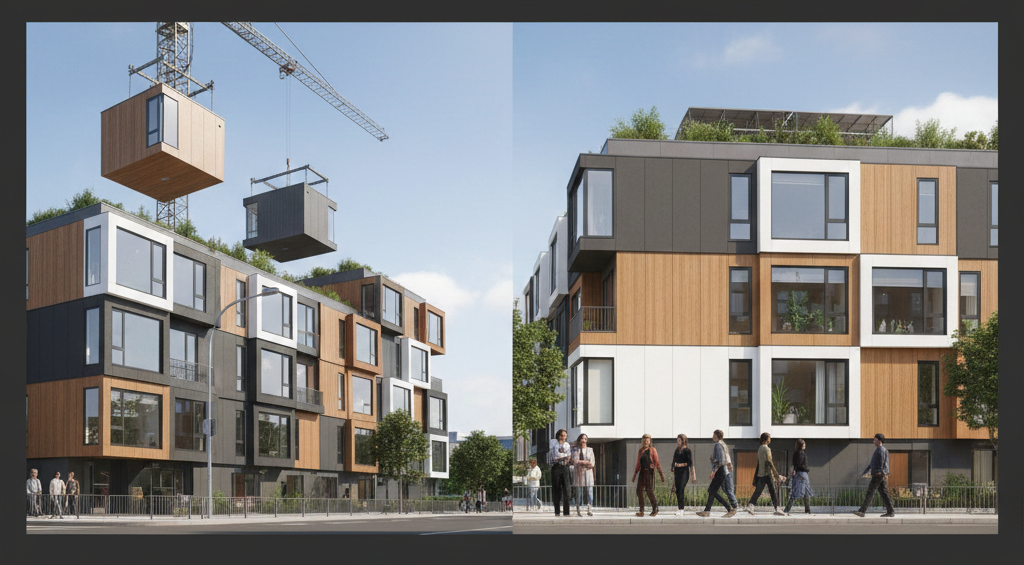
You build pieces off-site in a controlled environment. You transport them. You click them together like a grown-up version of your favorite childhood building toy. And somehow, what used to take months takes weeks. Sometimes days.
There’s also a quality advantage now. Manufacturing environments can implement precision measurements, automation, and consistency in ways that an open-air job site can’t. It’s part of why modern architecture is increasingly shaped by better tools and smarter planning (and if you’re curious about that shift, you might enjoy this piece on how GPR shapes modern architecture at Futurist Architecture).
Modular homes today don’t look like temporary solutions either. They look designed. Intentional. Many of them feel warm rather than sterile, which is a pleasant surprise if you remember their older cousins from decades ago.
Sustainability that actually feels practical
Here’s the strange thing about prefab homes. They cut waste without trying too hard. Manufacturing off-site means you control materials more tightly. You know exactly how much you need, which reduces all the random scrap piles that usually appear on construction sites.
Energy use drops too. Transport might seem like a downside, but when the construction process is faster and more predictable, the overall carbon footprint is often lower.
And yes, more developers are leaning into green upgrades within modular builds. Renewable materials. Smarter insulation. Solar-ready rooftops. Even small design decisions ripple through a home’s lifespan. If you ever end up renting out a modular home someday, green features often help with attracting tenants with green updates, something that’s becoming surprisingly common in sustainability-minded cities.
Modular is also reshaping how cities plan for growth
Traditional construction requires cities to brace for months of noise, blocked roads, scaffolding, and all the joys that come with “classic” building. Modular construction cuts that chaos significantly.
Cities like the fact that you can assemble a mid-rise modular building in a fraction of the time. Neighbors appreciate it too. And when speed goes up, housing shortages ease just a little faster.
There’s also a flexibility bonus that people don’t talk about enough. You can disassemble modular units. Relocate them. Expand or shrink buildings depending on need. In a time when cities are trying to predict the unpredictable, that adaptability feels refreshing.
Lean construction strategies are also part of this shift. Technology keeps improving coordination, reducing delays, and helping teams work smarter instead of louder. If you want to dig into that topic, there’s a good breakdown here on boosting productivity with technology in lean construction.
What living in a modular home actually feels like
If you picture something cold or temporary, you might be imagining modular from the past. Modular 2.0 homes feel surprisingly sturdy. Comfortable. Some even lean toward minimalist luxury in a way that makes you rethink everything you thought you knew.
The layouts tend to make more sense because they’re engineered on purpose rather than improvised around whatever went wrong during the build. Rooms flow. Light moves. Storage works.
I’ve walked into modular homes where the acoustics felt better than in traditionally built apartments. Maybe that’s just a happy accident. Or maybe modern prefab manufacturers finally figured out the formula that traditional builds sometimes struggle with: thoughtful, efficient design.
There’s also something undeniably appealing about knowing your home was built with less waste and less chaos. You feel the difference even if you can’t articulate it.
Prefab goes vertical
People used to think modular homes meant little single-family units or rural cabins. Not anymore. Prefab high-rises are popping up in global cities. The technology improved. Engineering advanced. And architects began seeing modular as a creative tool rather than a limitation.
Modules stack cleanly. Shapes evolve. Facades don’t have to look like identical squares. Large-scale prefab housing now looks modern in a good way, not in a “future dystopia” way.
Some of the most interesting examples I’ve seen use a hybrid approach. Prefab rooms or pods combined with traditional structural frames. It creates a balance between speed and design freedom. Cities love hybrid builds because they still reduce disruption but offer more architectural expression.
What this means for the future of urban housing
Here’s the honest part. Prefab and modular housing won’t solve everything. They can’t fix building codes overnight or convince every city council to streamline approval processes. But they do offer something urban housing desperately needs. A faster, cleaner, more flexible way to build.
Prefab 2.0 isn’t a phase. It’s slowly becoming part of the permanent toolkit.
If you’re curious about how modular housing intersects with future rental markets or property management (because these homes often turn over faster due to standardized components), you can always click here to learn more at Earnest Homes. They talk quite a bit about how modern housing types affect rental operations, and modular fits right into that conversation.
What I keep noticing is that people don’t pick modular homes simply because they’re cheaper or faster. They choose them because they feel intentional. Purposeful. Designed for real life, where sustainability matters but so does comfort and timing.
Maybe that’s the real appeal. A modular home doesn’t ask you to make a philosophical statement. It just quietly solves problems while giving you a clean, calming space to exist in.
So, should modular 2.0 be part of your future?
If you like efficiency, sustainability, and the idea of a home that comes together with less stress and fewer surprises, then probably yes. Perhaps not immediately. But the trend is moving forward whether you’re ready or not.
Urban housing is changing. Faster than it looks. And modular and prefab 2.0 are a big part of that shift.
Not perfect. Not magic. Just… finally good.
Get gorgeous projects via email
