

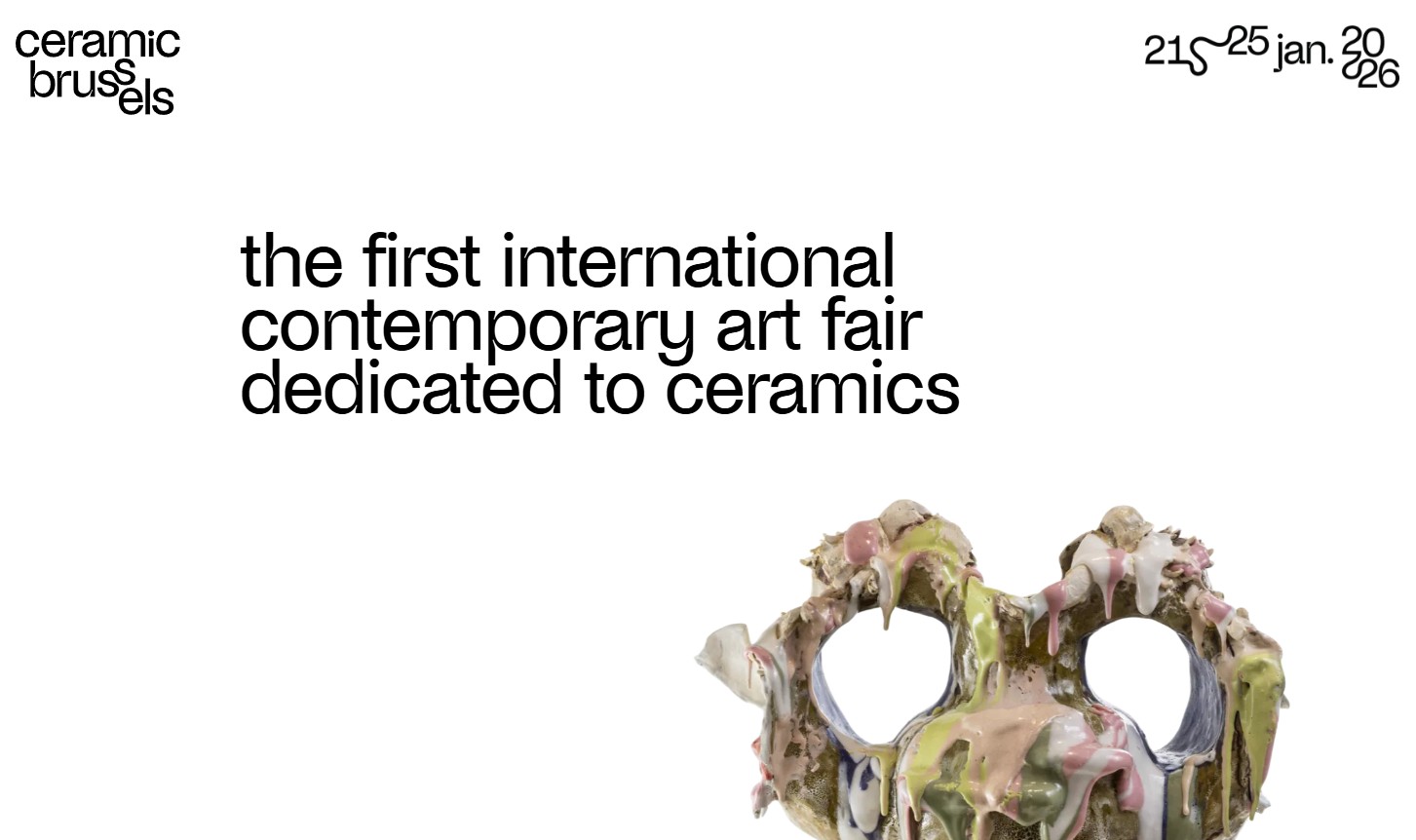
There’s a palpable energy in the contemporary art world right now—one that celebrates the resurgence of ceramics from craft tradition into cutting-edge artistic practice. At the heart of this renaissance sits Ceramic Brussels, an international contemporary art fair that has quickly established itself as Europe’s definitive platform for ceramic innovation. As the fair prepares for its third edition in January 2026, it’s worth exploring what makes this event so significant for artists, galleries, and collectors navigating the evolving landscape of contemporary ceramics.
I’ve spent considerable time examining the trajectory of contemporary ceramics over the past decade, and what strikes me most is how the medium has transcended its utilitarian origins to become a serious contender in the fine art world. Ceramic Brussels embodies this transformation perfectly, bringing together over 60 international galleries, institutions, and key players to celebrate what is arguably one of the most dynamic movements in contemporary sculpture today.
The Rise of Ceramic Brussels: A Fair with Momentum
When Ceramic Brussels launched in January 2024, few could have predicted the rapid trajectory it would follow. The inaugural edition welcomed 55 international galleries, approximately 200 artists, and 12,900 visitors over four days at Tour & Taxis—a sprawling 7,000 square-meter cultural hotspot in the heart of Brussels. These numbers might seem modest compared to mega-fairs like Art Basel or Frieze, but they tell a story of focused, intentional curation rather than commercial saturation.
By the second edition in 2025, the fair had grown substantially: 65 galleries, 200+ artists, and 17,840 visitors. This 38% increase in attendance demonstrates something crucial—there’s genuine appetite for a fair dedicated entirely to contemporary ceramics. The fair isn’t trying to be everything to everyone; it’s mastered the art of specialization, which, in today’s fractured art market, is increasingly valuable.
Why Tour & Taxis Matters
The venue itself deserves mention. Tour & Taxis, a converted customs warehouse in Brussels’ Kanal district, has become synonymous with contemporary art in Belgium. Its industrial architecture, soaring ceilings, and raw materiality create an ideal backdrop for ceramic work. There’s something poetic about celebrating clay in a space defined by repurposed industrial materials—it speaks to the fair’s philosophy of transformation and reinvention.
Elmar Trenkwalder: The 2026 Guest of Honour
The announcement of Austrian ceramicist Elmar Trenkwalder as the 2026 Guest of Honour signals the fair’s commitment to recognizing artists who have fundamentally expanded what ceramics can be. Born in 1959 in Weißenbach am Lech, Trenkwalder trained under legendary figures Max Weiler and Arnulf Rainer at the Academy of Fine Arts Vienna—a pedigree that speaks volumes about his artistic lineage.
What fascinates me about Trenkwalder’s practice is its refusal to be confined by medium expectations. His monumental ceramic sculptures blend Baroque and Rococo ornamentation with Asian influences in ways that feel neither historically derivative nor culturally appropriative. Instead, they read as genuinely original dialogues between traditions. His work pushes ceramics into the realm of architectural material—a concept that deserves unpacking.
Technical Virtuosity Meets Conceptual Ambition
Trenkwalder’s career speaks to sustained excellence at the highest institutional level. He exhibited at the 1990 Venice Biennale (Aperto 90, curated by the legendary Harald Szeemann), showed at the 1997 Lyon Biennale, and has since exhibited at institutions including the Louvre Museum (2005), MAK Vienna, Kunsthaus Zürich, and most recently at Beelden aan Zee Museum in The Hague (2023). His accolades include the City of Vienna Prize (1991), the Salzburg State Prize for Ceramics (2004), and the Tyrol State Prize for Contemporary Art (2015).
What distinguishes Trenkwalder from many contemporary ceramic artists is the scale and ambition of his vision. His works function as sculptural interventions that command architectural space. They’re not objects to be held or small vessels to be admired from a distance—they’re immersive experiences that alter how we perceive the spaces they inhabit. In his own words: “It is an honour for me to present my work at ceramic brussels 2026… to share my artistic approach with an enthusiastic audience.”
Spain as Guest Country: A Nod to European Ceramics Heritage
The selection of Spain as the 2026 Guest Country (as part of the broader EUROPALIA ESPAÑA initiative) acknowledges a crucial truth: Spain has long been a powerhouse in contemporary ceramics. While Spanish ceramics heritage stretches back centuries—from Moorish tilework to regional pottery traditions—contemporary Spanish artists have been equally innovative.
This curatorial choice reflects a sophisticated understanding of how ceramics functions within European cultural identity. Spain’s inclusion isn’t merely tokenistic; it represents recognition that the future of ceramics in Europe is inseparable from its past, and that contemporary Spanish practitioners continue to push the medium in compelling directions.
The 2026 Art Prize: Recognizing Emerging Excellence
Perhaps one of the most exciting announcements for 2026 is the Art Prize, which will honor 10 laureates whose works will be featured in a collective exhibition. This initiative serves multiple purposes: it democratizes visibility within the fair, celebrates emerging voices, and creates a curatorial framework that elevates certain practices above others.
Meet the 2026 Laureates: A Global Snapshot
The selected artists represent a genuinely international cohort, each bringing distinct perspectives to ceramic practice:
- Lorie Ballage (France) works at the intersection of ceramic sculpture and immersive installation, exploring themes of water, failure, and absurdity by combining ceramics with recycled materials and sound.
- Uriel Caspi (Israel), trained at both Bezalel Academy and Alfred University, has exhibited across five continents and holds prestigious fellowships including the 2024 McKnight Fellowship.
- Danny Cremers (Netherlands) brings a fashion design background (Central Saint Martins) to hand-crafted porcelain, exploring tension between freedom and control.
- Kira Fröse (Germany) works across glass, ceramics, plaster, and found objects, with pieces in major Dutch museum collections.
- Ninon Hivert (France) uses clay’s mimetic potential to recreate everyday objects, creating what amounts to an archaeology of the mundane.
- Santiago Insignares-Martínez (US/Colombia) creates colorful ceramic structures inspired by ruins and childhood building games, recently exhibiting at the 12th Gyeonggi International Ceramic Biennale.
- Faye Papargyropoulou (Greece) founded CERAMIC 47 studio in Athens, combining imperfection and nature with contemporary design sensibilities.
- Marie Pic (France), a 2021 graduate of ENSAD Limoges, explores thresholds and architecture through bas-relief doors adorned with organic ornamentation.
- Angelika Stefaniak (Poland), born in 1997, combines ceramics and textiles inspired by psychology and biomorphism, having just completed her MFA in Sculpture.
- Walter Yu (China) bridges painting, ceramics, and architecture while exploring East Asian aesthetics within contemporary storytelling frameworks.
What strikes me about this cohort is their diversity—not merely in geography, but in approach. Some work within traditional ceramic vocabularies, while others use clay as one material among many. Some engage with abstraction, others with representation. This plurality reflects where contemporary ceramics actually exists: as a genuinely pluralistic field where multiple valid approaches coexist.
Understanding the Broader Ceramics Renaissance
Ceramic Brussels didn’t emerge in a vacuum. The fair capitalizes on a genuine renaissance in contemporary ceramics that has been building for nearly two decades. Artists like Johan Creten, Miquel Barceló, Grayson Perry, Klara Kristalova, Carolein Smit, and Anne Wenzel have demonstrated that ceramics can function at the highest levels of contemporary art practice.
What changed the trajectory of ceramics in the contemporary art world? Several factors converge:
Institutional Legitimacy
Major museums began acquiring ceramic works seriously. The Louvre, MoMA, the Guggenheim, and contemporary art museums worldwide started treating ceramics as fine art rather than decorative craft. This institutional validation opened doors for galleries to represent ceramic artists without fear of being relegated to craft fair status.
Conceptual Expansion
Contemporary ceramic artists stopped asking “what can I make?” and started asking “what can ceramics mean?” This conceptual shift transformed the medium. Ceramics became a vehicle for exploring materiality, labor, cultural identity, environmental concerns, and architectural thinking.
Material Pluralism
The boundaries between disciplines dissolved. Ceramic artists began incorporating video, sound, installation, textiles, and digital elements. Simultaneously, sculptors and installation artists discovered ceramics as a material with unique properties—its relationship to fire, its cultural weight, its tactile presence.
The Vision Behind Ceramic Brussels: Meet the Founders
Understanding what makes Ceramic Brussels distinctive requires knowing the minds behind it. The fair is co-managed by Gilles Parmentier (Belgium) and Jean-Marc Dimanche (France), a Franco-Belgian duo whose complementary expertise has shaped the fair’s identity.
Gilles Parmentier: The Cultural Organizer
Parmentier brings over a decade of experience in arts and cultural events. After founding Reporters Agency (a photojournalism and video platform) in 2011, he established Studio Gondo in 2017, linking art with business and brand initiatives. From 2018 to 2024, he directed Art on Paper, an international drawing fair in Brussels, and created Brussels Drawing Week—a collaborative initiative with over 30 cultural institutions. His background demonstrates deep understanding of how to build sustainable cultural infrastructure and foster community engagement.
Jean-Marc Dimanche: The Curatorial Voice
Dimanche brings twenty years of design expertise through his V.I.T.R.O.L. agency, coupled with curatorial vision. He co-founded Maison Parisienne in 2008 (a traveling gallery for French crafts) and served as advisor to H.R.H. the Grand Duchess Heiress of Luxembourg, helping launch the De Mains De Maîtres Biennale. From 2019 to 2022, he directed ELEVEN STEENS, a Brussels-based art and matter space. His writing appears in Revue de la Céramique et du Verre and various exhibition catalogues. Dimanche’s expertise spans crafts, contemporary art, design, architecture, and fashion—a breadth that informs Ceramic Brussels’ interdisciplinary approach.
Together, Parmentier and Dimanche have created something genuinely rare: a fair that maintains “militant, questioning format that evolves with the field.” This isn’t corporate art fair machinery; it’s a genuinely thoughtful curation of a medium in constant evolution.
The Fair’s Evolution: From 2024 to 2026
Looking at Ceramic Brussels’ trajectory tells us something important about how specialized fairs can thrive in today’s market:
| Edition | Date | Galleries | Artists | Visitors | Guest of Honour |
|---|---|---|---|---|---|
| 1st (2024) | 25–28 January | 55 | ~200 | 12,900 | Johan Creten |
| 2nd (2025) | January | 65 | 200+ | 17,840 | Elizabeth Jaeger |
| 3rd (2026) | 21–25 January | 60+ | Expected growth | Projected growth | Elmar Trenkwalder |
The growth pattern suggests sustainable expansion rather than speculative bubble. The fair is adding galleries and visitors at a measured pace, suggesting genuine market demand rather than hype-driven attendance.
What Makes Ceramic Brussels Essential for the Contemporary Art World
In an art world increasingly fragmented by mega-fairs, online platforms, and regional events, Ceramic Brussels fills a specific niche with grace and intentionality. Here’s why it matters:
Medium Specificity in a Generalist Market
Most contemporary art fairs operate on the “everything to everyone” model. Ceramic Brussels takes the opposite approach: it’s laser-focused on ceramics while remaining genuinely international and intellectually rigorous. This specificity creates an environment where serious dialogue about the medium can occur.
Networking at Scale
The fair facilitates connections between galleries, artists, curators, collectors, and institutions in ways that generic art fairs cannot. If you’re interested in contemporary ceramics, Ceramic Brussels is where the conversation happens. The 60+ galleries create a critical mass of expertise and inventory that simply doesn’t exist elsewhere in concentrated form.
Curatorial Intelligence
The Guest of Honour program, Guest Country focus, and Art Prize demonstrate serious curatorial thinking. These aren’t arbitrary selections; they’re strategic interventions that shape discourse around the medium. Elmar Trenkwalder’s selection, for instance, makes a statement about scale, technical virtuosity, and ceramics’ relationship to architecture.
Evolution and Questioning
The fair explicitly positions itself as “in a constant state of (r)evolution, influenced by diverse practices and the Zeitgeist.” This isn’t static curation; it’s responsive, thinking, evolving programming. The fair asks: What is ceramics becoming? How does it engage with contemporary concerns? Where are the boundaries?
Planning Your Visit to Ceramic Brussels 2026
If you’re considering attending the 2026 edition (21–25 January at Tour & Taxis), here’s what you should know:
Registration and Access
The fair manages registration through an online registration form. Early registration is recommended, as the fair has grown substantially and space fills up. For specific questions about attending, contact the organizers at [email protected].
What to Expect
Beyond gallery booths, Ceramic Brussels typically features:
- Conferences and panel discussions featuring artists, curators, and theorists
- Exhibitions dedicated to the Guest of Honour and Guest Country
- The annual Art Prize exhibition showcasing laureate works
- An annual review documenting the fair and contemporary ceramics discourse
- Unique scenography that transforms Tour & Taxis into an immersive environment
Following the Fair
Stay updated through the official website and Instagram (@ceramic.brussels), where the fair shares announcements, artist features, and behind-the-scenes content.
The Broader Significance: Why Ceramics Matter Now
There’s something particularly resonant about ceramics’ rise in contemporary art at this specific historical moment. In an age of digital saturation, immateriality, and dematerialized art forms, ceramics insists on the body, labor, material resistance, and the transformative power of fire. It’s fundamentally analog in ways that feel increasingly countercultural.
Contemporary ceramic artists engage with urgent concerns: environmental degradation (through recycled materials and sustainable practices), cultural identity (through engagement with traditions and diaspora), gender and labor (historically coded as feminine craft), and architectural thinking (reimagining how we inhabit space). These aren’t niche concerns—they’re central to contemporary art discourse.
Ceramic Brussels recognizes this significance and creates institutional infrastructure to support it. The fair isn’t preserving a dying craft tradition; it’s documenting and celebrating an art form in genuine renaissance.
Conclusion: The Future of Contemporary Ceramics
As I reflect on the trajectory of Ceramic Brussels and the contemporary ceramics field more broadly, I’m struck by a sense of genuine possibility. The fair has established itself as essential infrastructure for a medium that was, just fifteen years ago, marginalized in serious contemporary art discourse. Today, ceramics commands gallery representation, museum acquisition, and institutional attention at levels previously unimaginable.
The 2026 edition, with Elmar Trenkwalder as Guest of Honour, Spain as Guest Country, and ten emerging artists receiving recognition, promises to deepen this conversation. Trenkwalder’s monumental, architecturally-engaged practice represents one direction ceramics can travel; the diverse practices of the 2026 laureates represent countless others.
What Ceramic Brussels ultimately offers is not just a marketplace for ceramic objects, but a gathering place for thinking seriously about what ceramics can be in the twenty-first century. In a fragmented art world, that kind of focused, intelligent curation feels increasingly precious.
Whether you’re a collector, artist, curator, or simply someone curious about contemporary art’s most dynamic medium, Ceramic Brussels 2026 deserves your attention. The conversation happening there matters—not just for ceramics, but for contemporary art more broadly.
For more information, visit ceramic.brussels, follow @ceramic.brussels on Instagram, or contact [email protected]. Registration for the 2026 edition is available through the online registration form.
Frequently Asked Questions
What is Ceramic Brussels and who should attend?
Ceramic Brussels is an international contemporary art fair dedicated exclusively to contemporary ceramics. It brings together 60+ international galleries, institutions, and key players in the ceramic art world. You should attend if you’re a collector interested in contemporary ceramics, an artist or gallery professional seeking to connect with peers, a curator researching the field, or anyone genuinely interested in understanding where contemporary ceramics is heading. The fair isn’t exclusively for specialists—it welcomes anyone curious about this renaissance medium.
When and where is Ceramic Brussels 2026 taking place?
Ceramic Brussels 2026 (the third edition) will take place January 21–25, 2026, at Tour & Taxis in Brussels, Belgium. Tour & Taxis is a 7,000 square-meter cultural venue in the Kanal district, housed in a converted customs warehouse. The location provides an ideal setting for contemporary ceramic work, with its industrial architecture and soaring spaces creating compelling contexts for large-scale installations and sculptures.
How do I register to attend Ceramic Brussels 2026?
Registration for Ceramic Brussels 2026 is managed through an online form available at https://form.jotform.com/250654042361348. Given the fair’s growth trajectory (from 12,900 visitors in 2024 to 17,840 in 2025), early registration is recommended to secure your spot. For specific questions about registration or access, contact the organizers at [email protected].
Who is Elmar Trenkwalder and why is he significant?
Elmar Trenkwalder is an Austrian ceramicist born in 1959 who trained under legendary artists Max Weiler and Arnulf Rainer at Vienna’s Academy of Fine Arts. He’s known for monumental ceramic sculptures that blend Baroque and Rococo ornamentation with Asian influences, pushing ceramics into the realm of architectural material. His career includes exhibitions at the Venice Biennale (1990), the Louvre (2005), and major museums across Europe. As the 2026 Guest of Honour, Trenkwalder represents the technical virtuosity and conceptual ambition that contemporary ceramics has achieved at its highest levels.
What is the Art Prize and how are laureates selected?
The Ceramic Brussels Art Prize recognizes 10 emerging and established artists whose work represents excellence and innovation in contemporary ceramics. The 2026 laureates represent a globally diverse cohort—from France, Israel, Netherlands, Germany, US, Colombia, Greece, Poland, and China—working across varied approaches to ceramic practice. Their selected works are exhibited in a collective exhibition at the fair, providing significant visibility and institutional recognition. The prize represents the fair’s commitment to elevating and celebrating diverse voices within contemporary ceramics.
How has Ceramic Brussels grown since its inception?
Ceramic Brussels has demonstrated impressive growth trajectory: the 2024 inaugural edition featured 55 galleries, approximately 200 artists, and 12,900 visitors. The 2025 second edition expanded to 65 galleries, 200+ artists, and 17,840 visitors—a 38% increase in attendance. This measured, sustainable growth suggests genuine market demand for a fair dedicated specifically to contemporary ceramics. The fair maintains quality and curatorial integrity while expanding, rather than pursuing speculative growth that might dilute its mission.
Get gorgeous projects via email
