

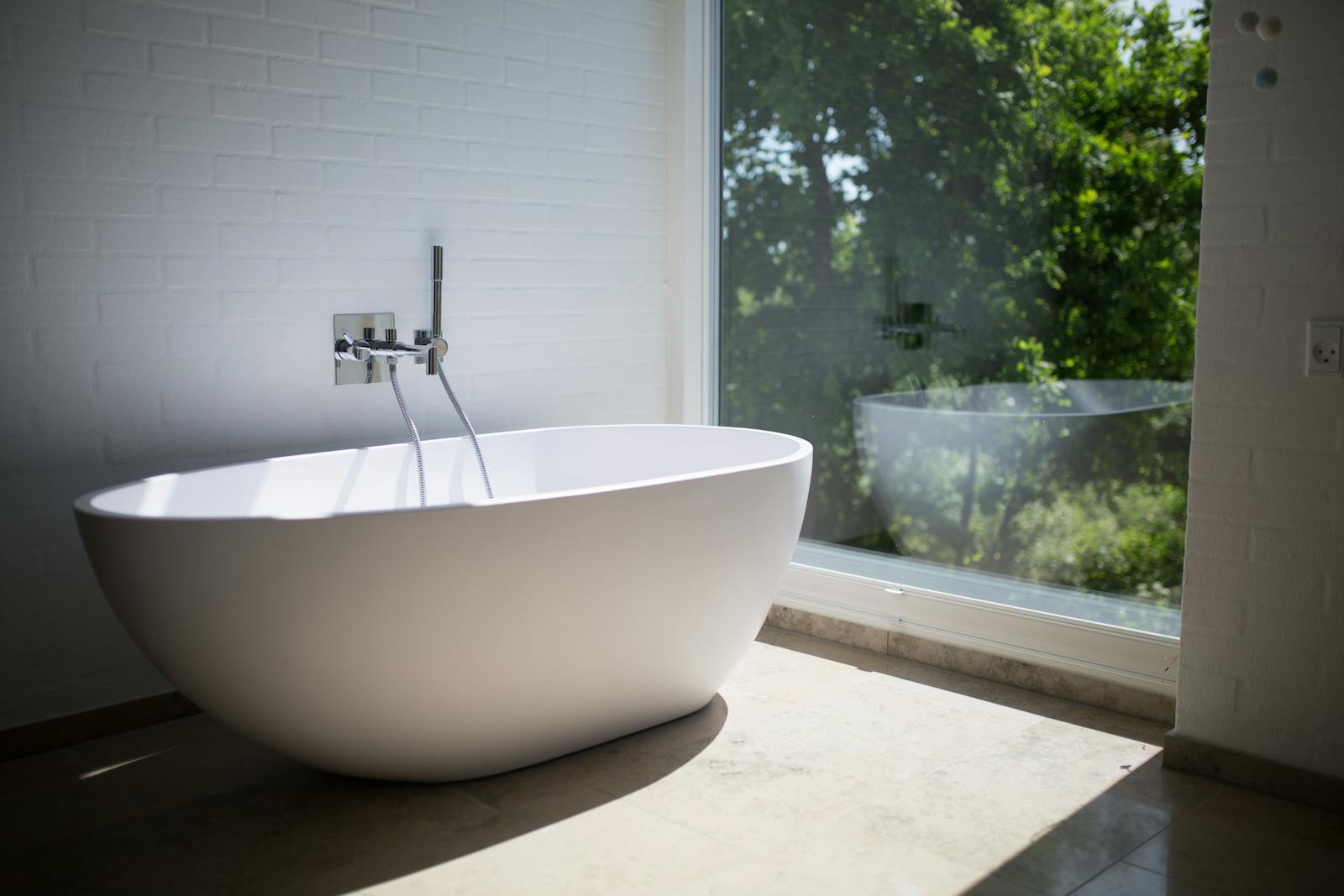
In today’s home design, the bathroom has evolved far beyond its utilitarian roots. No longer just a place to wash up, it has become a personal sanctuary—a private space for relaxation, ritual, and emotional reset. Among the many design trends reshaping the modern bathroom, the freestanding tub has emerged as a standout favorite. But is it truly the best fit for today’s homes? Let’s take a closer look through the lenses of aesthetics, practicality, and real-world application.
1. The Core Benefits of Freestanding Tubs
The first and most obvious appeal of a freestanding tub is its visual impact. Unlike built-in tubs that must be nestled into walls or corners, a freestanding tub holds its own space and presence—often doubling as a sculptural focal point. Its flowing curves or sharp minimalist lines can instantly elevate the design of any bathroom.
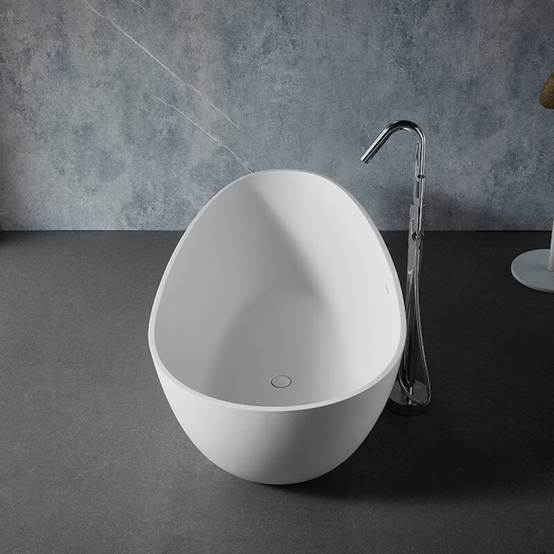
Whether it’s the lightweight translucency of acrylic, the vintage richness of cast iron, or the natural texture of stone, freestanding tubs bring material beauty to the forefront. Take Giving Tree’s GT22S02-59, for example: its fluid, egg shape paired with a stand blends modern minimalism with luxury. This style integrates effortlessly with contemporary, Japandi, or new-classical interiors alike.
 Pin
PinInstallation flexibility is another major advantage. While built-in tubs require wall framing, waterproofing, and tile work, freestanding bathtubs only need a drainage point. They can be placed against a wall, near a window, or even at the center of the room—offering endless layout possibilities. They’re especially well-suited for remodels, where structural changes are limited but visual upgrades are desired. Pair with wood platforms and lush greenery for a serene, spa-like corner.
From a user experience standpoint, freestanding tubs deliver on comfort. Many are ergonomically designed with generous depth (typically 50–60 cm) for full-body soaking. High-end models even feature hydrotherapy systems—jets that target sore shoulders and lower backs, or air bubble massage functions for whole-body relaxation. Add in a built-in heater, and your bath becomes a full-on wellness ritual. Picture it: soft lighting, a glass of wine, steam rising—this is luxury self-care that a standard tub just can’t replicate.
2. Drawbacks and Limitations You Shouldn’t Overlook
 Pin
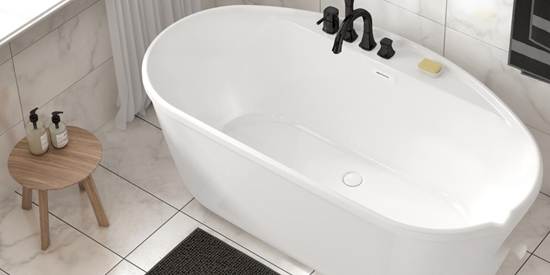
PinAs visually stunning as they are, freestanding bathtubs come with trade-offs—especially in smaller homes. Most models range from 59 to 71 inches in length and 28 to 35 inches in width. To preserve functionality and beauty, you’ll also need to leave about 20 inches of clearance around the tub. This means that the total usable bathroom area should ideally be at least 85 square feet (8 square meters).
For compact urban bathrooms (often 45–65 square feet), squeezing in a freestanding tub can crowd out essential fixtures like vanities or toilets, ultimately making the space less convenient.
Installation costs are another concern. Heavy materials like cast iron or stone can weigh over 600 pounds (270 kg), requiring reinforced flooring—especially in older homes. Drainage systems might also need repositioning, which can increase plumbing complexity and budget. And then there’s cleaning: gaps between the tub and floor can collect water or dust, and cleaning around a freestanding tub often requires more effort or special tools.
Finally, practicality can be an issue. Households that mostly rely on quick showers might find their beautiful tub gathering dust. Deep or uniquely shaped tubs can also be challenging for seniors or young children to use safely. Some sleek designs may even sacrifice ergonomic support, leading to awkward lying positions where your lower back doesn’t rest properly—defeating the purpose of relaxation.
3. When a Freestanding Bathtub Does Make Sense
Whether a freestanding tub suits your home really comes down to three things: available space, household lifestyle, and budget.
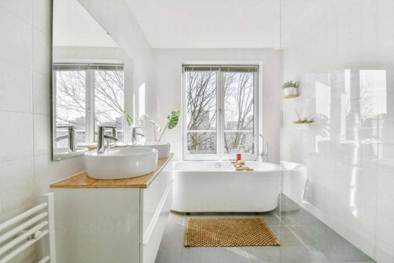
For primary bathrooms over 100 square feet (10㎡) with natural light and a good layout, the freestanding tub is a fantastic upgrade—especially for those who enjoy bathing as a self-care ritual. Situating the tub near a window can enhance the ambiance with daylight, while pairing it with ambient lighting, mirrors, and even a sound system can create a full sensory experience.
 Pin
PinFor design-forward homeowners, a freestanding tub is also an aesthetic statement. Industrial-style bathrooms pair beautifully with black cast iron tubs and exposed brass fixtures. If you lean toward a Japanese-inspired space, try a wood-wrapped soaking tub with river stone flooring to create a tranquil “zen zone.” In loft apartments or boutique-style homes, freestanding tubs can even boost resale value and become a talking point on listing platforms.
However, for small homes, multigenerational households, or budget-conscious remodels, a freestanding tub may not be the most practical choice. A compact built-in tub or a combined shower-tub unit might offer a better balance of functionality and space optimization.
Final Thoughts
The popularity of freestanding bathtubs speaks to a broader shift in how we think about home living: aesthetics, comfort, and wellness now go hand-in-hand. But just because a design is trending doesn’t mean it fits every lifestyle. When planning your bathroom upgrade, it’s important to weigh the visual and experiential benefits against your available space, habits, and priorities.
After all, the best design isn’t just beautiful—it works in harmony with your life.
Further Reading: Top Best Freestanding Tub Rankings
Get gorgeous projects via email
