

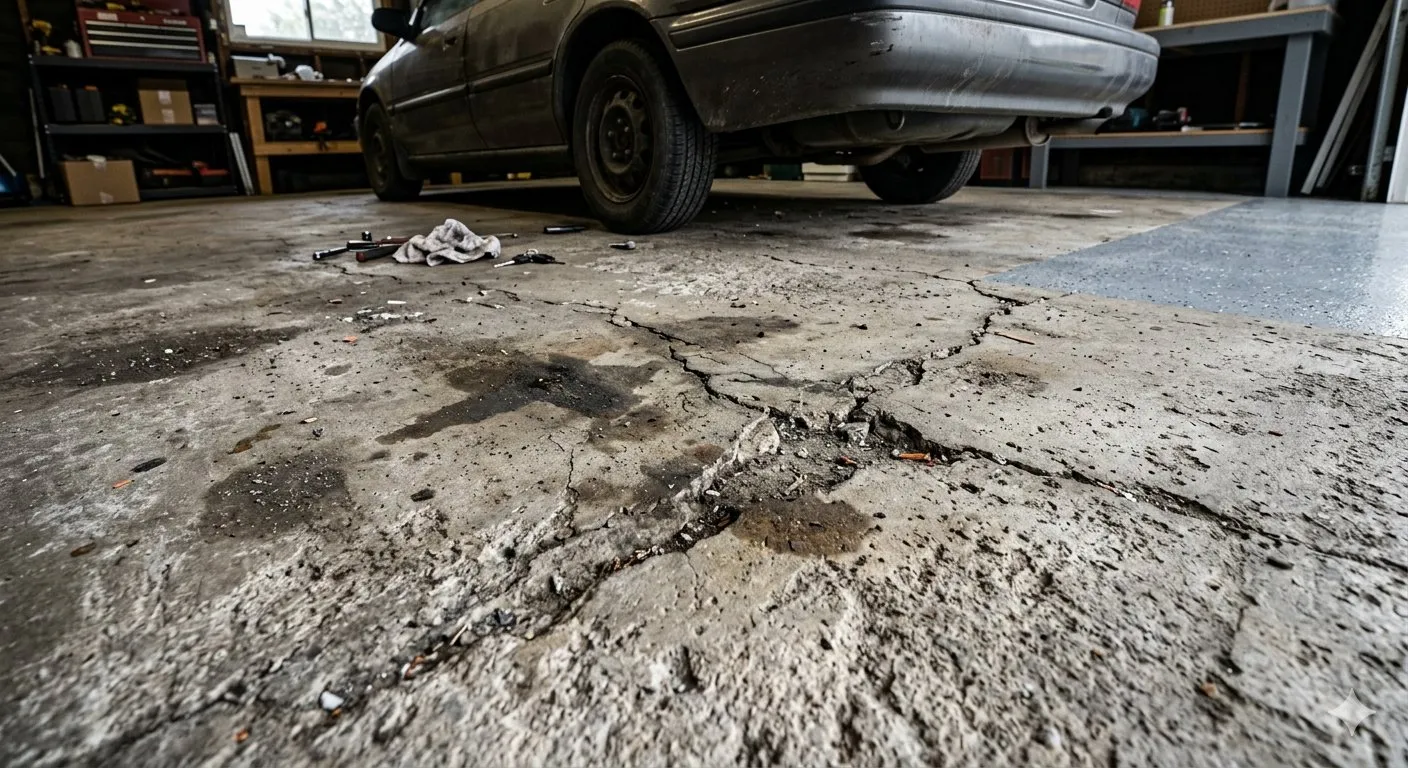
Most of us park in the garage, stack a few boxes in the corner, and never look down. That’s where the trouble starts. A concrete slab takes hits from oil drips, wet tyres and dropped tools, and the damage adds up quietly over the years. If you’ve been thinking about proper garage flooring, it helps to understand what the slab is going through and what your options really look like before you spend anything. A little homework now saves a lot of regret later.
What Raw Concrete Puts Up With
Concrete looks tough, but it’s porous. Oil, brake fluid and even rainwater carried in on the tyres soak into the surface and leave dark patches that scrubbing rarely shifts. After a couple of winters, those marks turn permanent, and no amount of degreaser brings back the original grey colour.
Dust is the other headache. A bare slab sheds a fine powder every time a car rolls across it, and that powder settles on your bumper, your tools and anything stored near the wall. Small cracks also creep wider with time, collecting grit and moisture as they go, which makes cleaning harder than it needs to be. Sweeping only moves the problem around.
A Floor You Can Fit in One Afternoon
Click-together PVC interlocking tiles deal with most of that without a messy install. Each tile locks into its neighbour along the edges, so there’s no glue, no drilling and no curing time to wait out. Four standard 500 x 500 mm tiles cover roughly one square metre, which keeps the maths simple when you order.
Sweep the slab first, then start in one corner and work across the room. A rubber mallet helps seat stubborn edges into place. Cutting around a pillar or the geyser only needs a sharp utility knife, so most people finish a double garage over a single weekend without calling anyone in. Keep the offcuts, because they come in handy for odd corners.
Living With It Day to Day
Spills wipe up without fuss, and a damp mop handles whatever is left behind. If a jack stand gouges one tile, pull it out and drop in a fresh one instead of redoing the whole room. That single repair option changes how you feel about the floor over the long run. It also means one bad afternoon doesn’t force a full redo.
There’s a comfort side too. Concrete pulls heat out of your feet in winter, and an hour at the workbench can leave your legs aching. A tile surface feels less harsh underfoot, and you’ll notice the difference the first Saturday you spend out there tinkering with the bakkie or a bicycle.
What Tiles Won’t Fix
Tiles sit on top of the slab, so they can’t repair a heaving or badly cracked floor. Level problems can show through the surface, and a damp slab needs sorting out at the source first. Water trapped underneath tends to leave marks and the odd musty smell, so check this early. A plastic sheet taped down overnight is a simple way to spot moisture.
Chemicals deserve a quick response as well. Wipe oil up straight away, and check the product notes if you keep strong solvents around. A hot exhaust pipe resting on one spot is worth avoiding, even if ordinary tyre heat is rarely a concern for a busy household garage.
Choosing Colour, Thickness and Layout
For a normal family garage, 5 mm is a sensible thickness. Workshops with heavier equipment might want something stronger, and asking for a sample lets you check the texture before committing. Darker shades hide tyre marks well, while lighter ones brighten up a dim space and make small tools easier to spot. Pick whichever suits the way you actually use the space.
Mixing two colours in a chequerboard, or running a border around the edge, costs nothing extra and makes the room feel finished. Sketch your layout on paper first, so you know where the pattern begins and how many tiles you need, plus a few spares for later repairs. Spares stored on a shelf rarely go to waste.
Conclusion: Protect the Slab While You Can
A garage works harder than most rooms in the house, and its floor takes the punishment. Tiles that click together shield the concrete, hide old stains and let you repair damage without starting from scratch every few years.
If you’d like to compare colours, sizes and prices before deciding, take a look at pvcfloortile.co.za and see which range suits your space and your budget.
Get gorgeous projects via email
