

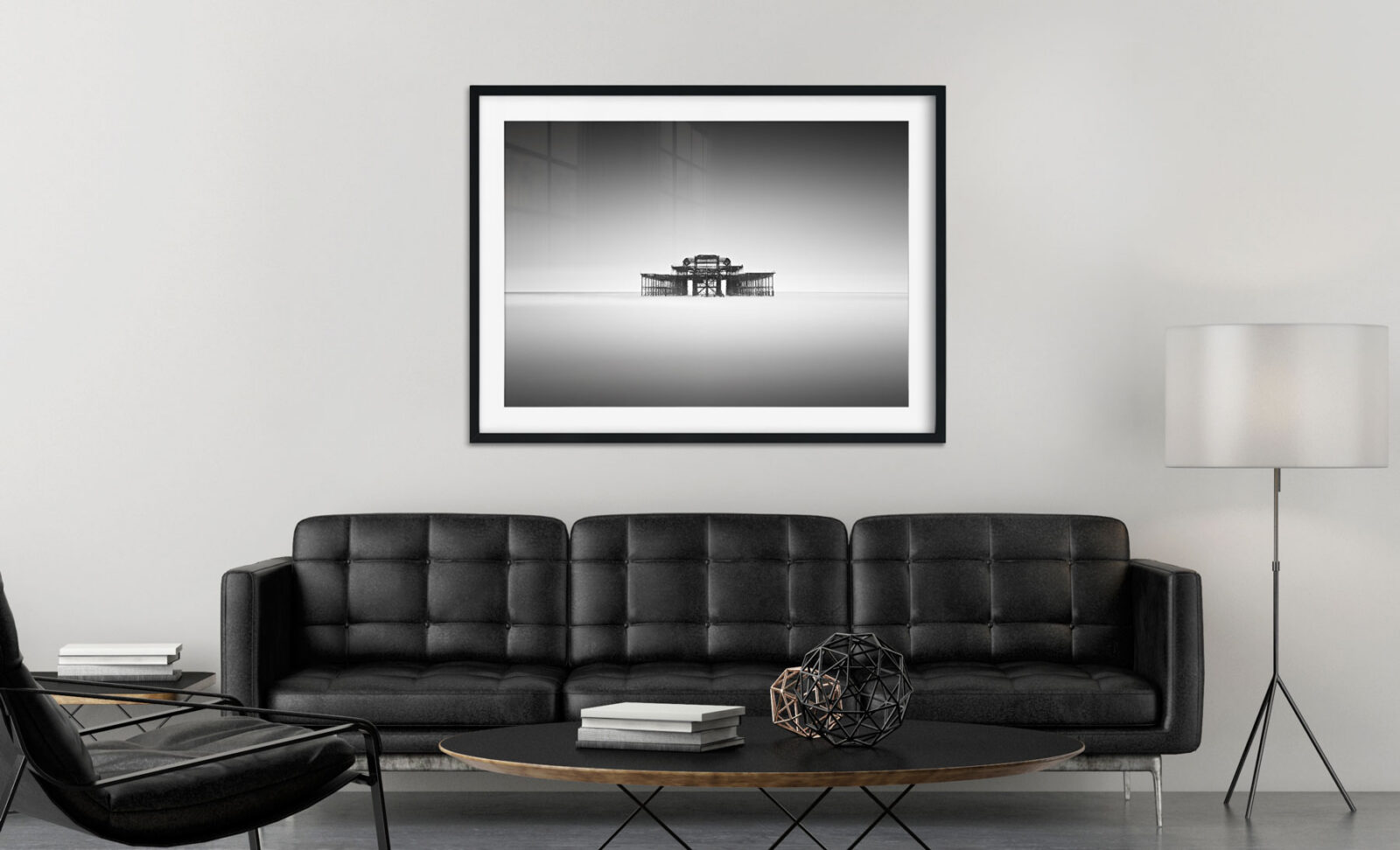
Black and white photography has a habit of outlasting trends.
Interior styles come and go. Walls shift from grey to green to warm neutrals. Furniture moves from minimal to mid-century to something softer and more layered. Yet a well-chosen black and white photograph still seems to hold its place. It does not rely on the colour of the moment, or the pattern of the season. It works through light, shadow, form and atmosphere.
That is why monochrome photography continues to feel so natural in modern interiors. It can be bold without being loud, calm without being bland, and decorative without feeling throwaway. In a room where every colour choice has already been carefully considered, black and white artwork can add structure and presence without introducing yet another shade to match.
It adds structure without adding more colour
One of the reasons black and white photography works so well in interiors is that it brings visual interest without competing with the room’s palette.
Many modern homes already have plenty going on. There may be timber flooring, stone worktops, painted cabinetry, patterned cushions, textured rugs, plants, books, ceramics and layered lighting. Even a neutral room can be full of colour once you start looking properly. Adding more colour to the walls is not always the answer.
Black and white photography gives the eye something different. It adds contrast, definition and rhythm. A dark tree line against a pale sky, an architectural shadow, a misty shoreline or a close-up natural detail can bring a room into focus without changing its colour story.
That makes monochrome artwork especially useful in rooms that already feel balanced. It does not ask you to rethink the cushions, repaint the wall or find a matching throw. It simply strengthens what is already there.
It suits both minimal and layered interiors
 Pin
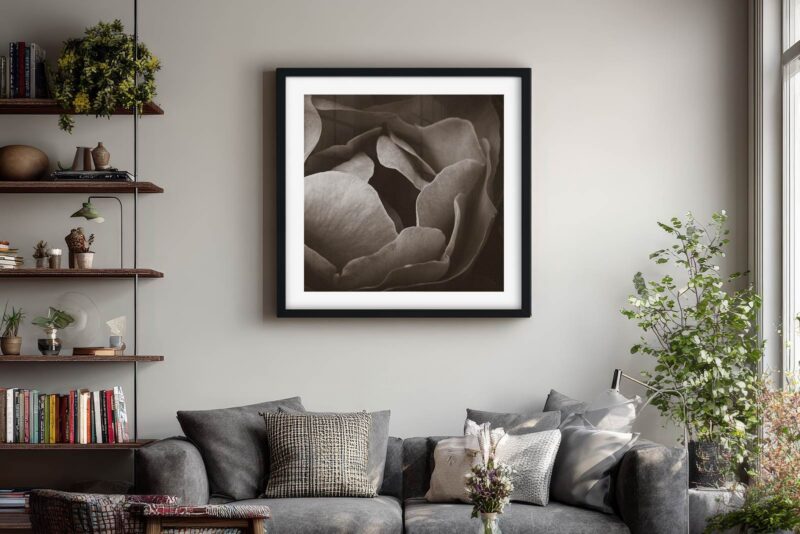
PinBlack and white photography is often associated with clean, minimal spaces, and it does work beautifully there. A large monochrome print on a plain wall can stop a room from feeling empty, while still preserving the sense of calm and restraint.
But it is not only for minimal homes.
In a layered interior, black and white art can be just as effective. When a room has pattern, books, antiques, plants, textured fabrics or strong paint colours, a monochrome photograph can give the eye somewhere to rest. It can act almost like punctuation, adding a pause between richer decorative elements.
This is where black and white photography becomes more flexible than people sometimes assume. It can work in a modern apartment, a Victorian terrace, a country cottage, a Scandi-inspired room or a more eclectic home. The deciding factor is not whether the room is “black and white”. It is whether the photograph adds the right mood, weight and balance.
A soft black and white landscape might bring calm to a bedroom. A bold architectural image could sharpen a hallway. A coastal scene in monochrome can feel more refined than a brightly coloured seaside print. A close-up botanical image can be gentle without becoming overly pretty.
The subject matters, but the treatment matters just as much.
It makes you notice composition
 Pin
PinWhen colour is removed from a photograph, other things come forward.
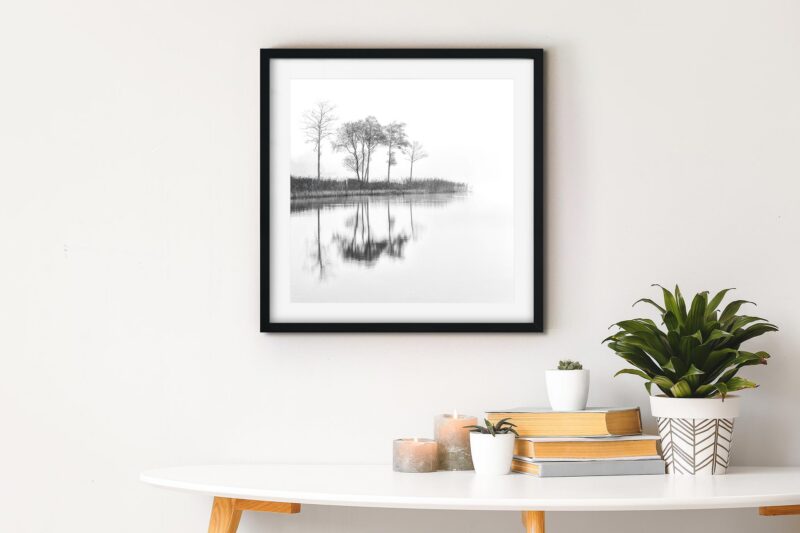
You notice the shape of a branch, the angle of a roofline, the texture of stone, the curve of a shoreline or the way light falls across a surface. The image becomes less about the literal colour of the subject and more about how the photograph is built.
That is part of the appeal. A strong black and white photograph depends on the photographer’s eye. It needs tone, balance, contrast, detail and restraint. Without colour to do the heavy lifting, weak composition becomes obvious very quickly.
This is why monochrome photography can feel more considered on a wall. It has a certain quiet confidence. It does not try to charm a room with colour alone. It asks you to look at the image itself.
For interiors, that can be powerful. A photograph with strong composition can anchor a space in a way that purely decorative artwork sometimes cannot. It gives the room a focal point, but also a sense of depth.
It gives neutral rooms more definition
 Pin
PinNeutral interiors can be beautiful, but they sometimes need contrast to stop them feeling flat.
Warm whites, soft greiges, pale timber, stone, linen, taupe and muted greens can all create a calm and welcoming room. But without a darker note somewhere, the whole space can begin to blur. Black and white photography is one of the easiest ways to add that visual anchor.
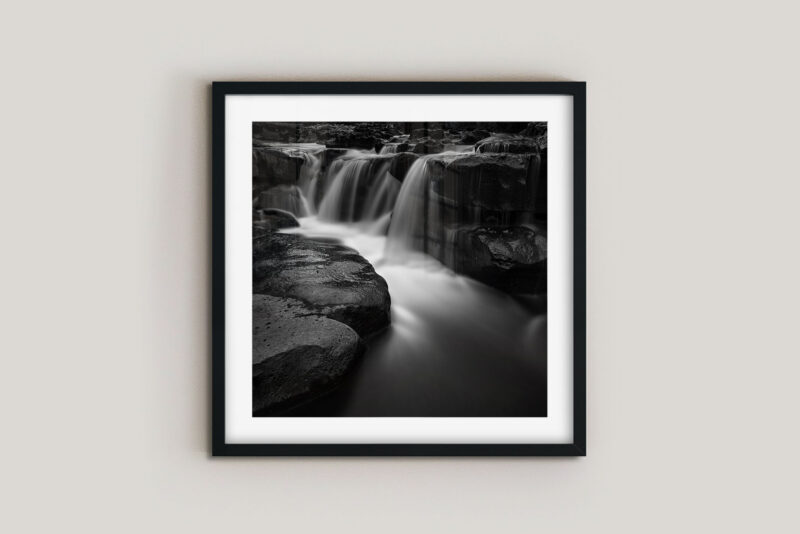
A framed monochrome print above a console table can give a hallway more purpose. A large black and white landscape above a sofa can create depth in a pale living room. A pair of photographic prints in a dining room can add symmetry and balance. In a home office, black and white artwork can make the space feel more focused without becoming corporate.
The trick is to think about contrast as part of the design, not as an afterthought. A black frame on a pale wall will feel sharper and more graphic. A pale wood or white frame will soften the look. Canvas can feel more relaxed, while acrylic gives a cleaner, more contemporary finish.
The photograph, frame and finish all change how the final piece sits in the room.
It can feel refined without becoming formal
Black and white photography has a natural association with galleries, books, film and classic photographic work. That can make it feel more refined, but it does not have to make a room feel formal.
This is an important distinction. Some monochrome interiors can feel too severe, especially when everything is sharp, polished and high contrast. But black and white photography does not need to be cold. It can be atmospheric, soft, quiet, romantic, dramatic or full of texture.
A misty woodland scene feels very different from a close-cropped city photograph. A black and white floral print has a different tone from a stormy coastal image. A wildlife photograph in monochrome can feel timeless, while an abstract photographic detail can look more contemporary.
That range is what makes it useful. You can choose a black and white print to calm a room, sharpen it, soften it or give it a more grown-up feel. It is not one look. It is a way of seeing.
How to choose the right black and white print
The best black and white print for a room is not always the most dramatic one. Sometimes it is the image that gives the space exactly what it is missing.
A room that already has strong furniture and bold shapes may suit something quieter and more atmospheric. A plain wall in a simple room may need a stronger image with more contrast. A bedroom often benefits from softer tones and more breathing space, while a hallway can take something more graphic because it is seen in passing.
Scale also matters. One large print can make a room feel more finished, especially above a sofa, bed or sideboard. A pair of prints can bring order and symmetry. Smaller framed pieces work well on shelves, in alcoves or as part of a gallery wall.
It is worth asking a few simple questions before choosing:
Does the room need more contrast or more calm?
Should the image feel bold and graphic, or soft and atmospheric?
Is the wall large enough for one strong print?
Would a landscape, architectural subject, floral study or abstract detail suit the space best?
Will the artwork still hold your attention once the first impression has passed?
Those questions are more useful than simply asking whether a print “matches”. Good artwork should belong in a room, but it does not need to disappear into it.
For homeowners looking specifically for photographic black and white prints, Fotoviva Art Prints offers curated monochrome imagery by professional photographers, available in framed, canvas and acrylic formats. Choosing from a photography-led gallery can make it easier to find images with real composition, atmosphere and depth rather than generic decorative artwork.
Why it still belongs
Black and white photography still belongs in modern interiors because it is not tied to one narrow trend. It works through contrast, tone, subject and composition. It can calm a busy room, strengthen a neutral one, add focus to a hallway or bring depth to a living space.
It is also one of the few forms of wall art that can feel both classic and contemporary at the same time. A good monochrome photograph does not have to explain itself. It simply holds the wall well.
And that is often what the best interior choices do. They do not shout for attention every time you walk into the room. They keep adding something quietly, day after day, until the room would feel incomplete without them.
Get gorgeous projects via email
