

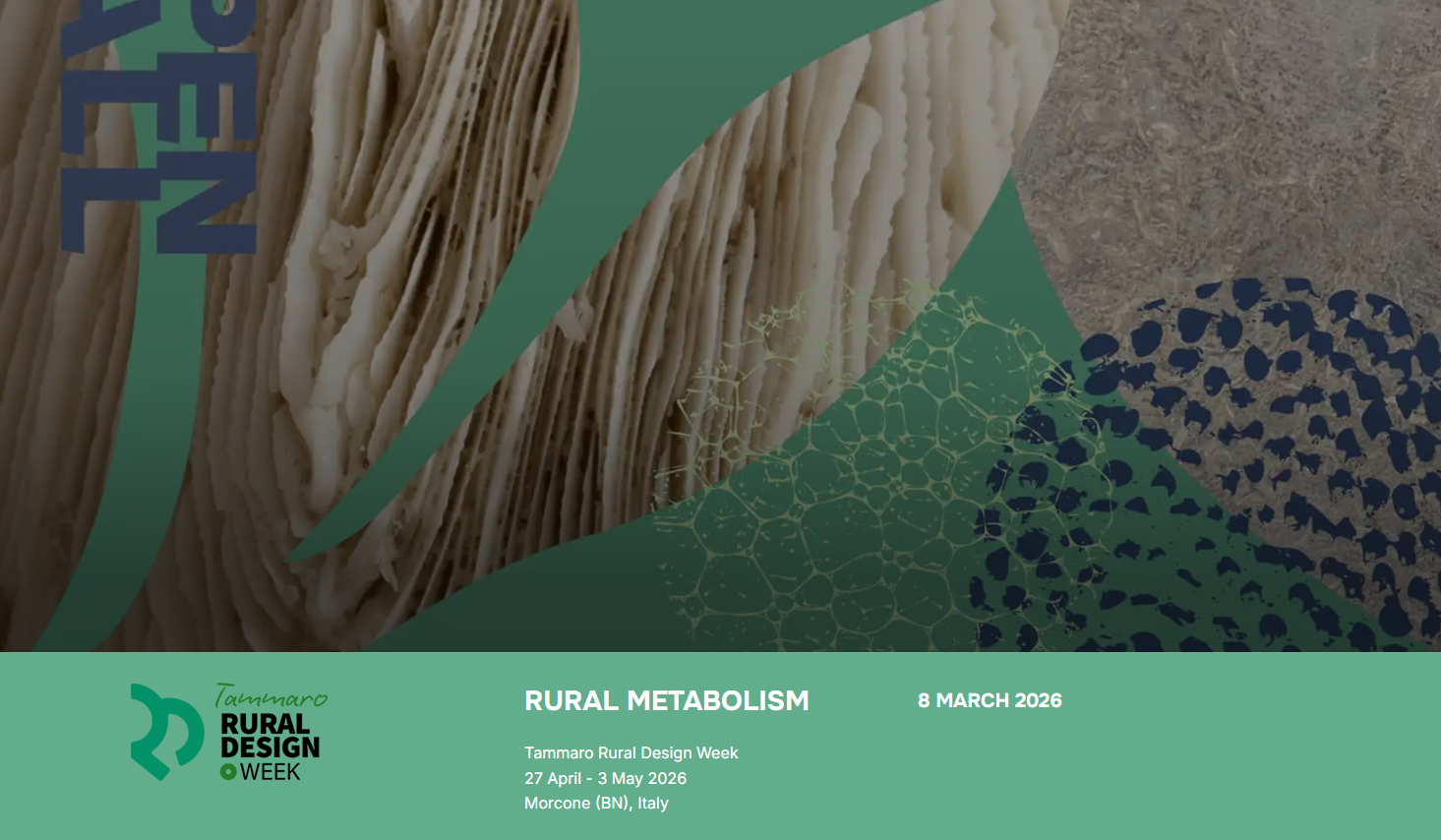
As someone who has spent years writing about the intersection of architecture, sustainability, and community, I get genuinely excited when I see events that challenge the status quo. The traditional model of urban development often treats rural areas as resource banks—places to extract materials, labor, or scenic views without giving much back. But a shift is happening. We are seeing a return to practices that respect the delicate balance of ecosystems, and that is exactly where the upcoming Rural Design Week comes in.
Event Overview
- Event Name: Rural Design Week 2026
- Date: April 27 to May 3, 2026
- Location: Morcone (BN), Italy
- Official Website: https://ruraldesignweek.info/en/
- Exhibit Info: https://ruderi.org/rdw/rdw26/
- Contact Email: [email protected]
This year, the event is diving deep into the concept of “rural metabolism.” It’s a term that sounds academic, but in practice, it’s about understanding the flow of energy, materials, and life through a territory. Rather than designing static objects, we are looking at systems that breathe, adapt, and regenerate.
What is Rural Metabolism?
In architectural and design theory, metabolism refers to the chemical processes that maintain life. When applied to rural territories, it becomes a framework for understanding how resources cycle through a landscape—how soil is nourished, how water moves, how waste becomes resource, and how communities sustain themselves.
The 2026 edition of Rural Design Week, hosted in Morcone, Italy, uses this concept as an interpretative key. The goal is to move beyond the extractivist logic of the linear model (take, make, waste) and embrace a circular, ecosystem-based approach. This isn’t just theoretical; it’s grounded in the specific context of the Tammaro Valley and the Matese National Park.
The Context: Morcone and the TAM Project
Rural Design Week isn’t happening in a vacuum. It is a key component of the TAM – Culture is a river project. This is a cultural, social, and economic regeneration initiative for the Municipality of Morcone, born from the PNRR call “Attractiveness of the historic villages.”
What I find compelling about this is the involvement of third-sector associations and local bodies. It’s not a top-down imposition of design; it’s a collaborative effort to revitalize the territory from within. The event leverages the existing work of local groups, ensuring that design interventions are rooted in the community’s reality.
Call for Proposals: Three Pathways for Change
If you are an architect, designer, artist, or researcher, this is your invitation to contribute. The organizers are looking for proposals that activate generative transformative processes. This means your work should do more than look good—it should function as part of a living system.
Participants are asked to critically engage with the Tammaro Valley, considering raw materials, waste, infrastructure, and local aesthetics. Proposals can be submitted in three specific categories:
- Category A: Products – Rural design and systemic design objects. Think beyond furniture; consider objects that facilitate agricultural workflows or community interaction.
- Category B: Materials – New natural-based materials. This is where material science meets local geology and biology. How can we use local resources to create high-performance, low-impact materials?
- Category C: Processes – Projects or practices inspired by circular economy principles. This could be a waste management system, a service design model, or a community-led maintenance protocol.
The call is open to all adults, professionals, and students, regardless of nationality. You can apply as an individual or a group.
The Exhibition: Design in Situ
One of the most exciting aspects of Rural Design Week is how the selected works are displayed. This isn’t a museum exhibition behind glass. From April 27 to May 3, 2026, selected proposals will be exhibited or created in situ.
We are talking about a diffuse exhibition across the internal and external spaces of the Municipality of Morcone and its surrounding areas. This approach allows the designs to interact directly with the environment they are meant to serve. It’s a live testing ground for how these ideas hold up in the real world.
Opportunities and Awards
For those selected, the stakes are high, and the rewards are tangible. The jury, composed of high-profile experts, will evaluate proposals based on their potential to address socio-economic, demographic, and environmental imbalances.
Here is what is at stake:
- Three Category Prizes: €1,500 (net) each for Products, Materials, and Processes.
- Special Mention: A project residence in the Tammaro Valley, including €1,000 (net), materials, accommodation, and production space, to be completed by the end of June 2026.
Winners will also be invited to present their work to the public during the event, with accommodation and food covered. Even if you don’t win one of the top prizes, selected works will be included in the official catalog and exhibited in widespread mode.
Why This Matters for Architects
As an architectural writer, I see many calls for proposals, but few address the “metabolism” of a place as holistically as this one. We are often trained to design buildings as static enclosures. However, in rural and mountain contexts, the building is just one node in a complex network of natural and social flows.
Rural Design Week 2026 challenges us to design for co-evolution. It asks: How can a product, material, or process not only serve a function today but adapt to the needs of the territory five, ten, or fifty years from now? This is the essence of sustainable architecture—designing for change.
How to Participate
Time is ticking. The deadline for submitting proposals has been extended to March 8, 2026. If you feel the need to visit the site first, preliminary visits and inspections can be booked until January 30, 2026.
To book a visit or ask for clarifications, you can reach out to the organizers directly at [email protected]. Questions regarding the call must be submitted by February 20, 2026, so don’t wait until the last minute.
For more detailed information on the submission process, including the necessary annexes, you can visit the exhibit info page linked at the top of this article.
Fun Fact
The River Metaphor
The parent project is called “Culture is a river.” This isn’t just a poetic turn of phrase. In hydrology, a river is a dynamic system that shapes its banks, transports nutrients, and connects disparate points in a landscape. By viewing culture—and design—as a river, the organizers emphasize flow, continuity, and the power of small tributaries to create a mighty current.
Frequently Asked Questions
Who is eligible to submit a proposal for Rural Design Week 2026?
The call is open to all adults over 18, of any nationality. You can apply as an individual or a group, and whether you are a professional, an academic, or a student, your proposal will be considered.
Do I need to be physically present during the exhibition week?
While it is not explicitly mandatory for all participants to be present, winners are invited to present their contributions to the public during the event. The organization covers accommodation and food costs for one person per group. For non-winning selected works, the exhibition is in situ, so engaging with the territory is a key part of the experience, but you should contact the organizer via the email mentioned above for specific attendance requirements.
What does “in situ” mean for the exhibition?
“In situ” means that the works will be displayed or created directly within the context of the Morcone municipality and the surrounding areas. Instead of a traditional gallery, the internal and external spaces of the town become the exhibition floor, allowing the designs to interact with the local environment.
Get gorgeous projects via email
