

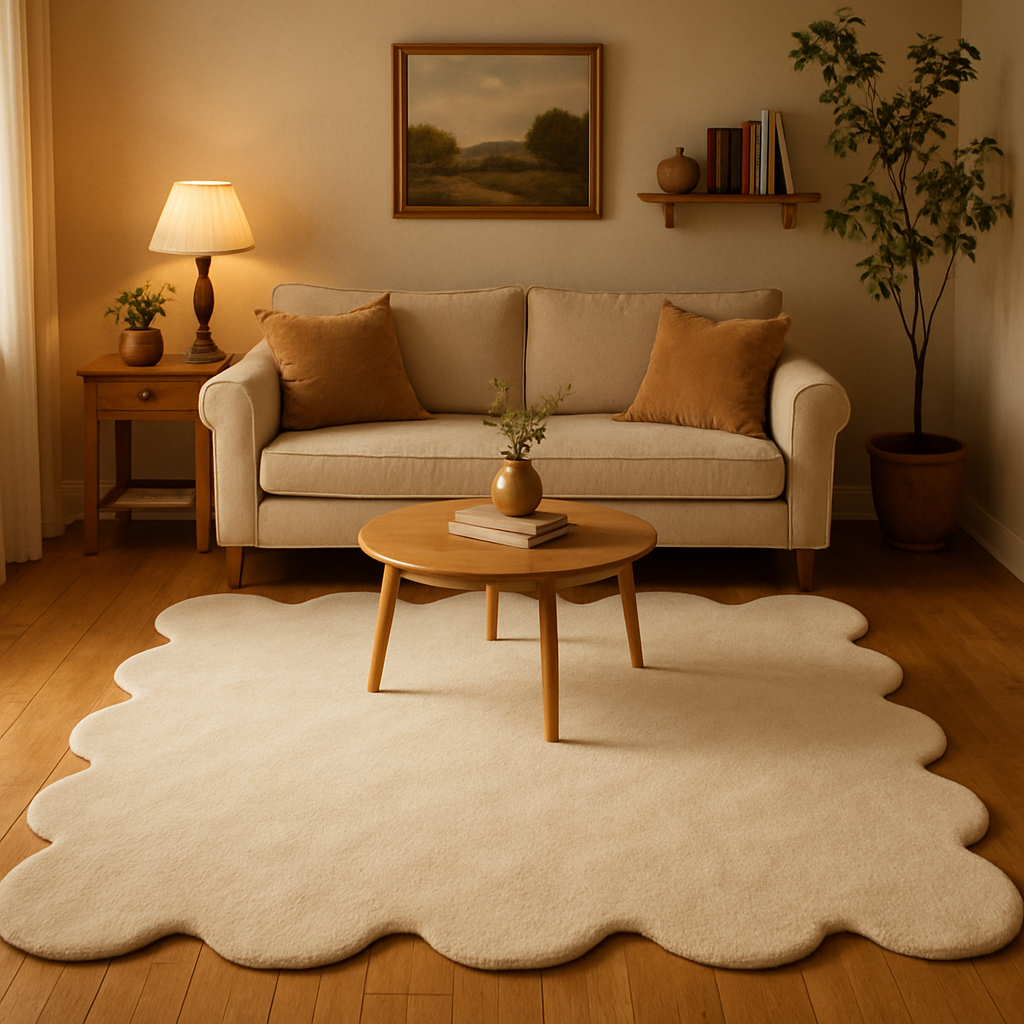
The scalloped rug has emerged as one of the most captivating interior design trends of 2025, bringing a fresh wave of sophistication and whimsy to modern living spaces. According to the 2025 Home Design Forecast by the American Society of Interior Designers, organic shapes and curved furnishings have seen a 67% increase in consumer demand compared to 2024. With their distinctive curved edges reminiscent of seashells or flower petals, these decorative pieces are transforming floors from mere functional surfaces into stunning focal points.
In my 15 years of designing residential spaces, I’ve witnessed countless trends come and go, but the scalloped rug represents something more enduring—a return to softer, more human-centered design that prioritizes emotional connection over stark minimalism.
Why Scalloped Rugs Are More Than Just a Trend
Unlike traditional rectangular or circular rugs, scalloped designs feature undulating borders that create visual interest and soften the hard lines often found in contemporary architecture. This organic shape adds an element of playfulness while maintaining elegance, making it a versatile choice for various interior styles—from minimalist Scandinavian to eclectic bohemian.
The appeal of scalloped rugs lies in their ability to break design monotony. In open-plan living areas, they help define zones without creating harsh divisions. Their curved edges naturally draw the eye inward, making spaces feel more intimate and intentionally curated. Last spring, I worked with a client who had a stark, modern loft with all right angles—introducing a large cream scalloped rug under her seating area completely transformed the space, making it feel welcoming rather than clinical.
Material Choices and Quality Considerations
Material choices for scalloped rugs in 2025 range from plush wool and soft cotton to eco-friendly jute and innovative recycled fibers. As someone who prioritizes sustainability, I’m particularly excited about the rise of rugs made from recycled PET bottles—they’re durable, easy to clean, and significantly reduce environmental impact.
When selecting a scalloped rug, consider these quality indicators:
- Pile density: Higher density means better durability and foot feel
- Backing material: Look for non-slip natural rubber backing to prevent sliding
- Colorfastness: Request information about dye quality to ensure longevity
- Construction method: Hand-tufted or hand-woven rugs typically outlast machine-made alternatives
- Certifications: OEKO-TEX or GoodWeave certifications ensure ethical production and non-toxic materials
Color palettes vary widely, with neutral tones like cream, beige, and soft gray remaining popular for their versatility, while bold jewel tones and pastel hues are favored by those seeking statement pieces. In my experience, investing in a neutral scalloped rug allows for greater flexibility with seasonal decor changes.
Expert Styling Tips from Real Projects
When styling a scalloped rug, consider placing it under coffee tables in living rooms, beneath dining sets, or as a bedside accent. The key is ensuring the scalloped edges are visible and not hidden under furniture, as the distinctive border is the rug’s defining feature.
Here are my proven placement strategies:
- Living Room: Position the rug so that at least the front legs of sofas and chairs rest on it, with 12-18 inches of rug extending beyond the furniture to showcase the scalloped edge.
- Dining Room: Ensure the rug extends at least 24 inches beyond the table on all sides so chairs remain on the rug when pulled out.
- Bedroom: Place a scalloped runner on each side of the bed, or use a larger piece that extends 18 inches beyond the foot of the bed.
- Entryway: Use a smaller scalloped rug (3×5 or 4×6) to create a welcoming focal point immediately upon entering.
One of my favorite applications was in a coastal Connecticut home where we layered a large jute scalloped rug over hardwood floors and placed a smaller, high-pile scalloped accent rug in a complementary color on top—this layering technique added depth and created a truly custom look.
Care and Maintenance for Longevity
Proper care extends the life of your investment significantly. Here’s my recommended maintenance routine:
- Vacuum weekly using the appropriate setting for your rug’s pile height
- Rotate the rug every 3-6 months to ensure even wear
- Address spills immediately by blotting (never rubbing) with a clean, white cloth
- Professional cleaning annually for high-traffic areas, every 2-3 years otherwise
- Use rug pads underneath to prevent slipping and reduce wear
- Keep rugs away from direct sunlight to prevent fading
For natural fiber rugs like jute or sisal, avoid excess moisture and use specialized cleaners designed for these materials.
Making an Informed Purchase Decision
According to interior design expert Jonathan Adler, quoted in the March 2025 issue of Architectural Digest, “The scalloped edge is the detail that makes a room feel designed rather than decorated. It’s intentional, sophisticated, and speaks to a homeowner who understands that the magic is in the details.”
When shopping for scalloped rugs, set a realistic budget. Quality pieces typically range from $200-$800 for standard living room sizes (8×10), with designer or hand-crafted options exceeding $1,500. However, the investment pays off in durability and aesthetic impact.
Consider purchasing from retailers with generous return policies, allowing you to test the rug in your space. Many online retailers now offer free returns within 30-60 days, which I always recommend taking advantage of to ensure the piece works with your lighting and existing decor.
The Future of Scalloped Rugs in Interior Design
As we move further into 2025, the scalloped rug trend shows no signs of fading. It represents a broader shift in home decor toward softer, more organic forms that prioritize comfort and visual interest. Industry reports from Pantone and the Color Marketing Group suggest that this preference for curved, organic elements will continue to dominate through 2026 and beyond.
Ready to Transform Your Space?
For anyone looking to refresh their interior design, a scalloped rug offers an accessible yet impactful way to embrace contemporary style while adding timeless elegance to any room. Start by measuring your space carefully, considering your lifestyle needs (pets, children, traffic patterns), and selecting a material and color that complements your existing palette.
If you’re uncertain about which style or size would work best for your home, consider consulting with a certified interior designer who can provide personalized recommendations based on your specific space and aesthetic preferences. The right scalloped rug can truly transform a room from ordinary to extraordinary—I’ve seen it happen countless times, and the investment in both beauty and quality of life is undeniable.
Get gorgeous projects via email
