

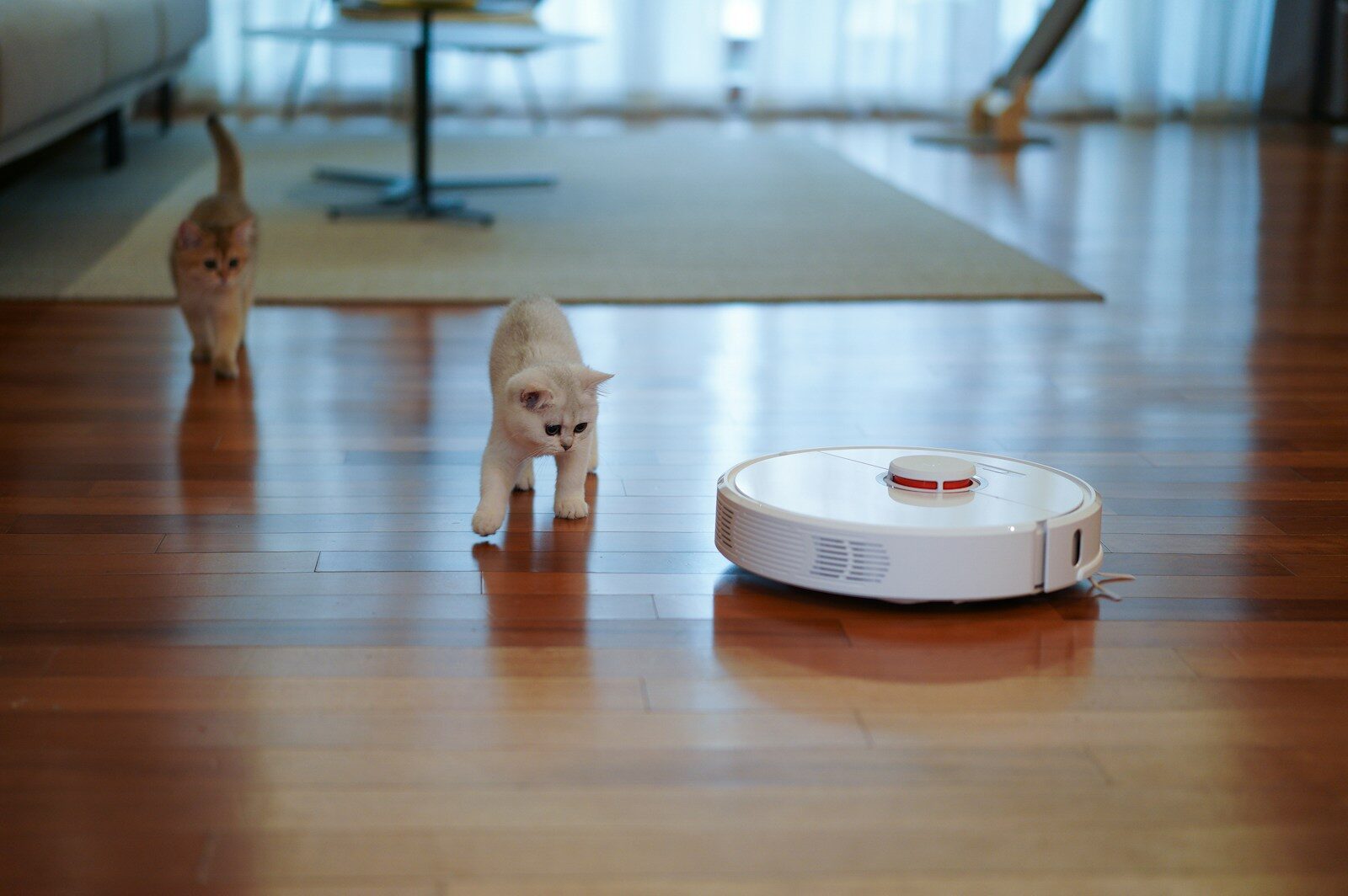
Anyone who’s owned a dog or a cat knows the specific despair of vacuuming a floor, turning around, and somehow finding a fresh clump of hair sitting exactly where you just cleaned. Pets shed constantly, relentlessly, sometimes seasonally with an extra vengeance, and a standard vacuum you drag out once a week just can’t keep pace. This is where robot vacuums either prove their worth or completely fall apart, and the gap between brands here is bigger than most people expect.
Why Pet Hair Breaks Cheap Robot Vacuums
Pet hair isn’t like regular dust and crumbs. It’s stringy, it wraps, and it loves nothing more than winding itself around a spinning brush roller until the whole thing seizes up mid-clean. Budget robot vacuums with basic bristle brushes are especially bad at this, the hair catches on bristles almost immediately and builds into a solid mass within days. Add fine dander into the mix, and a vacuum without decent filtration just recirculates allergens back into the air rather than trapping them.
What Actually Matters for Pet Hair Performance
Suction power gets all the marketing attention, but it’s genuinely only one ingredient. Brush design matters just as much, arguably more for long-haired breeds. Dustbin size matters too, since pet hair fills a small bin fast and nobody wants to empty a vacuum every single day. And filtration matters for anyone dealing with allergies, since trapping the hair is only half the job if the fine dander just floats straight back out.
- Anti-tangle brush design, ideally dual-section or rubber-based rather than bristle
- Strong, consistent suction across both carpet and hard floors
- A dustbin large enough to avoid daily emptying
- HEPA-grade filtration to trap dander alongside visible hair
- Self-emptying dock, which matters enormously for busy multi-pet households
Where Roborock Pulls Ahead
Roborock’s approach to pet hair leans hard into brush geometry rather than just cranking suction numbers and calling it a day. Current flagship models push up to 22,000 Pa or more of HyperForce suction, which is genuinely strong, but it’s the anti-tangle brush systems paired with that suction which actually stop hair building up into a solid clog over weeks of use. Combine that with self-emptying docks on higher-tier models, and the whole “forgot to empty the bin, now it’s useless” problem mostly disappears.
We’ve gone deeper into exactly which features to prioritise if pet hair is your main battle in this guide to the best robot vacuums for pet owners tackling hair and dander. It breaks down suction power, brush types and dustbin capacity specifically through a pet-owner lens, rather than relying on a generic buyer’s checklist.
How Competitors Stack Up
Ecovacs, another major player in this space, takes a fairly similar approach on paper, strong suction figures, combined vacuum and mop functionality, decent navigation. Where things tend to diverge is brush maintenance over the long haul. Plenty of pet owners running competitor brands report needing to manually cut hair free from brush ends every week or two, a task that dual-section anti-tangle designs are specifically engineered to reduce, if not eliminate outright.
Budget brands outside the major names cut costs somewhere, and it’s almost always the brush or the filtration that suffers first. A vacuum might launch with an impressively low price and a suction number that looks competitive on a spec sheet, but if the brush is a basic bristle design, pet owners will be back to manual detangling within the first fortnight, defeating half the point of buying a robot vacuum in the first place.
Long-Haired vs Short-Haired Pets: Different Demands
It’s worth being honest that not all pet hair is created equal. Short-haired cats and dogs shed fine, light hair that mostly just needs strong suction and decent filtration to handle. Long-haired breeds, huskies, golden retrievers, maine coons, produce longer strands that wrap around brush rollers far more aggressively. If you’re in the second camp, brush design should sit above suction numbers on your priority list, since even a monster-suction vacuum will bog down fast if the brush geometry doesn’t actively resist wrapping.
The Self-Emptying Dock Question
For multi-pet households especially, a self-emptying dock isn’t a luxury add-on, it’s close to essential. Pet hair fills a standard onboard dustbin far faster than regular household dust, and a vacuum that needs its bin emptied every second day quickly becomes a chore rather than a convenience. Docks that empty the bin automatically into a larger bag, sometimes holding weeks of debris, shift the whole maintenance burden from daily to monthly, which is honestly the difference between loving your robot vacuum and quietly resenting it.
Noise and Timing Considerations
One thing that rarely makes it onto spec sheets: pets react to robot vacuums, and not always calmly. Nervous cats and easily startled dogs sometimes need a quiet mode or a scheduling feature that avoids running the vacuum while they’re settled in a favourite spot. Most current-generation models from major brands include some version of this, but it’s worth checking before assuming your pet will simply adjust. Some do within days. Others hold a grudge against the little robot for months.
Price vs Long-Term Value
It’s tempting to chase the cheapest option that mentions “pet hair” somewhere in its listing, but the maths rarely works out favourably. A budget vacuum that clogs weekly, needs manual brush maintenance, and lacks decent filtration ends up costing more in frustration and lost time than spending a bit more upfront on a model actually engineered around the pet hair problem specifically, rather than one that just happens to vacuum hair along with everything else.
Setting Realistic Expectations
No robot vacuum, regardless of brand or price tag, eliminates the need for any manual cleaning at all. Corners, stairs, and the occasional stubborn clump wedged under a couch leg still need a hand now and then. What a well-chosen pet-focused robot vacuum does is handle the bulk of the daily grind automatically, so the manual cleaning that’s left is occasional touch-up work rather than a full weekly battle against tumbleweeds of fur.
A Quick Word on Multi-Pet Households
Two shedding dogs produce a genuinely different volume of hair than one cat, and it’s worth being honest with yourself about which category your household falls into before choosing a model. Multi-pet homes benefit disproportionately from larger dustbins, self-emptying docks, and more frequent cleaning schedules, since the hair accumulation simply doesn’t slow down to match a once-a-day cleaning cycle designed with a single, lightly-shedding pet in mind.
So What’s the Real Answer Here?
If pet hair is your household’s main battle, prioritise brush design and dustbin capacity over chasing the highest suction number on a spec sheet, though strong suction still matters plenty. Roborock’s anti-tangle brush systems and self-emptying dock options tend to hold up best over the long haul specifically for this use case, but the right pick still depends on your home’s flooring mix, your pet’s coat length, and how much manual maintenance you’re genuinely willing to tolerate. Browse the full range of robot vacuums to compare suction, brush type, and dock features side by side before settling on the one that’ll actually keep up with the shedding.
Get gorgeous projects via email
