

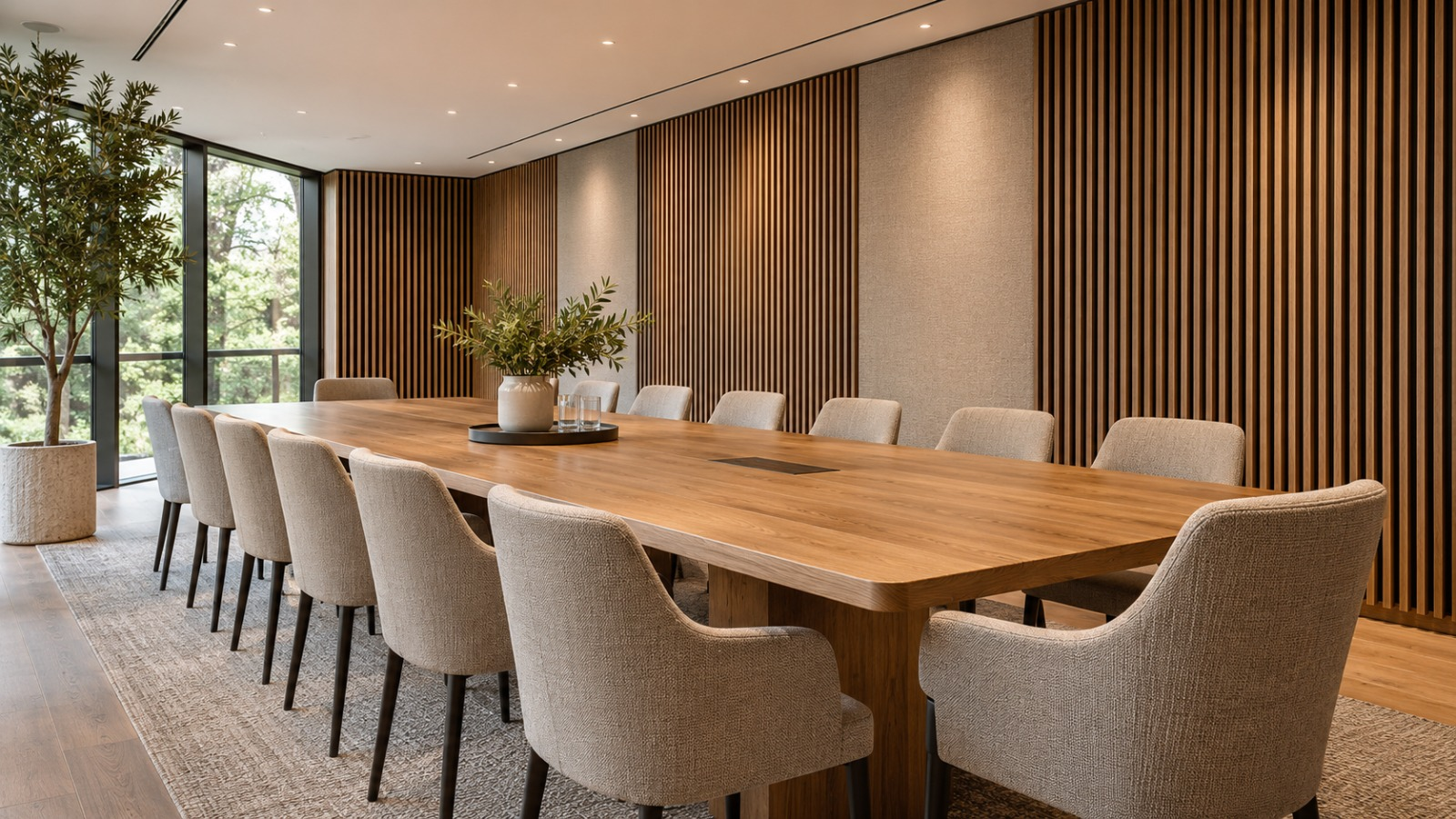
Why flexible acoustic walls are on the rise
In offices, restaurants and open-plan workplaces, acoustic walls are an important part of making a space usable. By absorbing sound and controlling noise and echo, they shape how comfortable a room is to work and socialize in. For years, acoustic panels were treated as a finishing layer that was specified once, fixed in place and left alone until the next refurbishment. That’s now changing with more architects designing acoustic walls that can be taken down, moved and put back, so the treatment follows the space as its use changes instead of being locked into the first layout.
There are many reasons that flexibility in acoustic wall panels is needed. Work styles shift, tenants change, brands refresh their interiors, and services contained behind walls need regular attention. Open-plan spaces can also experience noise problems if the right acoustic treatment isn’t used. So it’s important that wall panels are specified to be flexible from the outset.
The problem with permanent acoustic walls
Most acoustic panels have traditionally been glued, screwed or fixed straight to the wall or ceiling. That is fine on the day the project is handed over, but the trouble starts when something needs to change.
A glued panel rarely comes off in one piece without damage to it or the substrate. So a simple relocation turns into demolition, reinstatement and a fresh order of materials. Screw-fixed panels fare a little better but leave holes to fill and refinish. Either way, the client is paying not only to remove what’s there but also to replace it.
Waste is also an issue. Many acoustic panels are made from materials that could be reused or recycled, yet adhesive fixing usually rules that out.
Permanent fixing also makes it harder to reach what sits behind the wall. Electrical wiring, data cabling, plumbing and HVAC all need inspection, repair and upgrades over the life of a building. When the acoustic finish is stuck in place, reaching those services means cutting into it, and every repair leaves a mark on the interior.
How removable panel systems make acoustic walls flexible
The alternative is to mount acoustic panels on concealed clips. One half of each clip set is fixed to the back of the panel and the other to the wall, ceiling or framework. The panel clips into place and unclips when it needs to come down, with no glue causing breakage and no screws to pull out.
With a concealed clip system, the panel isn’t damaged while being removed and it can go back in the same position, move to another room or be stored for a later fit out. Panels can also be removed in any order, so reaching services behind one section of wall doesn’t mean stripping everything around it. Reconfiguring a space becomes a less expensive exercise both in time and cost.
A clean finish can also be achieved through the use of concealed clips. With no exposed screws, caps or trims interrupting the surface, the design intent can be maintained.
In commercial interiors, this suits a range of applications. Office partitions and feature walls can be reworked as teams grow or brands change, acoustic panels in meeting rooms and open plan areas can be added, moved or swapped as noise patterns shift, and ceiling panels that hide services can come down for maintenance and go straight back up.
Fastmount’s system perfect for acoustic walls that demand flexibility
Fastmount’s panel mounting system was first developed for superyacht interiors, where panels come off regularly for access and refits. The founding idea was to let panels be removed, recovered and put back instead of thrown away, and the same thinking sits behind its architectural panel systems. Clip options vary by panel weight, material and how often the panel needs to come off, so the hardware can be matched to the project.
The Standard Range is the general-purpose choice for wall and ceiling panels, with self-tapping, screw and adhesive fix options and pull-out loads from 5 to 15kg (11 to 33lb) depending on the male clip. Acoustic panels are one of its common uses, and it includes a surface-mount male clip designed for acoustic panels.
The Low Profile Range suits wall panels that need less space between panel and substrate, with female clips that self-tap into drywall, MDF, foam core and curved substrates.
The Very Low Profile Range gives the smallest gap between panel and substrate for thin panels and substrates, with a certified fire-rated version available. It includes the VL-PF3 Recessed Mount Acoustic Clip, developed for PET acoustic panels. Its glue-free, push-fit design means panels can be removed and fully recycled, and the clip received a special mention at the DAME Design Awards in 2025.
The SLX Range is engineered for drywall, plasterboard and plywood. Two-stage engagement gives 6mm (1/4″) of adjustment in every direction, with fire-rated options for architectural installations.
The Stratlock® Range handles heavy wall and ceiling panels mounted to the Stratlock Rail System, with 360-degree adjustment before locking and Fastmount’s highest shear strength and pull-out load. It is typically used in hotels, hospitals and retail interiors.
The Metal Range provides a robust hidden fixing for heavyweight, fire-rated and metal panels, while the Panel Control Range, including PanelSafe restraints, lets ceiling panels hang below the ceiling while services behind them are worked on.
Fastmount’s product selector helps narrow down the right panel mounting clips for each panel and substrate.
Long term value of designing for change
The value of a removable acoustic wall is realised after handover. Each time a layout changes, panels that can be unclipped and reused save the cost of new materials, the labor of stripping out old ones and the waste that comes with it. Across several fit out cycles, those savings are substantial.
It also fits a wider shift toward commercial buildings that are adapted instead of gutted. An interior that can be reconfigured stays useful for longer, and its materials keep working instead of being replaced with each new tenant.
For the business using the space, the biggest difference is disruption. Reworking a meeting room or opening up part of a floor becomes a matter of moving panels, not a construction project.
Why architects and contractors specify Fastmount
Fastmount’s concealed clip system solves the flexibility problem that every modern commercial space faces. Panels are mounted securely but come off cleanly, in any order and without damage. Fixings stay hidden, so the surface looks the way it was designed. Adjustable clips in the SLX and Stratlock® ranges help installers keep panels aligned on irregular walls. And with options from lightweight acoustic panels to heavy architectural panels, the system can be specified for a whole project.
For architects planning commercial interiors that will need to change, designing removable acoustic walls from the start keeps those options open. Fastmount gives them a practical way to do it, so the space can keep adapting for years without losing the finish it was designed with.
Get gorgeous projects via email
