

For years, homeowners assumed that saving energy meant giving something up: smaller windows, plain finishes, or bulky equipment that spoiled the look of a room. That is no longer true. Modern materials, smarter lighting, and better planning let you build or renovate a home that costs less to run and still looks the way you imagined.
The key is to treat efficiency and design as one project instead of two. When both are planned together from the start, the efficient choices become part of the style. Here is how to do it.
Start With the Building Envelope
The most effective efficiency upgrades are the ones nobody sees. Insulation, air sealing, and a well-built roof and wall system keep conditioned air inside, which reduces the load on your heating and cooling equipment.
Because these improvements sit behind the walls, they cost you nothing visually. Spray foam, dense-pack cellulose, and rigid foam boards all improve thermal performance without changing a single finish. If you are renovating, opening up a wall for cosmetic reasons is the ideal moment to upgrade the insulation inside it.
Air sealing deserves just as much attention. Gaps around windows, outlets, attic hatches, and plumbing penetrations let air leak in and out. Sealing them is inexpensive and invisible, and it often makes a room feel more comfortable right away.
Choose Windows That Perform and Look Great
Windows are where efficiency and aesthetics meet most directly. They shape the character of a home, yet they are also a common source of heat gain and loss.
Modern double- and triple-pane windows with low-emissivity coatings reduce heat transfer without any visible tint. Slim frames in wood, fiberglass, or thermally broken aluminum let you keep the clean sightlines of large glass openings while still meeting performance goals.
Placement matters too. In many climates, larger windows on the south side bring in winter sun, while well-shaded openings on the west reduce summer heat. Deep overhangs, pergolas, and exterior shutters can handle that shading and add architectural interest at the same time.
Design Lighting in Layers
Lighting is one of the easiest places to save energy and one of the most powerful tools for setting a mood. LED bulbs use far less electricity than older incandescent bulbs and last much longer, and they now come in warm tones that flatter wood, textiles, and paint colors.
Layer your lighting in three levels. Ambient lighting provides general illumination, task lighting supports activities like cooking or reading, and accent lighting highlights art, texture, or architecture. Using each layer only when needed means you rarely have to light an entire room at full brightness.
Dimmers extend this approach. They let one fixture serve several moods and trim energy use whenever the lights are turned down. Choose LED-compatible dimmers so the bulbs perform smoothly without flicker.
Daylight is the cheapest light of all. Skylights, light tubes, glass interior doors, and light-colored walls help sunshine travel deeper into a home, which cuts daytime electricity use and makes spaces feel larger.
Let Smart Controls Work in the Background
Smart technology has become small and discreet. A slim thermostat, a few wireless sensors, and a hub hidden in a closet can learn your routine and adjust heating, cooling, and lighting automatically.
Occupancy sensors turn off lights in empty rooms. Programmable thermostats lower the temperature while you are away.
Motorized shades can close during the hottest part of the afternoon and open again in the evening. Because these systems run themselves, you get the savings without needing to think about them, and the home stays free of visible clutter.
Plan the Electrical System Early
The electrical plan affects almost everything else on this list: where fixtures sit, how smart controls connect, how appliances are powered, and whether the house is ready for future upgrades such as solar panels or an electric vehicle charger. Treating it as an afterthought often leads to ugly surface wiring, awkward switch placement, or costly rework.
This is a good moment to bring in a professional. Working with an electrician in St Louis Mo who understands both local code and modern efficiency goals can help you map out circuits, dimmable lighting zones, concealed wiring, and the capacity needed for high-efficiency heat pumps or induction cooktops.
Involving an electrician during the design stage, rather than at the end, keeps the wiring hidden and the finished rooms clean.
A panel with room to grow is also worth considering. As more households add electric appliances, a well-planned panel makes future additions simpler and avoids having to open finished walls later.
Pick Materials With Efficiency in Mind
Material choices influence both appearance and performance. Thermal mass, such as stone, brick, or polished concrete floors, absorbs heat during the day and releases it slowly at night, which can stabilize indoor temperatures. These materials also look striking and age well.
Light-colored roofing and exterior finishes reflect more sunlight in warm climates, reducing cooling demand. Natural insulators like wood, cork, and wool bring warmth and texture inside. When you can, choose durable, locally sourced products, since they often have a lower environmental footprint and give a home a sense of place.
Flooring, window treatments, and rugs also play a role. Thick drapes or cellular shades add a layer of insulation at the window, and they can be selected in fabrics that match your design scheme.
Choose Appliances and Systems That Fit the Look
Efficient appliances are no longer limited to plain white boxes. Many high-efficiency refrigerators, dishwashers, and ovens come in panel-ready designs that blend into custom cabinetry. Heat pump water heaters and high-efficiency HVAC systems can be tucked into utility spaces, while ductless mini-split units come in slim, modern forms that suit contemporary interiors.
Look for products with recognized efficiency ratings, and compare the lifetime operating cost rather than just the purchase price. A slightly higher upfront cost frequently pays for itself through lower utility bills.
Make Renewable Energy Blend In
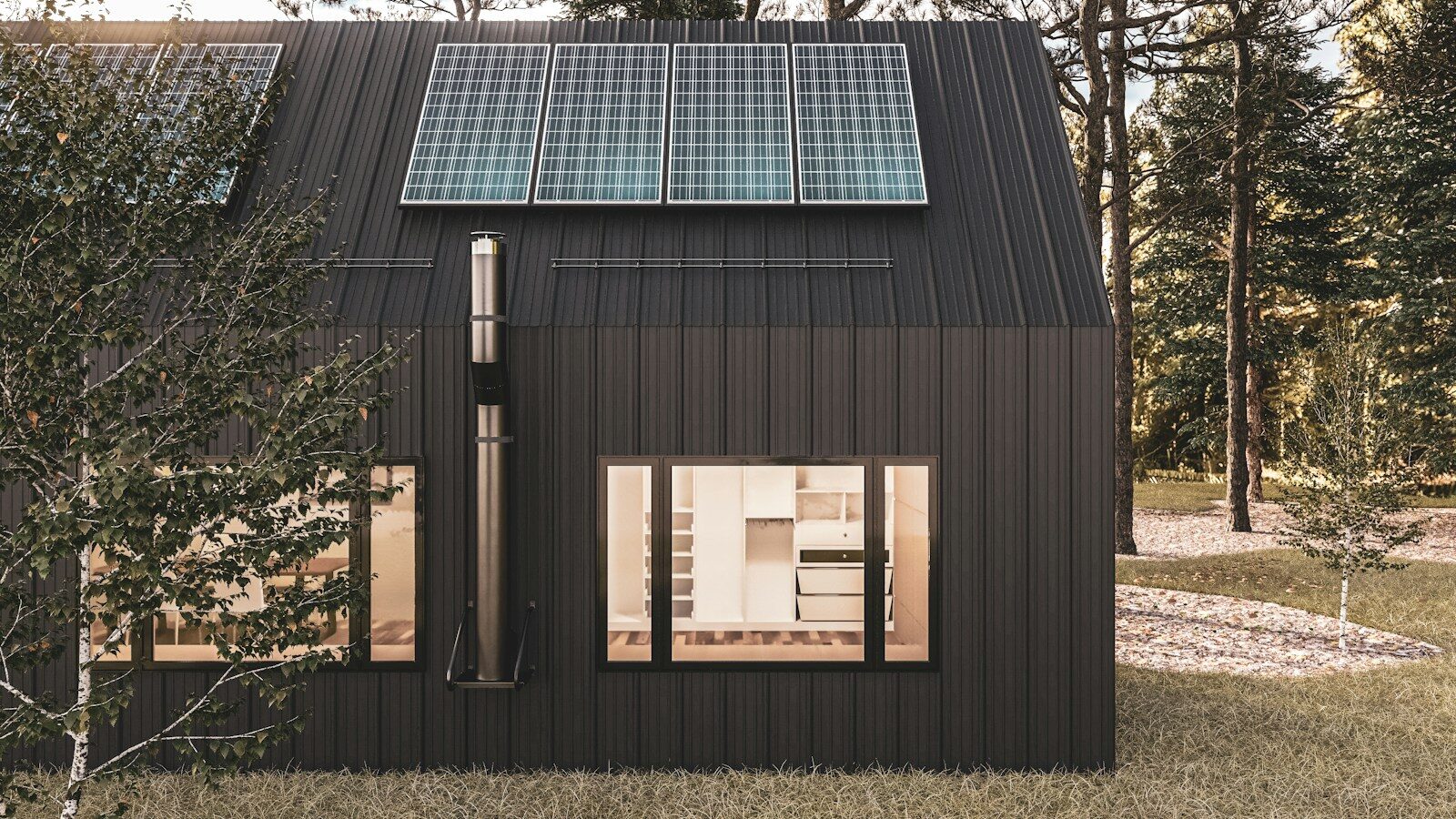
Solar panels no longer have to be an eyesore. Low-profile panels with black frames and uniform cells sit neatly against many roof styles. Solar shingles and integrated roofing products go further, becoming part of the roof surface itself. If rooftop placement does not suit your home, ground-mounted systems or carports with solar canopies can generate power while staying out of view from the main facade.
Bringing It All Together
Designing an energy efficient home does not require trade-offs between comfort, cost, and beauty. Begin with a tight building envelope, choose windows and materials that perform well, layer your lighting, and let smart controls manage the details. Plan the electrical system early, and work with qualified professionals so that every decision supports both function and style.
When efficiency is built into the design from the beginning, the result is a home that looks refined, feels comfortable, and costs less to operate year after year.
Get gorgeous projects via email
