

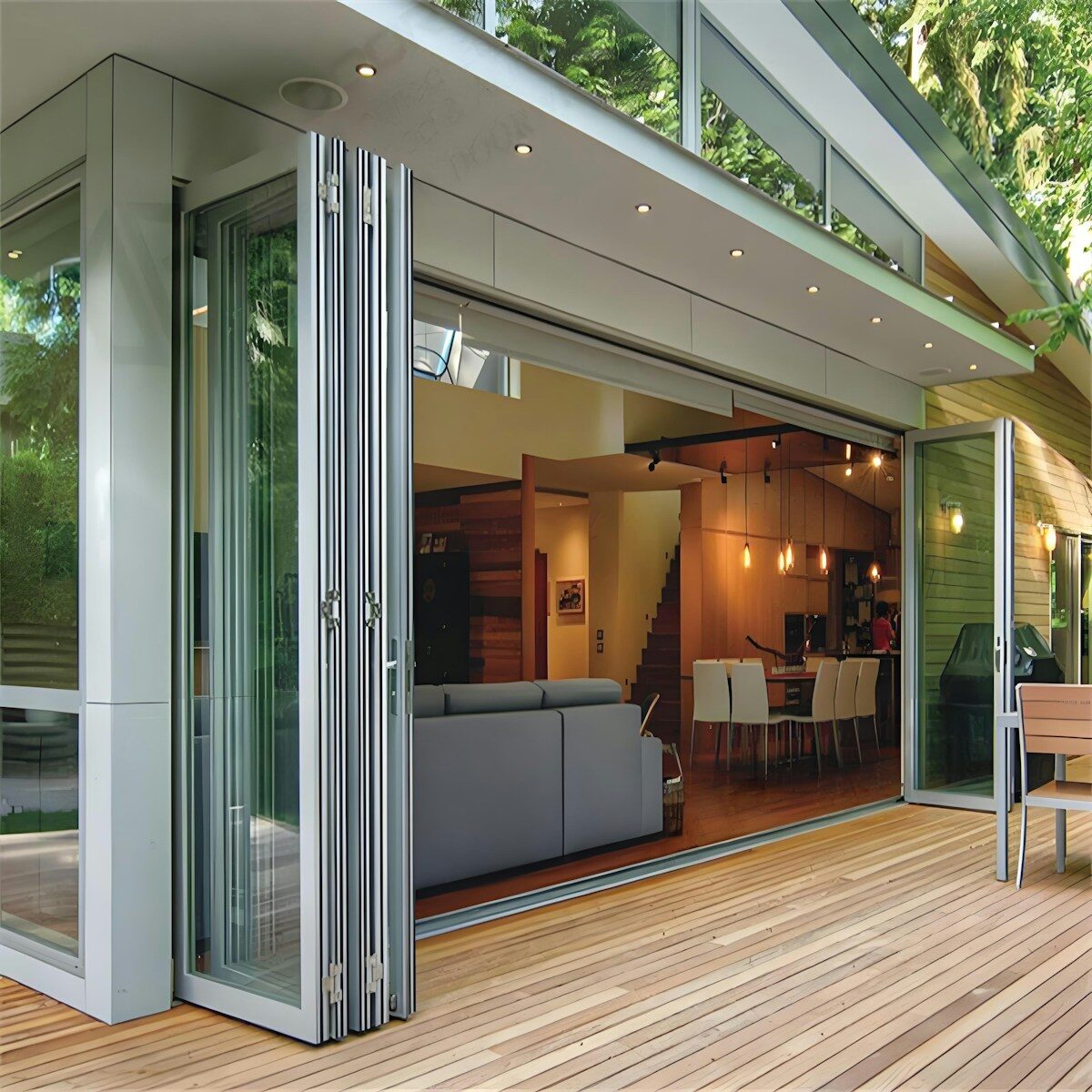
Doors are among the most used elements in any home, yet they are often the last detail people consider during a renovation. That is changing. Homeowners and designers are paying closer attention to how a door opens, how it closes, and how much of its mechanism stays visible. The result is a shift in door hardware toward systems that are cleaner, smarter with space, and better integrated into the architecture of a room.
1. Hardware That Disappears
One of the clearest trends in modern interiors is concealment. Visible tracks, exposed hinges, and bulky fittings interrupt clean sightlines, so more projects now use systems that hide the mechanism entirely.
Concealed sliding systems such as Milcasa’s Magic 2 build the slide mechanism into the door itself, so the hardware and upper running track stay invisible whether the door is open or closed. Magic 2 is a patented system made in Italy, supports wood doors weighing up to 176 lb, and can be mounted on both left and right-handed doors. A Magic 2 Vetro version brings the same concealed approach to glass doors.
The same thinking applies to swing doors. Invisible hinges keep the door face uninterrupted, so the sightline stays clear and no doorway competes with the next.
2. Complete Systems Instead of Separate Parts
Buying a door slab and then sourcing a jamb, hinges, a lock, and a handle separately adds cost, time, and on-site carpentry. Complete sets that arrive ready to assemble remove most of that work.
Milcasa’s interior swinging doors follow this approach. Each set ships with a pre-cut slab, a three-piece pre-cut jamb, an Italian-made AGB magnetic lock and strike, two AGB invisible hinges, and a European handle. Buyers choose passage, privacy knob, or key cylinder at checkout, with hardware finishes in black or silver. Widths run from 24 to 36 inches, and no templating or milling is required on site, which turns installation into assembly rather than carpentry.
3. Panels Designed Around the Mechanism
Concealed hardware performs best when the door panel is built for it. Rather than adapting a generic slab, homeowners are choosing panels made to work with a specific system.
The Milcasa magic door panels collection includes primed and laminated options ready to finish, mirrored white slabs, and white slabs with frosted glass, all compatible with the concealed Magic system as well as Ergon and pocket hardware. For openings that need a bespoke fit, custom-made panels are available for the Magic 2 system.
Glazed panels earn their place in hallways without windows because they borrow light from the next room. Solid panels remain the better choice where privacy matters most.
4. Doors That Save Space
In smaller rooms and open layouts, a door that only swings can waste valuable floor area. Folding systems such as Compack 180 and Compack 90 let doors fold open 180 or 90 degrees, so a single opening can divide or expand a living area as needed. Ergon slide-and-swing systems combine both movements, and the Ergon Living Folding design handles very wide openings without floor guides.
Choosing the Right Hardware for Your Project
The best choice depends on the opening, the wall, the floor, and how the room is used. Start by measuring the rough opening at the top, center, and bottom, and decide early whether the door should slide, swing, fold, or combine these movements.
Explore the Milcasa Collection
Milcasa curates Italian-crafted door hardware, concealed sliding systems, and complete door sets for residential and commercial projects, with free and fast US shipping. Browse the collections online, or request a quote if you are working with an unusual opening or outfitting a whole house. Customers ordering five items or more can request a discounted quote before they buy.
Get gorgeous projects via email
