

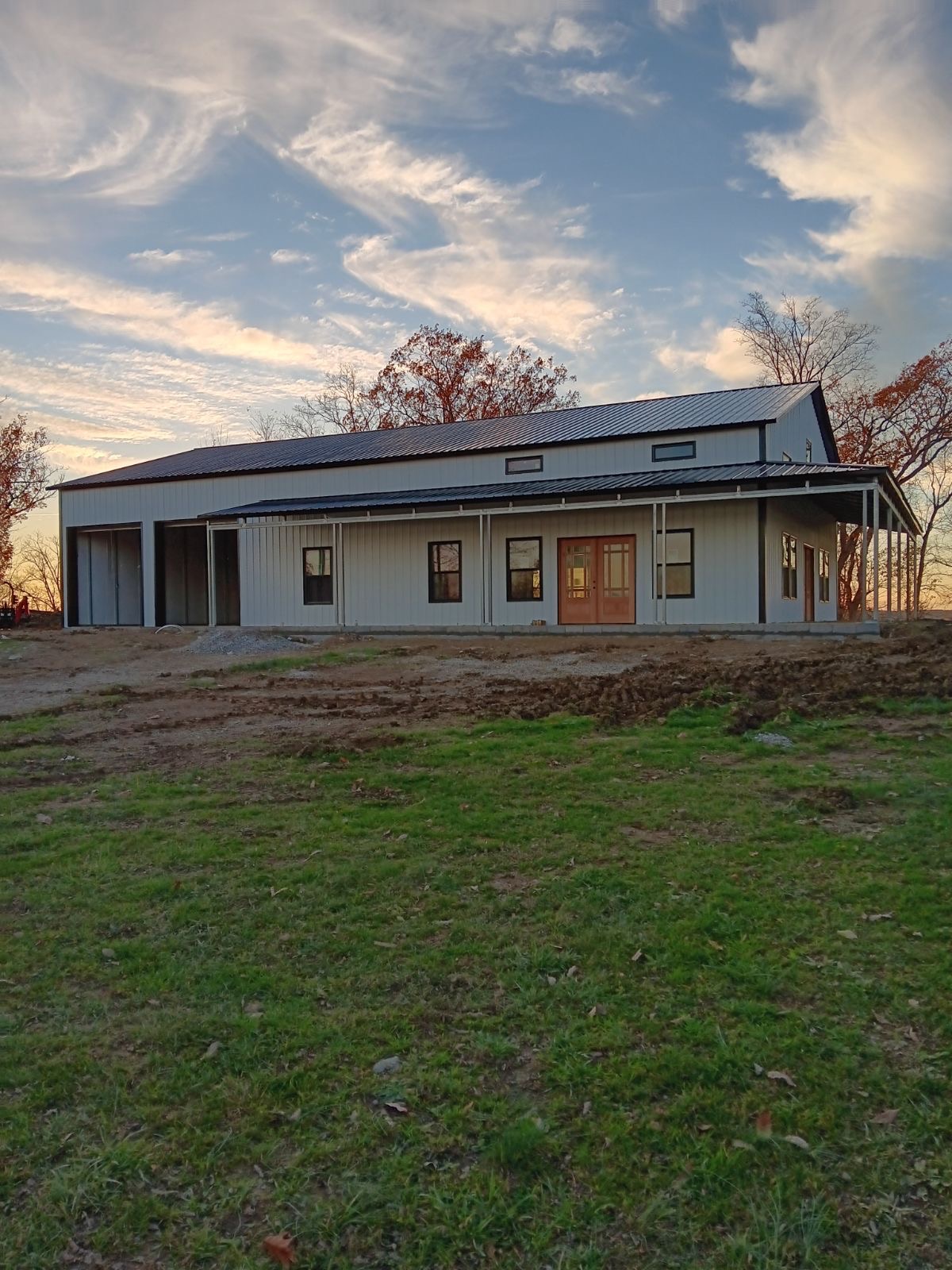
Buying a steel building is not like buying a product off a shelf. It is a custom construction process involving engineering, logistics, code compliance and a fair amount of coordination between multiple moving parts. For buyers who have never gone through it before, the experience can feel overwhelming, particularly when you do not know what questions to ask or what to expect at each phase.
That is why understanding the full project lifecycle, before ever signing a contract, matters so much. Companies like US National Steel have built their reputation on walking clients through every step of the process clearly and consistently, from the first conversation to the final walkthrough.
Chris Favoroso is the owner of US National Steel, a leading steel building manufacturer dedicated to revolutionizing the construction industry with innovative and sustainable building solutions. The company has decades of experience in the industry and is a trusted name in providing high-quality, custom-designed steel structures.
“The best way to deliver a quality job is to stay true to the proven process we’ve put in place,” Favoroso said. “Nothing is ever perfect, but we never compromise on the quality of work. We truly appreciate that our clients are investing their hard-earned money, so we double-check every detail, making sure nothing was overlooked by us or the client, confirming our crews are ready to perform to our standards and protecting materials on site. At the end of the day, our goal is for the client to step back, look at their finished building and feel that it exceeded their expectations.”
One key aspect that buyers often overlook, Favoroso said, is the process itself. US National Steel has made it a priority to help clients understand what is involved at every stage, particularly as steel construction continues to expand across residential and commercial markets.
The global structural steel market was estimated at more than $110 billion in 2023 and is projected to reach more than $174 billion by 2030, driven largely by demand for durable, cost-effective building solutions. In the barndominium space alone, interest has surged as buyers look for flexible layouts, lower construction costs and the long-term durability that steel provides over traditional wood framing.
The quality of the final structure, however, is only as good as the process behind it. A properly engineered and installed steel building can last decades with minimal maintenance, resisting termites, rot, fire and weather events that would compromise other materials. Getting there requires a builder who treats each phase of the project, from the first design conversation to the final inspection, with the same level of expertise.
US National Steel reviews show the company stands out above the rest. Here are the steps they take to prepare clients.
Step 1: Initial Consultation and Project Planning
The process begins with a conversation, not a sales pitch. Before any design work starts, the team at US National Steel sits down with each client to understand the intended use of the structure, how many rooms or functional spaces are needed, how much garage or storage square footage makes sense, and what the overall vision looks like.
This intake process matters more than most buyers realize. This is because every steel building is custom-built from the ground up, the details gathered during that initial conversation directly shape the engineering and material decisions that follow. Clients who come in with a clear vision get that vision refined. Clients who come in with general ideas get help thinking through the specifics.
“We start with an in-depth initial design conversation,” Favoroso said. “Since every building is custom, we build from the ground up with each client. We ask about the intended use of the structure, how many rooms they need, how much garage or storage space they want, and what overall vision they have in mind. Many clients come in with a pretty clear idea already, but we always offer recommendations to help make sure the final project turns out exactly the way they envisioned it.”
The goal is alignment before anything is committed to paper.
Step 2: Design, Engineering, and Code Considerations
Once the project scope is defined, the engineering process begins. This is where the technical work happens, and it is a step that experienced companies take seriously.
Steel is one of the primary structural materials recognized in the Florida Building Code, alongside concrete, masonry, and wood, and the code includes entire sections dedicated to both structural and cold-formed steel design.
For buyers in Florida and across the Southeast, this means projects must be engineered to meet wind-load requirements that rank among the strictest in the country.
US National Steel treats engineering as a non-negotiable part of every project. The design phase is also where cost thresholds get addressed. For example, once a building reaches 31 feet in width, the engineering requirements and materials needed to meet code increase considerably. There are several similar thresholds throughout a project, and understanding them early gives clients the ability to make informed decisions, either staying under a threshold to save money or crossing it because the additional space justifies the cost.
“Engineering is a critical part of every steel building we deliver,” Favoroso noted. “We always prioritize full compliance with local codes while bringing the client’s vision to life safely and effectively.”
Getting these decisions right during design prevents expensive changes later, and it protects the client from surprises when the project reaches the permitting stage.
Step 3: Material Sourcing and Scheduling
After design and engineering are finalized, the logistics phase begins. Steel buildings involve many distinct components, and coordinating the delivery of all of them is often the most operationally complex part of the entire project.
US National Steel’s team knows its suppliers’ timelines inside and out and uses that knowledge to give clients realistic delivery windows rather than overpromising and underdelivering. A clear project timeline is shared with the client upfront, covering both delivery and on-site completion.
Since all of this work happens outdoors, weather is always a variable. Material protection on site is taken seriously, and if anything affects the schedule, clients hear about it immediately rather than being left to wonder.
The communication is direct and proactive, not reactive.
“We share a clear timeline with the client for delivery and completion,” Favoroso said. “If anything causes a delay, we communicate it right away.”
Step 4: Installation and Construction
This is where the project becomes real. The installation phase is where the quality of everything that came before, the planning, the engineering, the scheduling, either holds up or falls short.
US National Steel works exclusively with experienced crews who follow established installation procedures and adhere to all applicable building codes and safety standards. Before work begins on any site, the full scope is reviewed and communicated so that every crew member understands exactly what is being built and how it should be executed.
The team also triple-checks project details internally before crews ever mobilize. Some jobs carry 50 or more individual line items, each with specific measurements and specifications. Missing even one can mean an unhappy client at the end of the job. If something on a signed contract does not look right during that review process, the team reaches back out to the client to clarify before work begins, not after.
“Safety is our top priority on every single project,” Favoroso said. “We make sure our crews follow proper installation procedures, use the right equipment, and adhere to all applicable building codes. We also put a strong emphasis on preparation and clear communication before work even begins, so everyone on site fully understands the scope of the work and exactly how it will be executed safely.”
That preparation is what separates a smooth installation from one full of costly interruptions and miscommunication.
Step 5: Final Delivery and Client Communication
Project completion is not simply the moment installation ends. It is the moment the client steps back, looks at the finished structure, and feels confident it matches what they asked for and that the process to get there was worth it.
Transparency throughout the project is what makes that moment possible. US National Steel’s office team is organized into specific roles so that every aspect of the project is handled by the right person. Nothing gets passed around in ways that cause details to fall through the cracks, and clients are not left chasing updates.
Those who have gone through the process and shared US National Steel reviews often point to this level of communication and attention to detail as what sets the experience apart from other builders they have worked with.
“We celebrate every time a client is thrilled with both the process and the final building,” Favoroso shared with a smile. “Our reputation is everything to us.”
Get gorgeous projects via email
