

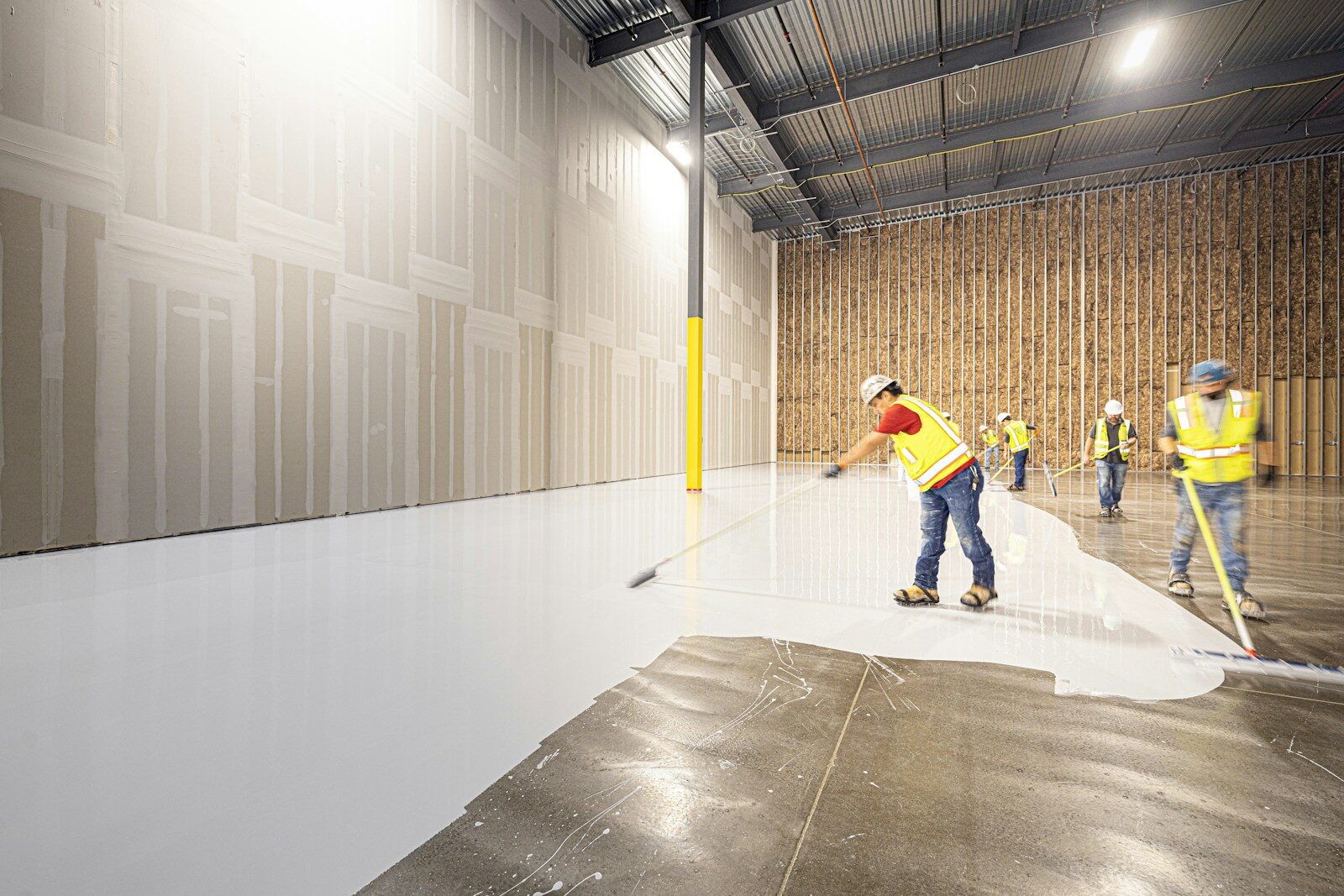
You drive into the garage after a wet afternoon, step out of the car and notice muddy tyre marks, water and a small oil spot on the floor. On bare concrete, these everyday messes can soak into the surface, leave stains and contribute to gradual wear. An epoxy-coated floor creates a smoother, sealed surface that is easier to clean and better prepared for daily use.
Epoxy flooring is valued for more than its polished appearance. When the concrete is properly prepared and the coating system is selected for the conditions, it can resist abrasion, moisture, chemicals and frequent foot or vehicle traffic. These qualities make it a practical choice for Australian homes, workshops, retail premises, warehouses and other busy environments.
How Does Epoxy Flooring Work?
Epoxy flooring is created by combining resin with a hardener. When mixed, the two components react chemically and cure into a rigid coating that bonds to a prepared concrete substrate. Unlike ordinary floor paint, epoxy does not simply dry as a thin decorative layer. It forms a harder and more tightly bonded surface.
The finished result depends heavily on the system beneath the visible topcoat. Concrete condition, mechanical preparation, moisture levels, primer selection, coating thickness and curing time all affect performance. A well-installed system acts like protective armour for the slab, while poor preparation can lead to peeling, bubbling or premature wear.
Why Is Epoxy Flooring So Durable?
Durability comes from the strong bond between the cured coating and the concrete. A suitable epoxy system can tolerate regular foot traffic, vehicle movement, dropped tools and repeated cleaning without wearing as quickly as untreated concrete or standard paint.
Epoxy also seals the porous surface of the slab. Concrete naturally absorbs water, oil and other liquids through small pores and cracks. Sealing those pathways reduces staining and makes dirt easier to remove before it settles into the floor.
Common durability benefits include:
- Resistance to abrasion from shoes, tyres, trolleys and equipment
- Protection against oil, grease and many household or workplace chemicals
- Reduced concrete dust and surface deterioration
- Improved resistance to stains and moisture penetration
- A seamless finish with fewer joints where dirt can collect
- Better tolerance of regular sweeping, mopping and washing
- Optional protective topcoats for added scratch and UV resistance
No flooring is indestructible. Sharp impacts can still chip a coating, and prolonged exposure to harsh chemicals may cause discolouration or damage. The right product specification should match the type of traffic, cleaning routine and substances likely to contact the floor.
Where Can Epoxy Flooring Be Used?
Epoxy is commonly associated with garages, but its uses extend well beyond vehicle storage. Its seamless surface, broad colour range and adaptable finish allow it to work in both practical and design-focused spaces.
The condition of the concrete remains a deciding factor. New and existing slabs may both be coated, although cracks, contamination, rising moisture and weak surface layers must be addressed before installation.
Suitable applications may include:
- Residential garages and carports
- Home workshops and storage rooms
- Laundries and utility spaces
- Covered outdoor entertainment areas
- Retail stores and showrooms
- Commercial kitchens and food preparation areas
- Warehouses and light industrial facilities
- Medical, educational and community premises
- Mechanical workshops and service areas
Different spaces require different systems. A decorative garage coating may prioritise appearance and easy cleaning, while a warehouse floor may need greater thickness, abrasion resistance and line marking. Wet work areas may also require slip-resistant additives.
Residential Epoxy Flooring for Everyday Australian Homes
Residential Epoxy Flooring can turn a dusty, stained concrete slab into a clean and functional part of the home. Garages are increasingly used for storage, hobbies, exercise and household projects, so the floor needs to cope with more than parked vehicles.
A professionally applied system can make the area feel brighter and more finished. Light-coloured or flake finishes reflect available light, while the seamless surface makes sawdust, soil, leaves and vehicle residue easier to remove. Homeowners can choose colours and textures that complement surrounding cabinetry, walls or exterior finishes.
Residential applications often benefit from:
- Decorative flake systems that help disguise minor dirt and marks
- Solid-colour finishes for a simple, uniform appearance
- Slip-resistant textures for entries and wet areas
- UV-stable topcoats where sunlight reaches the floor
- Cove details where easier edge cleaning is required
- Clear protective layers that improve wear resistance
- Colour zoning for workbenches, storage or parking spaces
A garage exposed to direct sunlight needs special attention. Some epoxy products can yellow or fade under ultraviolet light, particularly near open doors. A compatible UV-resistant topcoat can help retain the intended colour and finish.
How Epoxy Supports Easier Cleaning and Maintenance
Bare concrete can release fine dust as its surface wears. It also contains pores that trap soil, grease and spills. Epoxy creates a sealed surface, allowing most everyday messes to remain on top long enough to be wiped, swept or mopped away.
Regular maintenance is usually straightforward. Loose grit should be removed because it can act like sandpaper under tyres, shoes and equipment. Spills should also be cleaned promptly, even when the coating is chemical resistant, because long exposure can stain or soften some finishes.
A practical maintenance routine includes:
- Sweep or vacuum loose grit regularly
- Mop with warm water and a mild, compatible cleaner
- Remove oil, fuel and chemical spills promptly
- Avoid highly abrasive pads unless approved for the coating
- Place protective pads beneath sharp or heavy equipment
- Inspect high-use areas for scratches, chips or worn texture
- Repair local damage before moisture reaches the concrete
Soap residue can make a smooth floor slippery and dull its appearance. Clean water rinsing helps prevent a hazy film. Cleaning products containing strong acids, solvents or unknown chemicals should not be used without checking their compatibility with the installed system.
Are Epoxy Floors Safe When Wet?
A smooth epoxy floor may become slippery when wet, oily or dusty. This does not mean epoxy is unsuitable for wet areas. Slip resistance can be adjusted by adding aggregate, polymer beads or another textured material to the coating system.
The required texture should match the setting. A heavily textured industrial surface may offer strong grip but can be harder to mop. A finer texture may suit a residential garage where cleaning comfort and appearance carry more weight. The installer should balance grip, cleaning needs and expected contaminants.
Other safety features can also be incorporated:
- Contrasting colours around steps, ramps and level changes
- Line marking for walkways, parking bays and restricted zones
- Brighter finishes that improve reflected light
- Coving that reduces dirt build-up at wall junctions
- Different colours for work zones and storage areas
- Chemical-resistant finishes for spill-prone environments
Slip resistance can change over time as the surface wears or cleaning residue builds up. Routine cleaning and periodic inspection help maintain the intended grip.
What Makes Commercial Epoxy Floors Practical?
Commercial epoxy floors are designed around the demands of the premises. Retail stores may need an attractive finish that copes with constant foot traffic, while workshops may prioritise impact resistance, chemical protection and clearly marked work zones.
Commercial projects also need careful scheduling. The space may need to close while the concrete is prepared, coatings are applied and each layer cures. Planning work in stages or outside trading hours can reduce disruption, but the coating still needs the full specified cure time before traffic resumes.
A commercial flooring plan may account for:
- Pedestrian, trolley, forklift or vehicle traffic
- Equipment weight and wheel type
- Oils, cleaning agents and workplace chemicals
- Hygiene and cleaning requirements
- Wet areas and slip hazards
- Temperature changes and thermal shock
- Drainage, falls and existing joints
- Safety colours, markings and signage
- Downtime available for installation and curing
Specifying the coating only by colour or price can lead to poor performance. The expected load, substrate condition and operating environment should guide the system choice.
Why Surface Preparation Matters
Surface preparation is often the difference between a long-lasting coating and one that begins lifting after a short period. Concrete may appear clean while still containing oil, curing compounds, dust or weak material that prevents a secure bond.
Mechanical grinding or shot blasting is commonly used to remove contaminants and open the concrete surface. Cracks, holes and damaged joints are then repaired with suitable materials. Moisture testing may also be required because vapour rising through the slab can create bubbles or push the coating away from the concrete.
Before coating begins, the installer may review:
- Concrete strength and surface condition
- Existing paint, sealers or adhesive residue
- Oil and chemical contamination
- Cracks, joints, holes and uneven areas
- Moisture levels within or beneath the slab
- Drainage and floor falls
- Previous repairs and patching compounds
- Access, ventilation and curing conditions
Preparation can account for a large share of the installation work. Skipping it to reduce the initial cost may create a more expensive repair later, particularly if the coating must be removed and replaced.
How Long Does Epoxy Flooring Last?
There is no single lifespan for every epoxy floor. A lightly used residential garage may perform for many years, while a busy industrial facility can wear faster even with a heavier system. Installation quality, coating thickness, traffic, sunlight, maintenance and chemical exposure all influence service life.
The wear pattern matters as much as the calendar. Areas beneath turning tyres, entry points and workstations usually experience greater stress. A protective topcoat or scheduled recoating can renew the surface before the underlying system is damaged.
Signs that maintenance may be needed include:
- Loss of gloss in frequently used areas
- Fine scratches or visible abrasion
- Worn slip-resistant texture
- Local chips caused by impact
- Fading or yellowing near sunlight
- Coating damage around cracks or joints
- Areas where chemicals have changed the finish
Small defects are often easier to repair when identified early. Waiting until large sections detach can increase labour, downtime and material costs.
How Much Does Epoxy Flooring Cost?
Epoxy flooring costs vary because each project has a different substrate, layout and performance requirement. Floor size matters, but the square-metre rate alone does not reveal how much repair, grinding, cleaning or detailing the slab requires.
Decorative flakes, multiple colours, additional topcoats, non-slip finishes and chemical-resistant systems can affect the price. Difficult access, occupied premises and short working windows may also increase labour requirements.
When comparing quotes, check whether they cover:
- Mechanical concrete preparation
- Crack and surface repairs
- Moisture testing where required
- Primer, body coats and protective topcoats
- Decorative flakes or colour effects
- Slip-resistant additives
- Edge, drain and joint detailing
- Removal of existing coatings
- Site protection and clean-up
- Product and workmanship warranties
A lower quote may exclude preparation or use a thinner system. Asking each contractor to describe the full coating build-up makes comparison easier and reduces the chance of unexpected charges.
Is Epoxy Flooring the Right Choice for Your Space?
Epoxy is well suited to sound concrete floors that need greater durability, easier cleaning and a more finished appearance. It can be customised for homes, retail spaces, workshops and other demanding areas without relying on grout lines or multiple floor joints.
It may be less suitable where the slab has unresolved moisture issues, substantial movement or contamination that cannot be removed. Outdoor areas exposed to strong sunlight may require another resin type or a UV-resistant topcoat. A site inspection helps identify these conditions before a system is selected.
Before choosing a finish, ask:
- What type of traffic will use the floor?
- Will vehicles or heavy equipment turn on the surface?
- Which liquids or chemicals may be spilled?
- How much direct sunlight reaches the area?
- Is slip resistance needed?
- How will the floor be cleaned?
- Are there cracks, moisture or drainage problems?
- How long can the area remain unused during curing?
- What warranty applies to the proposed system?
The best finish is not always the thickest or most decorative option. It is the one designed around the slab, daily activity and maintenance expectations.
A Stronger Foundation for Everyday Use
Epoxy flooring combines surface protection, practical maintenance and visual flexibility in one system. Its strength comes from more than the resin itself. Concrete preparation, product compatibility, skilled application and suitable curing conditions all contribute to the final result.
If your garage, workshop or commercial floor is dusty, stained or difficult to maintain, arrange a professional inspection before choosing a coating. A tailored specification can protect the concrete, improve how the space functions and deliver a finish built for the way the area is actually used.
Frequently Asked Questions About Residential Epoxy Flooring
Is residential epoxy flooring suitable for garages?
Yes. Residential epoxy flooring is commonly used in garages because it can resist tyre traffic, oil spills, dirt and everyday abrasion. Its sealed surface also makes sweeping and mopping easier than cleaning porous concrete.
The coating system should be selected for vehicle use and prepared correctly around cracks, joints and contaminated areas. A UV-resistant topcoat may be beneficial when strong sunlight enters through an open garage door.
How long before residential epoxy flooring can be used?
Curing time depends on the product, temperature, humidity and number of coating layers. Light foot traffic may be permitted before vehicles, but the installer’s stated curing schedule should always be followed.
Driving onto the floor too early can leave tyre marks, indentations or surface damage. Plan alternative parking and keep stored items out of the area until the coating has reached the required hardness.
Can residential epoxy flooring be applied over cracked concrete?
Minor cracks can often be repaired before residential epoxy flooring is installed. The installer will inspect the crack, determine whether it is stable and use a compatible repair material before preparing the surrounding concrete.
Active cracks caused by slab movement may return through the coating. In those cases, flexible repair details or another flooring approach may be recommended. Epoxy should not be used to hide unresolved structural movement.
Is residential epoxy flooring easy to clean?
Residential epoxy flooring is generally easy to maintain because it forms a smooth, sealed surface. Dust, leaves and grit can be swept or vacuumed, while most household marks can be removed with warm water and a mild cleaner.
Oil and chemical spills should still be cleaned promptly. Avoid harsh solvents and abrasive tools unless the flooring provider confirms they are safe for the installed coating and topcoat.
Can residential epoxy flooring be customised?
Yes. Residential epoxy flooring is available in solid colours, decorative flake blends and finishes with different levels of gloss and texture. Colours can be selected to suit cabinetry, walls, storage systems or the exterior style of the home.
Practical details can also be customised. These may include slip-resistant texture, marked parking zones, contrasting borders and UV-resistant protection. The finish should suit both the desired appearance and the room’s daily use.
Get gorgeous projects via email
